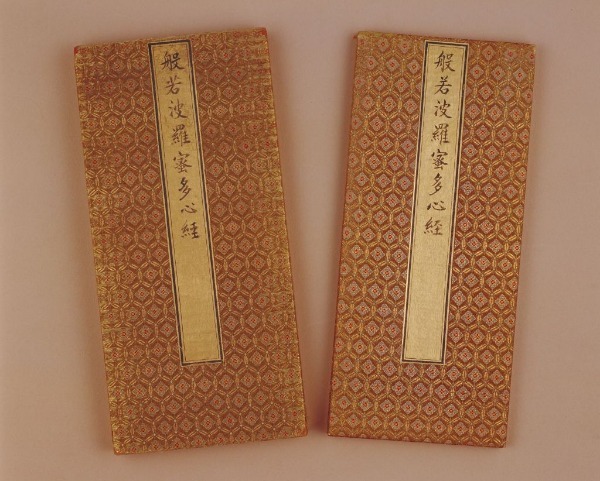
When watching the Qing Dynasty (1644-1901) palace dramas like Empresses in the Palace, audiences probably are no stranger to scenes about royals copying sutras.
The hundreds of copies of various sutras written by Qing emperors now kept in the Palace Museum also show that sutra copying was a hobby popular among the royals.
Known for its calligraphic merit, Emperor Kangxi's copy of The Heart Sutra, has even become one of the most sought-after copybooks sold on Tmall and JD.com, China's two leading e-commerce platforms.
Were the Qing emperor still alive, he would probably be more than surprised by the fact that an increasing number of modern urbanites are warming up to his hobby.
Brushing up on handwriting
Liu Fei, a 30-year-old white-collar worker in Beijing, bought a copybook of The Heart Sutra penned by Emperor Kangxi, published by the Palace Museum Press, months ago.
A salesperson working for an online education company, Liu has been copying the sutra on and off for the past two years.
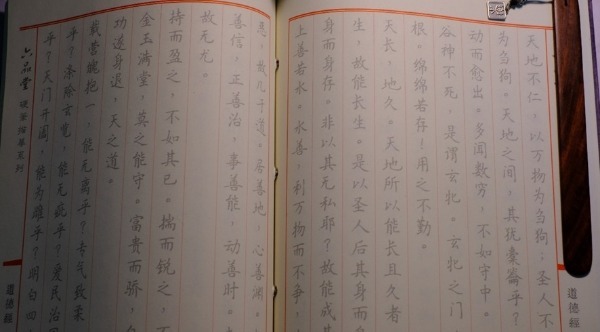
"Aside from Emperor Kangxi's work, I also followed calligrapher Zhao Mengfu's (1254-1322) copies of The Heart Sutra and Tao Te Ching," Liu said. "They are all good choices for practicing the regular-script calligraphy".
Like Liu, many other calligraphy enthusiasts are also fond of copying classic texts of Buddhism, Taoism, and ancient poetry to enhance their handwriting.
It can be largely explained by the fact that those canons were the common choices for renowned calligraphers in history. For example, Buddhist classic texts The Heart Sutra and The Diamond Sutra, Taoist classic Tao Te Ching, and classic poems such as The Thousand-Character Text, were most written by legendary calligraphers like Wang Xizhi (303-361), Liu Gongquan (778-865), Huang Tingjian (1045-1105) and Zhao Mengfu.
Calligraphy, ranked as the supreme visual art form in traditional Chinese culture, and has been considered by Chinese literati almost of all times, along with poetry as a means of self-expression and cultivation.
In addition, the traditional belief – Zi Ru Qi Ren, meaning one's handwriting can readily give away one's true character, still has a strong foothold in the digital modern society.
Aside from having one or two calligraphy classes at school, many primary schoolers are sent by parents to afterschool classes to further improve their handwriting, as it is widely held that neat, beautiful handwriting would probably earn the examinee bonus credits.