



To beat the virus, we need to boost cooperation









There are many dimensions of the novel coronavirus challenge that are going to stay with us for some time. And the only way to meet this challenge is through international cooperation.
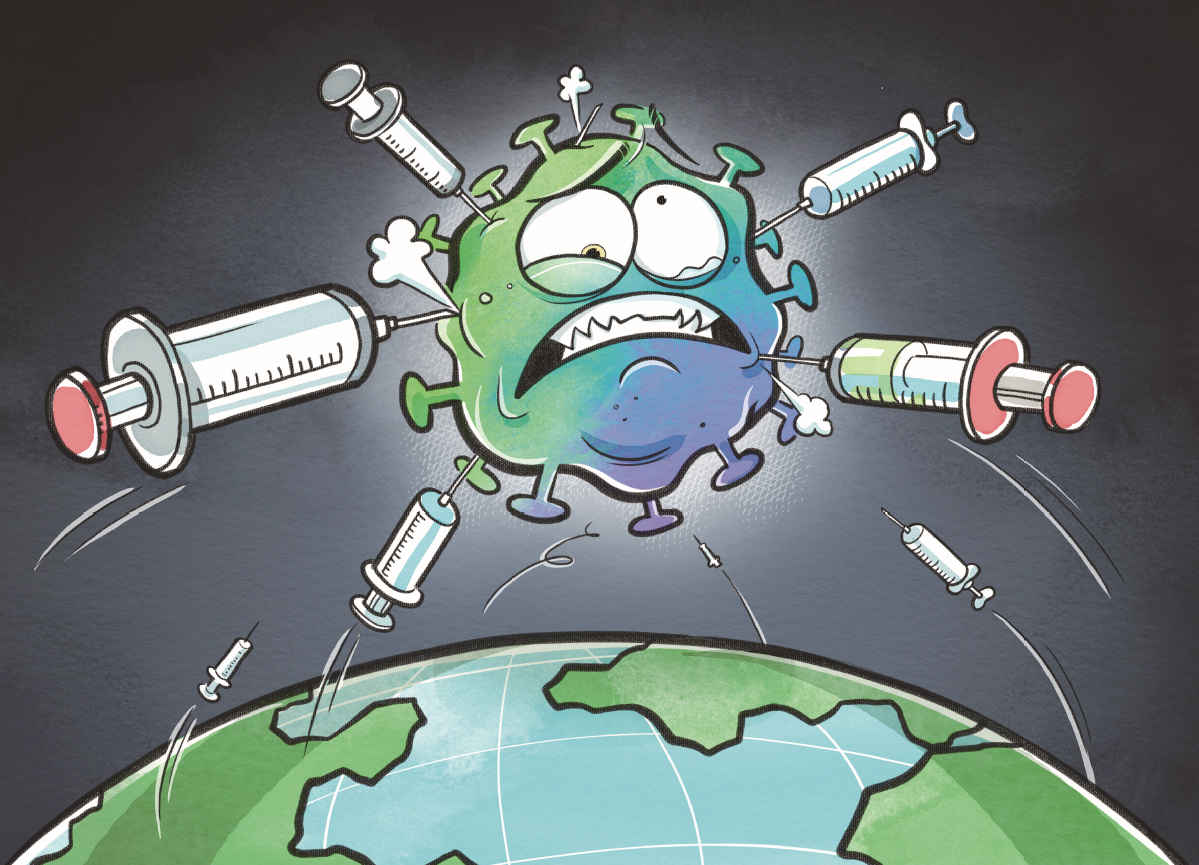
Take for instance the health dimension, which relates to not only the global public health crisis but also the grand effort to save as many lives as possible until researchers can find a cure or develop a vaccine for COVID-19, which could take a year at the least.
Many governments were taken by surprise by the novel coronavirus pandemic. But now that some of them have managed to largely contain the virus or flatten the curve, they can begin to help others. China, for example, has already been assisting other countries to fight the pandemic, for which it deserves praise.
In the context of ASEAN+3(Association of Southeast Asian Nations plus China, Japan and the Republic of Korea), we see some real promises in this aspect, including the plan to establish a "Center on COVID-19" to help developing countries that, on their own, may not be able to overcome the challenge.
The second aspect relates to the need for economic assistance, particularly for developing countries. The economic impact of the pandemic has been severe, and people need food and medicine, and jobs. This is a serious problem for many developing countries, which can have consequences in the form of social instability and upheaval.
Most of the countries have been affected by the pandemic, including many in Africa and Latin America. But since many of these countries do not have adequate healthcare infrastructure, they need immediate assistance, in terms of not only medical supplies but also economic support, to prevent economic and social instability.
The third aspect is related to the post-pandemic economic situation. True, the pandemic will be a game changer in many areas, including economic development. It will have a huge impact on the way we cooperate to revive the economy after the sharp downturn, including resuming normal global trade-especially amid intense US-China trade competition-and strengthening the healthcare system to better prepare for an epidemic outbreak in the future.
Which brings us to some vital questions: How can we get the industries and the service sector running again? How can we solve the financial and monetary problems, including the massive debt of many countries? How can we resolve big environment-related issues, such as energy?
The common answer to all these questions is more international cooperation.
As for the fight against the coronavirus outbreak, East and Southeast Asia have done better than other parts of the world, with countries such as Japan and the ROK, and Singapore and other ASEAN member states taking the problem head on.
In particular, China has done a very good job of containing the virus at home as well as supporting other countries-especially those from which it received aid and support before-in the fight against the virus.
Call it a show of China's soft power if you will. But China has been doing the same with regard to Belt and Road Initiative infrastructure construction projects in Eurasian and African countries. Which is something the United States has forgotten, or else it would not have accused the World Health Organization of holding back complete information on the outbreak and, in the process, protecting China.
Perhaps the developments indicate the beginning of a new era. Not everything will change in a short time, but things will certainly change in the long run. What is important now is whether we will allow these changes to occur peacefully, or create an atmosphere of hate and violence in a desperate effort to prevent such changes.
East Asia, in general, has been better off due to the resolute policies of the governments in the region, which points to an emerging reality. As such, the outcomes of the recent ASEAN+3 Summit, although mostly in promises, could form the basis of a new regional order.
The US-China relationship is very important, despite the pandemic dealing it another blow. And by accusing China of covering up facts in Wuhan, Washington is neither doing anyone any good nor can it hide its own failure to prevent the spread of the virus in the US.
The author is vice-chair of Board of Trustees, Center for Strategic and International Studies Foundation.
The views don't necessarily reflect those of China Daily.





