



Smart cluster aims for global stage









More innovative projects in the works to propel the entire region
Editor's Note: With this year's two sessions underway - the annual meetings of the National People's Congress and the National Committee of the Chinese People's Political Consultative Conference - China Daily toured China to gather a series of stories focusing on the achievements and blueprints in various regions. They show how different regions find their own special strengths to achieve sustained economic development and integrated growth.
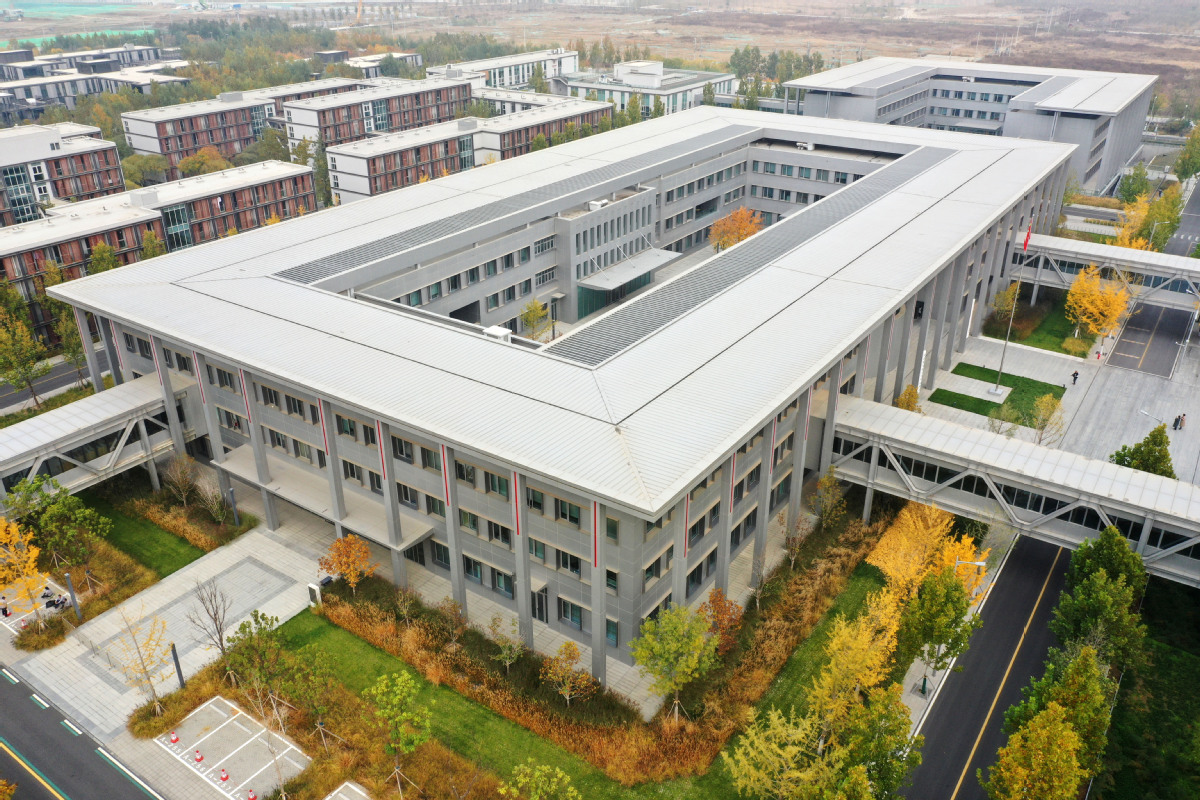
The integrated and synergetic development of Beijing, Tianjin and Hebei province has made major strides in recent years, a sign that the government's serious intention to enhance coordination of regional development and create a new growth pillar is succeeding.
Officials and experts expect coordinated development of the Beijing-Tianjin-Hebei region - a national strategy for economic momentum - to become a globally competitive and technologically innovative mega city cluster that can compete with other leading ones in the world.
They said the significance of the region lies in the fact that it will not only enhance regional economic efficiency and reduce the income gap in related areas, but it will also help fuel the growth of the entire Bohai Bay area, and even the whole nation.
Premier Li Keqiang highlighted the importance of regional development in the 2020 Government Work Report, saying the government will step up implementation of its regional development strategies.
According to the report, the government will move forward with the coordinated development of the Beijing-Tianjin-Hebei region.
Currently, the region's combined GDP accounts for nearly 10 percent of China's total, and its total population is more than 110 million - 8 percent of the whole country.
The grand development plan of the Beijing-Tianjin-Hebei region, mapped out by President Xi Jinping in 2014, aims to boost regional development and build it into a regional economic hub.
Six years later, considerable progress has been made and more projects aimed at boosting connectivity, economic and technological efficiency are planned for the future.
Based on the set goals, major breakthroughs and progress in transportation, industry, economy, urban development and public services in the coordinated region are to be achieved by this year.
Beijing has been striving to focus on sectors including science and technology, finance, culture, creative services and other innovative and emerging sectors. Beijing, which is the national center for politics, culture, international communication, as well as scientific and technological innovation - collectively known as "four centers" - wants to remove its noncapital functions and to focus on building the four centers to solve its big city malaise.
Cai Qi, Party secretary of Beijing, highlighted the importance of having a deeper understanding of the coordinated development strategy, saying Beijing is dedicated to removing its noncapital function and seeking new momentum to foster high-quality development in the region.
"Powered by the coordinated development plan, Beijing is able to solve its big city malaise, allocate resources on a large scale and foster high-quality development powered by a vast hinterland," Cai said during a meeting earlier this year.
A slate of key tasks in the main areas of Beijing-Tianjin-Hebei coordinated development are being accelerated. Beijing and its two neighboring areas are stepping up efforts to boost regional connectivity, and are taking a solid step toward building a world-class airport cluster. In terms of transit oriented development, the intercity traffic of the Beijing-Tianjin-Hebei region has developed rapidly with the establishment of the Beijing Daxing International Airport economic demonstration zone, the economic zone around the Winter Olympics and many others.
This year, the region will witness the implementation of several coordinated projects and more innovative projects and industrial upgrades are in the pipeline. The Beijing-Xiongan intercity railway, which will link the capital, Daxing Airport and Xiongan New Area in Hebei through a 30-minute train ride, is expected to start tests in September. The rail service is due to begin operations by the end of this year.
Another joint regional development lies in the growing investment from Beijing to Hebei and Tianjin, especially in the fields of technological and innovation-driven projects.
Last year, the business turnover concerning technology transfer contracts from Beijing to Hebei and Tianjin increased 24.4 percent to 528.28 billion yuan ($74.1 billion).




















