BRI is not revival of ancient China’s tributary system









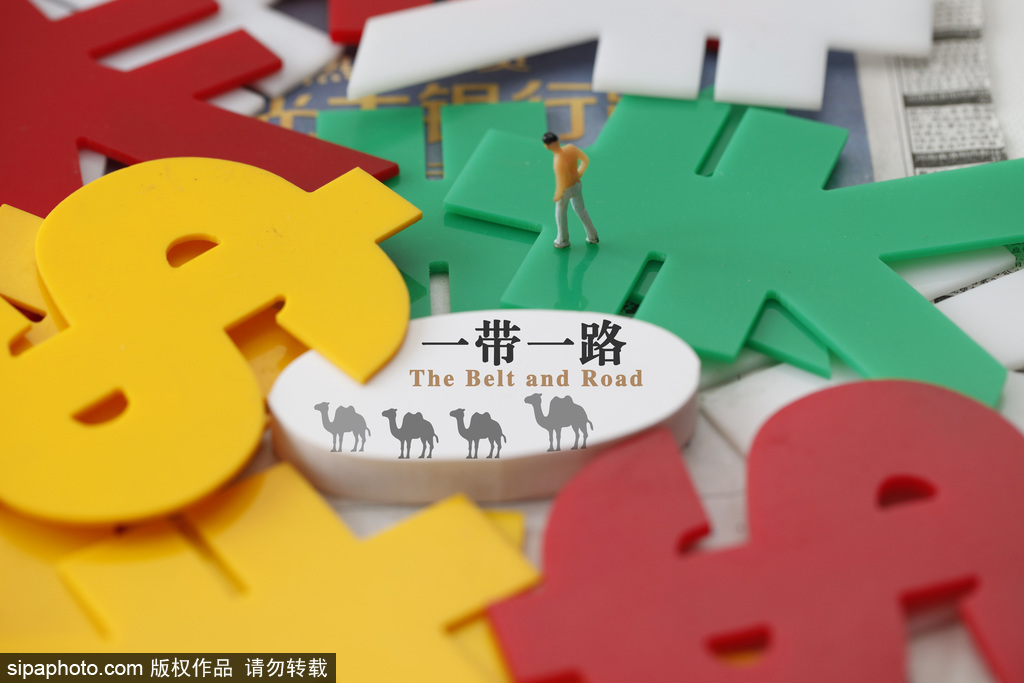
The Belt and Road Initiative (BRI) has grown rapidly into the most important global public in the new century. Having won the endorsement of 138 countries and 30 international organizations, more governments are now turning to the global connectivity program, hoping that it can help boost the world economy.
But as the BRI has been contributing to the fight against the pandemic, for example having aided Europe with countless life-saving medical supplies from China through the BRI-branded China-Europe freight trains, the British newspaper The Economist produced a very biased special report, composed of six articles, to strike a major disgrace upon the BRI.
The idea delivered in those articles is that China wants to revive the ancient tributary system through the BRI, and to ultimately regain its sphere of influence. With that idea, one may well foresee that China will confront, and even decouple itself from, the West. That idea, being so dangerous and wrong nevertheless, has been prevailing in the West for years, unfortunately. I must make a serious response by revealing the absurdity regarding the name and intention of the BRI, as represented in the special report, and tell how to best understand them.
First, the report wrongly explained the Chinese name of the program—Yidai Yilu (一帶一路). Given the full name — “Silk Road Economic Belt and 21st Century Maritime Silk Road” — being too long to remember, Yidai Yilu is merely a newly coined term for convenience of use. Literally meaning “one belt one road”, however, the term does not “imply balance, harmony, wholeness”, as the report claimed, when the report undertook to compare Yidai Yilu to such Chinese set phrases as Yifu Yiqi (one man one wife) and Yixin Yiyi (one heart one soul), which no wonder sounds bizarre to a Chinese ear, and is misleading to international audiences.
To be clear, the purpose of such comparison was to approve a Mr. Eyck Freymann’s claim in the report that the Chinese term evokes an image of China “going forth to encompass the world on land and sea, at once opening to the world and binding the world more closely to China”, surely echoing ancient China’s tributary system. I would say regretfully, that interpretation is overstretched at its best, and lunatic at its worst.
Second, regarding the English name change from the initial “One Belt One Road” to the current “Belt and Road Initiative”, the report said, such change was only to conceal “a sense of China’s return to historical greatness” from foreign audiences. Derived from Freymann’s bizarre interpretation above, that claimed sense of concealed superiority is illogical and purely self-made-up. After all, does any English native speaker believe that the four English words— “One Belt One Road”—convey anything threatening to the West, as the report warned, and thus, that the official English name “Belt and Road Initiative” is warranted?
Instead, a real reason for such change is that BRI is more accurate than OBOR in characterizing the program. The official English name respects the fact of multiple belts and roads under the umbrella of the program. For example, under the cap of the Belt alone, there are at least six grand economic corridors; and under the cap of Road, at least two routes reach across the Indian Ocean towards the Mediterranean and Africa, respectively, and a third towards South Pacific islands. And the number of belts and roads may grow as time goes by—the debut of the Polar Silk Road in 2017 and the Digital Silk Road in 2019 being the latest examples. Since the outbreak of COVID-19 pandemic, the Health Silk Road has become a new hit.
Third, the argument in The Economist’s special report about the BRI’s name in both Chinese and English as above, was consistent with the general theme of that report, i.e., the China-led BRI aimed to revive the ancient tributary system, where all other countries centered around China in an orderly hierarchy and one’s obligation depended on its relationship with China. It reflects a typical ignorance in the West about China’s approach towards the world order.
The nation’s true meaning and intention about the program may be reflected in the choice of “initiative” in the name of the BRI. The word “initiative” infers that the BRI is not pre-destined or self-contained. It conveys a sense of direction, but avoids dictating specifics. Such flexibility and openness as connoted in the name expresses a preferred approach of discussion and collaboration among participating nations on an equal footing. It surely contrasts the ancient tributary system, which featured inequality among states.
No doubt China is at the center of the BRI, sitting in the driver’s seat. But it acts as no hegemon to impose its will on others, which is not its cultural gene. Chinese multilateralism as reflected therein contrasts American multilateralism, whereby the US as a missionary society is ready to convert others.
Technically, the usual discourse “hub-and-spoke arrangements” to describe the BRI is misleading. The “hub-and-spoke” is simply bilateral, but the BRI is a complex and more than bilateral: it has a multilateral Belt and Road Forum, a trilateral agreement on the China-Mongolia-Russia Economic Corridor, an MOU signed with six international organizations under the BRI, and various multi-stakeholder green BRI initiatives, to name a few.
President Xi depicts the world as “a community of shared future for mankind”, which as a direction for mankind proves even more true during the global response to COVID-19. The BRI has been serving as a beacon shining for mankind still at this difficult moment. In contrast, Trump’s banner “America First”, at the expense of even the allies, has been degraded to “America Supremacy” (and domestically to “White Supremacy”, against the labeling of “the Chinese Virus” and the killing of George Floyd), having brought chaos home and abroad. To some extent, Trump’s world is even worse than the obsolete tributary system, where people and nations might still be able to expect their due positions in a set hierarchy.
Gu Bin is associate law professor at Beijing Foreign Studies University, and author of The Law and Governance of the Asian Infrastructure Investment Bank.