NYC commercial real estate faces uncertainty after COVID-19










The decision by Amazon, Facebook, Google and The New York Times to extend work-from-home policies during the COVID-19 pandemic raises a basic question. Will companies need less space when employees return to their desks?
The answer is likely to affect the commercial real estate market and perhaps the future of New York.
Those companies are major components of New York's reputation as a world media capital and as an emerging technology center. Their actions may set the tone for decisions in other sectors.
It's unclear how many employees will continue to work from home if the pandemic abates or a vaccine is developed.
If a significant number of employees continue to work remotely, companies might reduce the size of their offices to cut expenses, which could drive commercial rents down — and that could mean fewer new office towers are built, leading to cutbacks throughout the supply chain and leaner times for construction workers.
On the other hand, more office space might be needed to allow those who return to the office to spread out to maintain social distancing. That could mean many companies will retain all or most of their currently leased office space.
But it's unlikely the need to maintain social distancing would create demand for new offices since it's cheaper to have employees work from home, all things being equal.
Would companies be willing to pay prepandemic rents if fewer employees use the office, especially if vacancy rates climb forcing rents down as other enterprises cut back or leave New York?
The short answer: No one knows.
However, the experience of the 2007–09 recession caused by the collapse of the subprime mortgage market may provide a clue.
During that downturn, 3.3 percent of loans on commercial real estate, valued at billions of dollars, were written off, the US Federal Reserve reported.
The losses weighed on banks for years, and similar events may be repeated during the novel coronavirus pandemic as major retailers file for bankruptcy protection or simply refuse to pay rent.
Banks now carry commercial real estate loans valued at an estimated $2.38 trillion on their books, according to the website Trading Economics.
Moody's Analytics foresees a record nationwide office vacancy rate of 19.4 percent by the end of 2020, up from 16.8 percent last year — a jump of 15.5 percent.
If so, that might give tenants bargaining power to renegotiate current leases downward or to sign new leases for less money.
In a filing with the US Securities and Exchange Commission, Newmark Group, a New York-based commercial real estate company with operations worldwide and assets valued at about $61.8 billion, noted dryly: "We expect our leasing and capital markets volumes to be severely (and) negatively impacted by COVID-19 in the near term."
The company said it allows employees to work from home and seeks to negotiate with clients.
In a report, Newmark, said: "Asset owners eager to boost occupancy may find that those tenants are willing to engage at the right price."
So far, there hasn't been a stampede of landlords asking banks to restructure loans as tenants fall behind on their rent.
Optimistically, fallout from the current coronavirus pandemic may just be seen as part of the usual boom-or-bust cycle in commercial real estate.
A similar bust occurred after the terror attacks of September 11, 2001, which killed nearly 3,000 people in the US, including 2,606 in the World Trade Center in New York. Many fled Manhattan after the attacks, but the city recovered and flourished.
A survey of the commercial real estate companies by Property Shark found that about a third of owners reported a complete shutdown during the pandemic, and about 20 percent believe the pandemic will affect business into 2021.
Only 27 percent of Property Shark's respondents reported an uptick in demand.
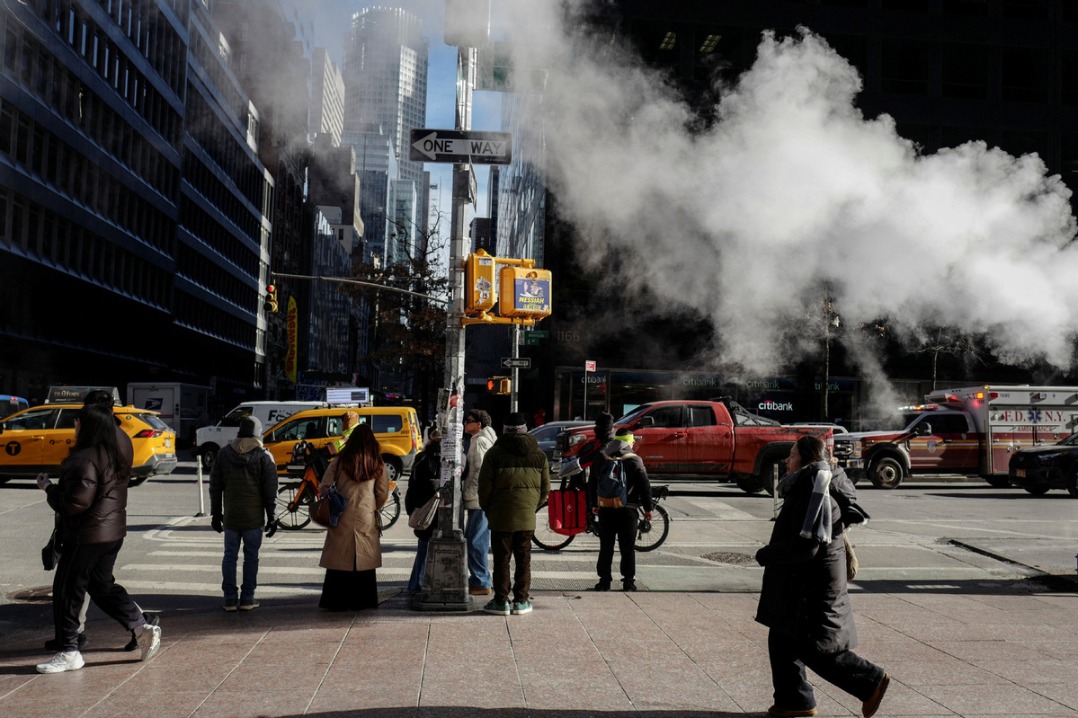
Empty offices could lead to a sharp decline in retail trade and restaurants, and that may create a downward spiral. Deserted streets are likely to translate into fewer people at restaurants and stores, especially if the city is considered unsafe. That would gut sales and eventually affect commercial rents.
The trend to online shopping accelerated during the pandemic, further undercutting the market for retail space.
But if the economy is resilient, the current downturn may not foreshadow a slide into the abyss.
Before the last recession, the US Census Bureau said there were about 549,000 restaurants and bars in the US. By 2010, as the industry struggled during the downturn, the number had declined to 519,000.
When assessing the future, most assume current dislocations can be overcome as the pandemic recedes or a vaccine is introduced.
But what if the assumption is wrong? What if the virus, or a similar strain, becomes a permanent feature much like the annual flu season?
In that case, it's hard to imagine the US being on permanent lockdown. It's also difficult to believe that New York would fully recover because the wide-open spaces of the Western and Midwestern states would look safer and cheaper.
"It's not too soon for sober reflection and debate about such matters," said Ted Galen Carpenter, a senior fellow in security studies at the Washington-based Cato Institute, in a research report.
"Unfortunately, the current atmosphere increasingly exhibits the characteristics of a collective panic and this is always a poor basis for intelligent policy decisions."