



New pathways for global talent exchange









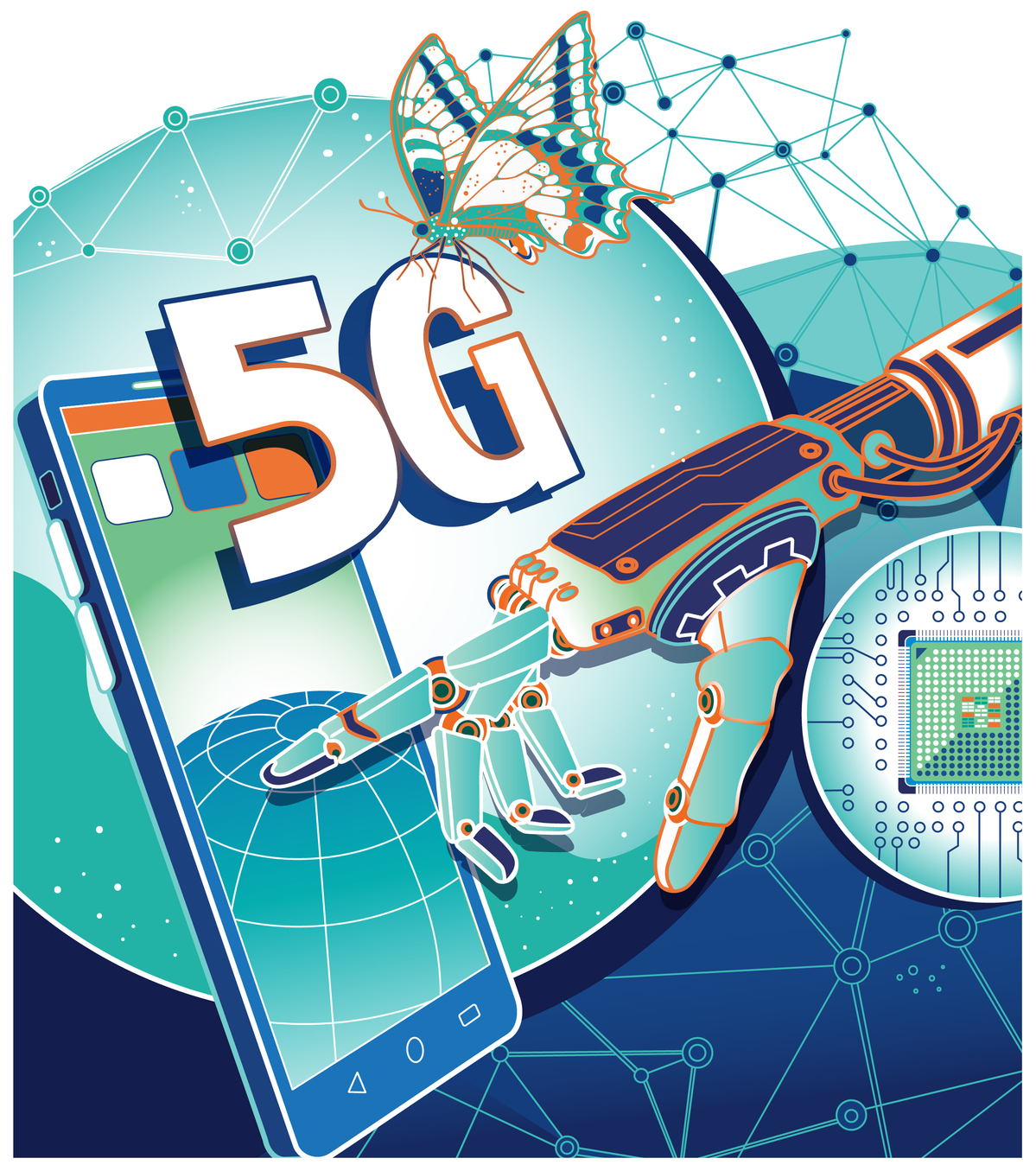
The novel coronavirus pandemic has changed the international political landscape and put global scientific and technological cooperation and talent exchange to the test. The pandemic has had far-reaching impacts on global economic and social activities. Yet it has played the catalyst in the rise of digital economy, represented by cloud computing, artificial intelligence (AI), big data, internet of things (IoT) and 5G technology.
The digital economy, in turn, has promoted the digitalization of industries while helping modernize social governance and facilitating the development of smart society. It has also promoted the digital transformation of global scientific and technological cooperation and talent exchange, for instance, through online and offline integration. And remote communication, virtual scientific research organizations and remote laboratories are becoming the new normal of global talent exchange and cooperation.
Big data, AI, blockchain and other information technologies help institutions and government departments to timely understand the flow of high-level talents, improve the level, quality and efficiency of talent introduction, and highlight the speed and precision brought about by technology empowerment. And talent data acts as "combustion booster" driving innovation and development.
Traditional talent exchange and cooperation are subject to management and technical means. The widespread application of new generation IT enables information to cross time and space barriers, accelerates data flow, makes information acquisition and sharing more efficient and effective, and enhances talent exchange and scientific and technological cooperation.
New generation IT also provides new ideas for building an open and shared database of scientific and technological talents and industry. Based on the concept of distributed cloud storage, industrial databases are built so they can help match the new generation of scientific and technological talents with national key technology needs, the development direction of strategic emerging industries and local industries' demands. Algorithms make the database an important decision-making reference.
Big data has helped make epidemic prevention and control work more targeted and effective. With the integrated development of digitalization, networking and intelligence, the online-offline combination will open up a new path for global talent cooperation. Online cooperation uses 5G, digital collaborative platforms and other "non-contact" communication tools, and provides information on talent recruitment-in which the internet promotes activities such as material screening, personnel interview, project negotiation, and financial support and cooperation agreements and their execution and evaluation. And offline cooperation is characterized by face-to-face negotiation among other things to address online problems.
AI, 5G, virtual reality and similar technologies, which make international cooperation and talent introduction a reality, are not limited to one format. They are immersive, interactive and personalized. And effective cooperation methods make people feel that "experts" are always at hand, and enables scientific and technological talents to cross national boundaries to reach any corner of the world in real time.
Accurate online docking and rapid offline promotion greatly improve the efficiency of investing in scientific and technological talents and reduce the cost of global scientific and technological cooperation. Digital technology reduces the costs of data retrieval, sharing and analysis.
Further, most of the innovation activities today involve digital technology. Digitalization accelerates the rapid flow and sharing of data, changes knowledge creation and dissemination methods, and propels innovation activities. Digital and information technology has helped enhance the degree of collaboration, while boosting innovation activities and interactions among scientific research entities.
Digitalization, networking and intellectualization have brought about disruptive changes in the way people communicate. Similar changes will take place in knowledge flows and talent exchanges. That's why there is a need to set up more remote laboratories and virtual scientific research organizations, and build international scientific and technological cooperation and talent exchange platforms by applying 5G, AI, big data, IoT, cloud computing, blockchain and other new technologies.
In terms of concept, international scientific and technological cooperation and talent exchange should be guided by the principles of safeguarding human health, fighting climate change, protecting the environment and using science and technology to alleviate poverty.
As for laboratory and platform construction and cooperation, we should build new platforms-perhaps start by establishing different types of biomedical and big health digital simulation laboratories, and learn from the experiences of remote consultation and remote surgery in the medical field to develop a global platform for remote laboratories.
Market-oriented operations should be used to open basic services and scientific experiments to global scientists. There is also a need to introduce standardized management and support policies, including financial support for key projects, and help build an "achievement-sharing" platform according to international law, and clearly define intellectual property rights.
Every major global crisis has been followed by global scientific and technology cooperation on a larger scale. The more serious the crisis, the greater the degree of exchanges and cooperation has been. If the post-pandemic period witnesses wider and better global cooperation, global scientific and technological cooperation and talent exchange will certainly get a big boost.
The author is a senior researcher at the China International Talent Exchange Foundation. The views don't necessarily reflect those of China Daily.





