Govts, carmakers to ease charging for electric cars










Mileage no longer No 1 concern for potential new energy customers
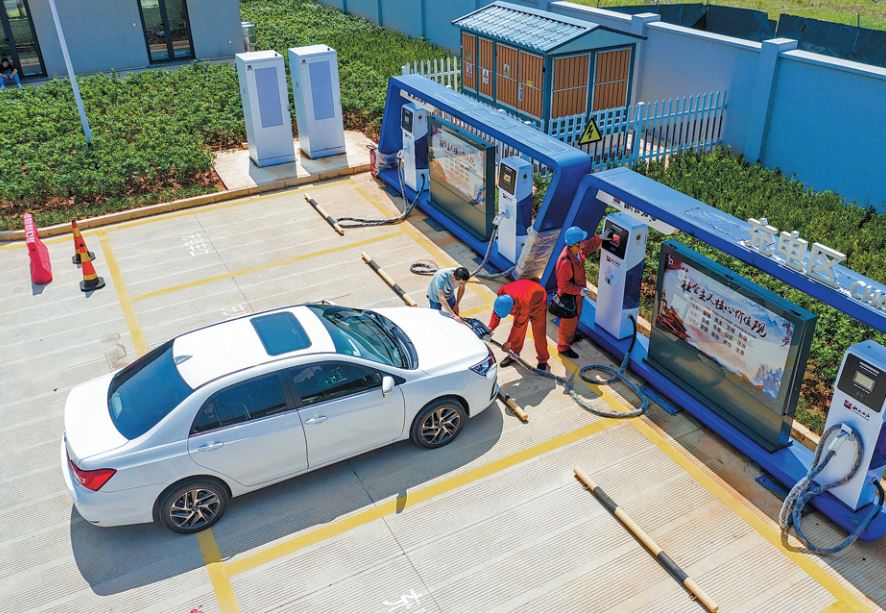
Authorities and carmakers in China are stepping up efforts to make it easier and faster to charge electric vehicles, as charging convenience and time is dwarfing mileage anxiety as the top concern for potential buyers.
Last week, China's Ministry of Transport issued a document, saying it will encourage local governments to build fast-charging facilities in rest areas along the country's major expressways.
This is one of the latest moves from the central government to bolster infrastructure in the emerging industry. Earlier this year, building a better charging network was listed as part of the nation's new infrastructure initiative and included in the State Council's Government Work Report.
China already has the world's largest charging network for electric vehicles and plug-in hybrids.
By the end of June, there were 1.32 million charging pillars in the country, of which 558,000 were for public use, according to the National Energy Administration. The administration said it is working on a plan to expand the network.
Such moves are essential, according to carmakers and users. Despite the number, more than three vehicles have to share one charging pillar in the country.
Stephan Woellenstein, CEO of Volkswagen Group China, said current electric cars in the Chinese market have an average range from 400 to 600 kilometers, which is similar to gasoline vehicles. He said the inadequate charging network and slow charging are becoming major concerns that dissuade some potential buyers.
Volkswagen is partnering with local Chinese companies to help solve the problem. Earlier this year, the German carmaker announced a plan to produce flexible charging stations in China.
Due to compact dimensions, charging stations could be set up almost anywhere where there would be a need or where no charging infrastructure is yet available, according to Volkswagen.
The flexible charging points could also be turned into fixed charging points when connected to the low voltage grid. According to Volkswagen, this would require less effort and cost compared to permanently installed quick charging points.
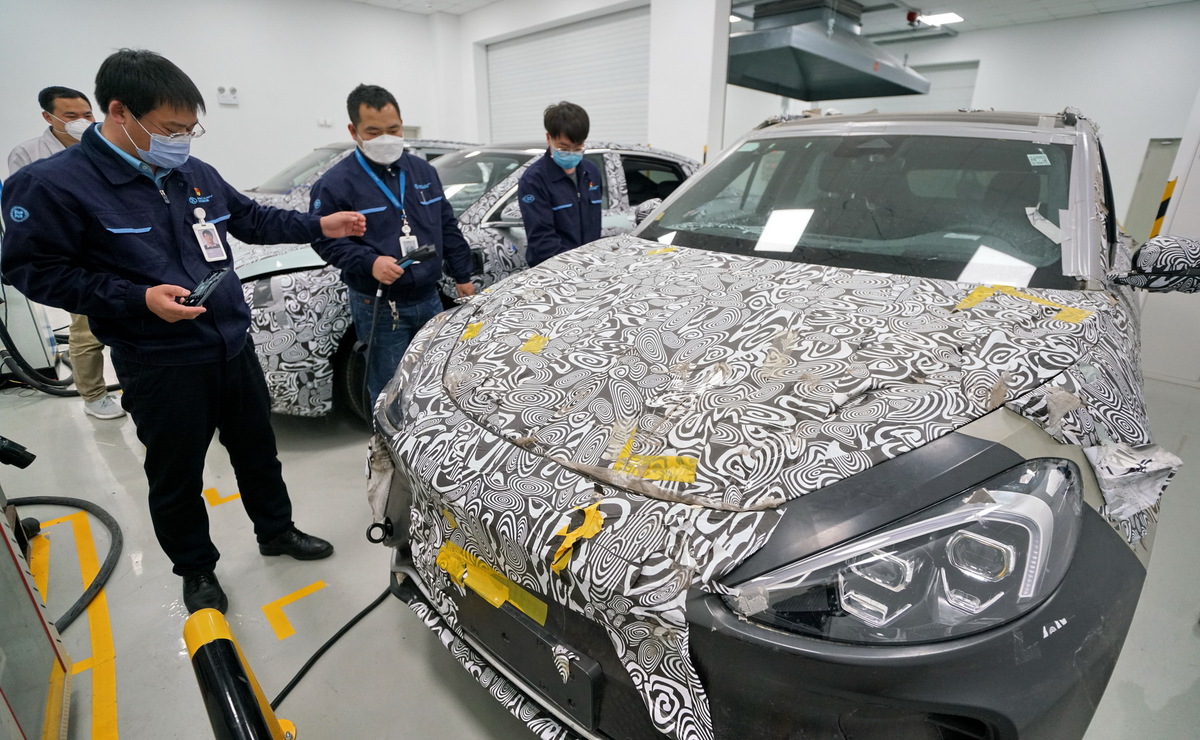
In the second half of 2019, Volkswagen expanded its joint ventures with FAW, JAC Motors and Star Charge, which covers development and production of "wallbox" chargers and charging pillars.
US electric carmaker Tesla is updating its charging network too, with the first supercharger version 3 in Beijing put into use last week. It is the third of its kind in the Chinese mainland.
The supercharger supports peak rates of up to 250 kW per car. At this rate, a Model 3 sedan can recover up to 200 km of charge in 15 minutes.
"Combined with other improvements, V3 Supercharging will ultimately cut the amount of time customers spend charging by an average of 50 percent, as modeled on our fleet data," said Tesla when announcing the new charger in 2019.
Tesla has a goal to add 4,000 superchargers including V3 ones this year into its charging network in China, which is double the figure of those built over the past five years combined.
Mercedes-Benz is working with Chinese battery maker CATL to cut charging times.
The German premium carmaker said for its EQS sedan, which will be delivered in 2021, the development goal is a range of more than 700 km and a reducing by half of the time it takes to charge compared to current models.
Besides charging pillars, some Chinese carmakers including BJEV and Nio are promoting battery swap technology.
Statistics from the Ministry and Information Technology show that China had 449 battery swap stations by the end of June this year across the country. Battery swapping will help extend the life of batteries, enhance safety and lower costs for electric car buyers, said Xin Guobin, a vice-minister of industry and information technology, at a news conference in July. He added that the technology will be piloted in regions including Beijing and Hainan province.
At BJEV's battery swap stations, vehicles can get their empty batteries replaced by fully-charged ones within 90 seconds.
The company is also planning to build 100 battery swap stations in the second half of 2020, in cities including Beijing and Xiamen in Fujian province, bringing its total to 300.
BJEV inked a deal with State Grid EV Service last month, and their battery swap stations have started operations in Jinan and Qingdao in Shandong province.