



Boosting service consumption key to recovery









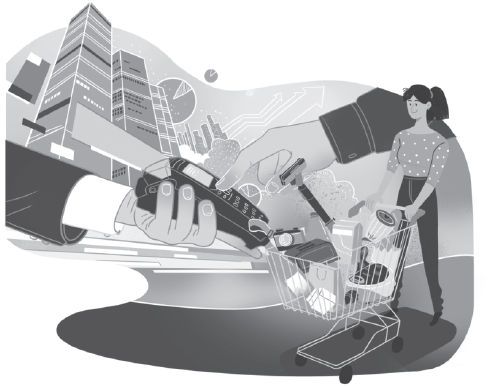
China's economy has recovered to a large extent in the second quarter of the year, as demonstrated by its 3.2 percent growth year-on-year, exhibiting its resilience. But the major factor driving the economic recovery is real estate and infrastructure investment, while consumption, which accounted for more than half of China's GDP, is still in negative growth territory.
The key to achieve all-round recovery therefore is to promote the growth of consumption.
Consumption includes the consumption of individuals, enterprises and the government. Due to the novel coronavirus epidemic, however, the government has reduced its administrative expenditure, although its spending on medical supplies and treatment has increased. To further coordinate epidemic prevention and control work while expanding consumption, the authorities should focus more on the potential of individual consumption.
Individual consumption could be divided into consumption of goods such as purchasing food and clothes, and service consumption, that is, spending on education, tourism and travel, entertainment and dining. But since service consumption involves physical contact, it has sharply declined due to the pandemic.
In the second quarter, Chinese residents' expenditure on services declined to 45.1 percent of the total from 50.2 percent in 2019, especially on education, cultural programs and related services.
The government has been making more efforts to boost service consumption, for example, by implementing stricter measures to prevent new outbreaks.
As a matter of fact, since mid-March, restaurants in many areas have resumed operations. Also, the Ministry of Culture and Tourism has announced the resumption of trans-provincial group tours-and on July 14, it increased the number of visitors to tourist spots from 30 percent to 50 percent. The resumption of cross-provincial tourism, in particular, will boost the recovery of the transportation and hospitality sectors.
Besides, cinemas in many low epidemic-risk areas opened on July 20, although they have to restrict the size of the audience.
To strike a balance between measures to contain the epidemic and expand consumption, we need to judge the actual epidemic situation. In fact, China has divided zones into low-, medium-and high-risk areas. To expedite the recovery of the service industry, the authorities also need to accurately identify middle-and high-risk areas to narrow the range of areas where epidemic-control measures are different, in order to further promote production and boost consumption.
Increasing consumption should be the top priority of low-risk regions. And strict epidemic prevention and control measures will definitely reduce service consumption, because availing of services means social contacts that come with contagion risks. There is a need therefore to dynamically balance the two goals of controlling the epidemic and increasing consumption, and to implement different measures in different areas based on the actual epidemic situation there.
Local authorities have been held responsible for any outbreaks and are obliged to contain them in the areas under their jurisdiction, which shows the central government's determination to improve prevention and control measures. But too strict a prevention and control policy could thwart the authorities' efforts to increase consumption.
True, China has largely contained the virus at home. Still, new infections could break out due to accidental factors. Hence, people should not panic and start blaming the local authorities for new clusters of infections, especially if they are quickly controlled.
The authorities have eased some of the prevention and control measures for the catering and tourism industries, but the film industry still has to abide by strict anti-epidemic rules. For instance, the size of the audience in a cinema should be limited to 30 percent to 50 percent, and theaters have to reduce daily screening time by half.
Moreover, the sale of snacks and beverages are still forbidden in cinema complexes, meaning food retail is still restricted. These restrictions have sharply reduced the film industry's revenue. Perhaps it's time authorities considered further easing the restrictions on cinemas, so as to promote the recovery of the film industry, boost employment and increase consumption.
The author is a professor at the School of Economics, Renmin University of China. The views don't necessarily represent those of China Daily.


Today's Top News
- Need for reshaping academic structure
- Shared Journey: Chinese new energy vehicles in Europe: competition or co-creation?
- Deep sea needs down-to-earth scientific research
- Deeper opening-up promised for steady growth
- China to rebalance growth with domestic demand boost
- Consultative suggestions provide policymakers with essential inputs to finalize five-year plan





