



Support network









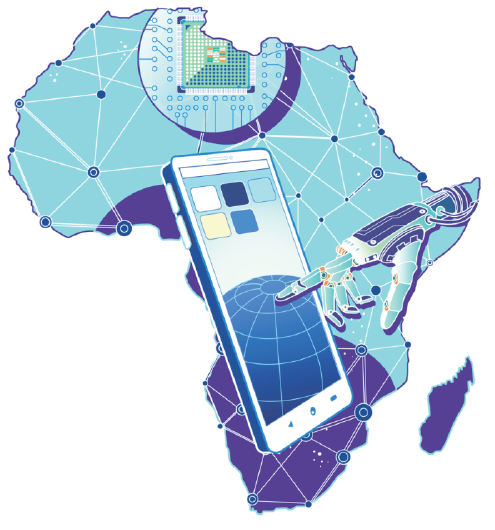
Huawei will be able to ride out the storm having won the approval of developing markets
The recent unreasonable attacks on Huawei by the United States remind me of my trips to Africa, once in 2014 and once in 2017. Whether it was in North Africa, in Egypt and Morocco, or East Africa in Ethiopia and Kenya, or West Africa in Mauritania and Senegal, two Chinese companies were always there-Huawei and ZTE. In particular, Huawei has witnessed fast expansion on the continent. Back in 2014, its main business was helping operators build base stations, but in 2017, Huawei cellphones were being sold everywhere in stores.
Huawei has built a solid foundation in Africa with its price advantage. By doing so, it has not only achieved development for the company, but also brought real benefits to African consumers.
Such a trading process is mutually beneficial. Huawei offers Africa cost-effective products, and Africa offers Huawei an enormous market in return. It's fair to say that it is with the help of developing countries that Huawei has achieved its growth. Huawei's products are generally not warmly received in developed countries. Consumers in European and US markets have been less willing to accept Huawei than those in Africa, Southeast Asia, India, Latin America, where consumers have higher demands for cost-efficiency.
Only after getting the approval of developing counties and enough experience for the international market, could Huawei muster the capacity for continuous R&D, and thus have the chance to compete with Nokia and Ericsson in technology and eventually convince consumers with its quality and expand into the markets of Europe, the United States, Japan and other developed countries.
It needs to be reiterated here that Huawei and Africa enjoy reciprocal benefits. On the one hand, Africa is supplied with inexpensive and reliable products, and on the other Huawei has gained a huge enough market to weather the storm it has encountered.
With the help of Huawei, the internet and telecommunications have developed rapidly in Africa. Despite the poor infrastructure and level of destitution, I marveled at the telecom equipment in Africa, some of which is even more sophisticated than that of Asian countries. It is the development of communication technology that enables Africa to have better access to the world.
What's gratifying about Huawei is that it attaches equal importance to Africa as to Europe because as a company from a developing country, it empathizes with the shortages and weaknesses of Africa. Its rules stipulate that promotion of the management requires overseas working experience, which is mostly gained in Africa, the Middle East and Latin America instead of developed countries. By so doing, the management and those who want to become a manager can understand that the world is not represented merely by Europe and the US.
Such practice has nurtured among most Huawei executives a global vision, which is both what China needs most in the current stage and what the world requires of China, because developing countries do not want a fast-developing China to forget and leave behind its less-developed friends.
Today's Huawei has become a global telecom giant with a considerable share in the European mainstream market with the boost it has received from developing countries.
A friend of mine was engaged in building the Huawei US team and they did a lot of work in preparing to enter the US market with the hope of winning the approval of US consumers through market competition. At that time it was believed that as the primary promoter of market competition, the US would embrace this dynamic Chinese company. However, after the US government's anti-market operations to ban Huawei from the US market and to sabotage its competitiveness, Huawei has had to leave the US market.
As the US puts more pressure on European countries, Huawei's share in Europe is declining as well. Will Huawei stand such a strong combination blow from the US and Europe?
I believe it will. Besides its own technological and competitive strengths, Huawei has a solid base.
It not only has China as its home market, but also the whole developing world to depend upon. This is easy to ignore because people usually have the opinion that the European and US markets decide the fate of a company. However, what Huawei and ZTE have achieved in their early years have shown that a company from a developing country must first and foremost win the approval of developing markets, based on which it can have the opportunity to go into developed countries. It's not just the story of China. Auto and electric companies from Japan and the Republic of Korea followed the same path of gaining access to developing markets such as China, Southeast Asia, Indian and Africa first and then growing into developed countries.
Even though the capacity of each individual developing market is limited, the overall market combined is huge. On the basis of reciprocity and mutual-benefit, Huawei has gained huge support and it can wait for the next opportunity. As long as these markets are there, Huawei will eventually prevail over the current crisis.
The great importance attached by Chinese companies to Africa serves as a testament to the close bond between China and Africa. Such a bond makes it possible for both to achieve development on the basis of mutual benefit.
I could see Chinese construction companies or road-building companies in virtually every African country when I traveled there. At a time when infrastructure in Africa still lags behind, a well-paved road could help a whole region achieve leapfrog development and a good company can provide a subsistence solution for many people. These things are what China excels in after its rapid growth in the past several decades. So judging from this, I believe I will see more Chinese brands and companies as well as a more modernized Africa next time I set foot on the continent.
The writer is the author of Africa: A Journey Through Two Hundred Years. The author contributed this article to China Watch, a think tank powered by China Daily. The views do not necessarily reflect those of China Daily.
If you have a specific expertise and would like to contribute to China Daily, please contact us at opinion@chinadaily.com.cn , and comment@chinadaily.com.cn


















