



Small enterprises stepping up digital transformation efforts
Companies embrace new development strategies to sustain growth









While the outbreak of the COVID-19 pandemic has dealt a heavy blow to business operations of Chinese small and medium-sized enterprises, there is also another side to the coin.
With traditional offline businesses stagnant and online business activities flourishing in the pandemic era, more and more Chinese SMEs are speeding up digital transformation in an effort to adapt to the "new normal". The global public health crisis has hit the fast-forward button for smaller businesses in the country to embrace digital changes that are crucial for their long-term development.
EEKA Fashion is one of the early movers in the going-digital wave. The Shenzhen-based fashion brand group is exploring new operating models to enhance its efficiency through digital means.
"We are making efforts to promote research and development digitalization," said Wu Qingye, executive vice-president of EEKA Fashion.
"Traditional business models in the apparel industry have customers buy clothes that we produce. If we use digital tools to help us with R&D, we can change that model and produce clothes based on the needs and preferences of customers. This way, the problem of excess inventory can be eased."
Wu said the quick move to go-digital has helped the company cushion the economic shock brought about by COVID-19.
"During the novel coronavirus outbreak, all our physical shops were closed. But because of the launch of our omnichannel online store on WeChat in mid-January, we were able to generate 70 percent of the revenue of a year earlier in February-about 300 million yuan ($43.8 million) for the month," he said.
EEKA Fashion is just one example of SMEs' intensifying efforts in digital transformation in Shenzhen. The South China metropolis, which is known for its private sector vitality, is home to more than 2.15 million SMEs, which account for over 99 percent of its total number of enterprises.
IKAS Industries (Guangdong) Co Ltd, which specializes in providing intelligent solutions to market players in the semiconductor sector for technology upgrades, is also jumping on the digitalization bandwagon.
"There is a pressing need for us to enhance the level of digitalization in our operations. On one hand, the semiconductor enterprises we serve are running around the clock. That requires us to have quick response capacity. On the other hand, we are operating a number of technical support centers in various cities across the country and overseas. How to manage them well is a challenge for an SME like us," said Li Jie, chief executive officer of the Shenzhen-based company.
"Digitalization can help us develop and strengthen those capabilities," Li said.
He added that a big part of the company's business has already been digitalized, including conferencing, solution development processes and customer relationship management.
"We are also thinking about in what aspects we can make greater efforts. We are now 40-50 percent fully digitalized and there is always room for improvement," Li said.
Private enterprises, of which most are SMEs, play an important role in driving China's economic growth. They generate more than 60 percent of the country's gross domestic product and create over 80 percent of total jobs.
The central government highlighted the importance of ensuring that focus is placed on "six priorities"-employment, people's livelihoods, development of market entities, food and energy security, stable operation of industrial and supply chains and smooth functioning at the community level of society-and that stability is maintained in six areas of employment, finance, foreign trade, foreign investment, domestic investment and market expectations, said Xiang Songzuo, former chief economist at the Agricultural Bank of China.
"Only with sound development of SMEs can we achieve these tasks,"Xiang said, adding that energizing SMEs is key to promoting the country's economic recovery and development.
Although there is a growing awareness of digitalization among Chinese SMEs, most of them are still in the early age of development and face a number of hurdles.
The China Electronics Standardization Institute said nearly 90 percent of the SMEs surveyed are in the process of exploring how to digitalize their businesses; and 8 percent are in the process of transformation, making digital changes to their core equipment and data. Only 3 percent are fully applying digital tools in their business.
The report based its findings on a survey of 2,608 SMEs in Jiangsu, Shandong, Zhejiang and Guangdong provinces along with other regions where a large number of SMEs are based.
The lack of talent and relatively weak capabilities in information technology are believed to be the major challenges facing smaller businesses to carry out digital transformation. What adds to their difficulty are the high costs involved, it said.
Zhang Yi, chief executive and chief analyst of online consulting firm iiMedia Research, said that the government should play a more active role in helping SMEs make the change.
"The government can launch various training sessions and introduce third-party organizations to provide related services for SMEs," he said.
"It can also introduce some role models in digital transformation and make them play a leading role in helping others make the move."
With robust demand for digitalization among SMEs, the services market for such transformations has grown at a fast rate in recent years. While its size stood at roughly 18 billion yuan in 2015, it expanded to over 100 billion in 2019, according to consulting firm iResearch. It is expected that the market will grow to over 330 billion yuan by 2022.
The novel coronavirus outbreak has accelerated the pace of Chinese SMEs to go digital and service providers that offer such services as smart payment, online financing, digital marketing and digital management to SMEs are expected to see rapid development, iResearch said.
Spotting the opportunities, leading digital services providers are ramping up efforts to grab a piece of the pie in the booming market.
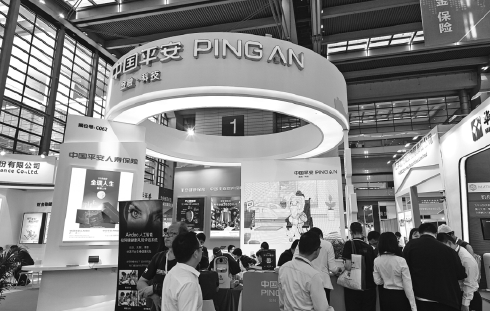
Ping An Smart City, a unit of insurance giant Ping An Insurance (Group) Company of China Ltd, focuses on smart city projects and has launched five online platforms to energize SMEs in their digital transformations.
For example, it has developed an online vocational education platform in which over 200,000 courses are on offer to help SMEs reduce training costs and enhance training efficiency. An online law-related knowledge-sharing platform has also been set up to help SMEs better deal with legal matters.
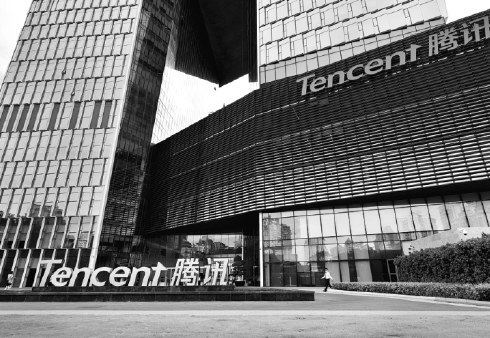
Tencent Cloud, the cloud computing arm of internet behemoth Tencent Holdings Ltd, said it will invest hundreds of millions of yuan within the next three years to help 300,000 Chinese SMEs grow.
It launched "Star Park Plan" in July, providing marketing, technical, financial and other support for SMEs in high-tech industrial parks across the country.
"We hope to export our resources and capabilities through this program to serve as a helper in SMEs' digitalization processes and support their innovation," Wu Qisheng, vice-president of Tencent Cloud, said in an earlier interview.
Huawei Technologies Co, meanwhile, has initiated a plan to promote digital development of SMEs in Shenzhen.
"We believe that 77 percent of SMEs in the country will use artificial intelligence in their business by 2025. The core objective of going digital is to increase productivity and revenue, and enhance competitiveness in the global market," said Chen Bin, vice-president of Huawei China region government and enterprise business group.
He said about 10,000 SMEs in Shenzhen are using Huawei's cloud services this year through the plan and the number is expected to reach 200,000, or even double that figure, within the next two or three years.


Today's Top News
- Highlights of NPC press conference on China's diplomacy
- Need for reshaping academic structure
- Shared Journey: Chinese new energy vehicles in Europe: competition or co-creation?
- Deep sea needs down-to-earth scientific research
- Deeper opening-up promised for steady growth
- China to rebalance growth with domestic demand boost





