



Lakeside villagers make move for better









Tough decision
"I was born and raised here, as were my father and grandfather," Lu said, explaining the family's close ties to the land.
More important, he had doubts about the future, frequently asking, "What if I cannot earn a living after being relocated?
"I'm stubborn. I had a good life, so why change? I was earning more money than before, so if I moved, would life be better?"
Officials responsible for the relocation campaign visited Lu's home, underlining the importance of environmental protection in an attempt to persuade him to move. However, Lu feared he would fall on hard times again and remained haunted by the prospect of an uncertain future.
Zhang Mingguo, a village official and distant relation of Lu's, who took part in relocation assignment work, said, "At family gatherings, he refused to talk to me, because it was impossible to avoid the subject."
However, after some villagers who agreed to move built hotels in the township and started to make money from them, Lu saw the benefits and began to question his decision to stay put.
Local officials often visited him and he realized the importance of protecting the environment and the need for change.
He spoke to his homestay clients, some of whom persuaded him to move.
"They were widely traveled and had foresight. One client with a degree told me that if I refused to move and continued to run the business, I would fail in the long run," Lu said.
The client told Lu the outside world treasured clean water and a good environment, but if the villagers continued to live by the lakes and discharge domestic waste into the wetland, the lakes and forests would perish and no one would benefit.
Lu finally agreed to move in 2015, two years after the campaign started. He is now proud that he can afford to send his children to college and that his son-in-law is the first graduate student in the village.
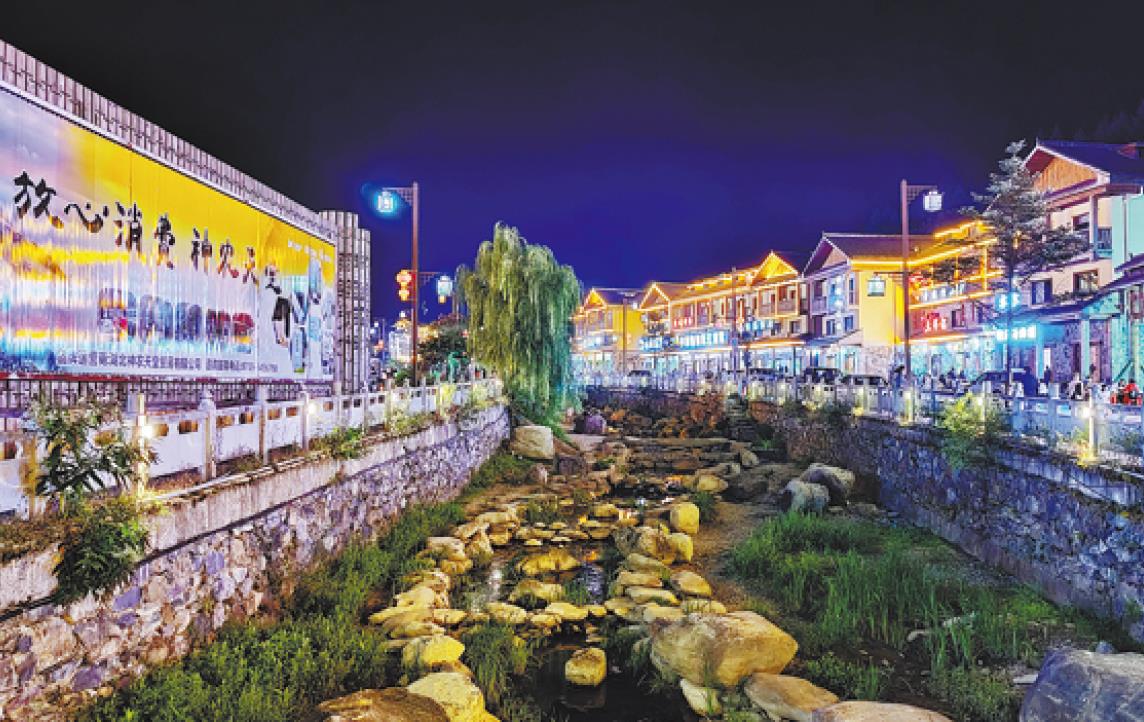
By this month, more than 460 families had moved to the township, and the remaining dozen will do so by the end of this year.
Difficult work
The relocation was not only difficult for villagers, but also for local officials, as Lu was not the sole resident who initially refused to move.
Liu Yong, president of Dajiuhu township people's congress, who led the relocation campaign, said, "Without the forests, their land and the traditional farming life they were familiar with, villagers were fearful about the future.
"Many families were reluctant to make decisions. They waited to see how others were doing and what their neighbors were asking for."
Zhang, the village official, said it was hard to strike a balance between the villagers' demands and the standards set by the authorities.
"Some families asked for an unreasonable amount of compensation, for example 1 million yuan, which was impossible under the relocation standards," Zhang said.
In one such case, he and colleagues knocked on a villager's door every day for two months and spoke to the man's friends and relatives. The family finally agreed to move on the condition that the villager and his wife could work as sanitation workers at the park shuttle transfer center.
To better implement the campaign, the local government set up a working committee to handle the relocation work. The committee comprised villagers with family ties or a strong social network in the local community.
Officials frequently visited villagers to explain the need to protect the environment and to lead sustainable lives, but even the residents' friends and relatives sometimes shut their doors in the bureaucrats' faces.
Negotiations were carried out and compensation was offered. Villagers sold their assets, including their houses and land, to the government.
Professional assessors calculated villagers' assets and drew up a plan for compensation, which was paid by the authorities.
For example, 1 hectare of farmland was valued at 300,000 yuan and 1 hectare of forest at 3,000 yuan. While the State owned land and forests, local farmers had the right to use them for agriculture and to breed livestock.
Families who received less than 300,000 yuan in compensation, could apply for low-interest bank loans.
Zhang Kun, head of Dajiuhu township, said it costs about 300,000 yuan to construct a three-story building in the town."A standard was set for locals to have at least enough money to build a house and start a new life in the tourism business," Zhang added.





- PLA Daily: China resolute in winning anti-graft war
- China unveils regulations on Party organization elections within armed forces
- Pick your own cherished flowers in downtown Shanghai
- Liangjiang New Area of Chongqing inaugurated
- 17 rescued Filipino crew members transferred
- Team of Chinese, US scientists identifies key tumor cell state driving cancer growth, drug resistance














