UK to conduct COVID-19 human challenge trials









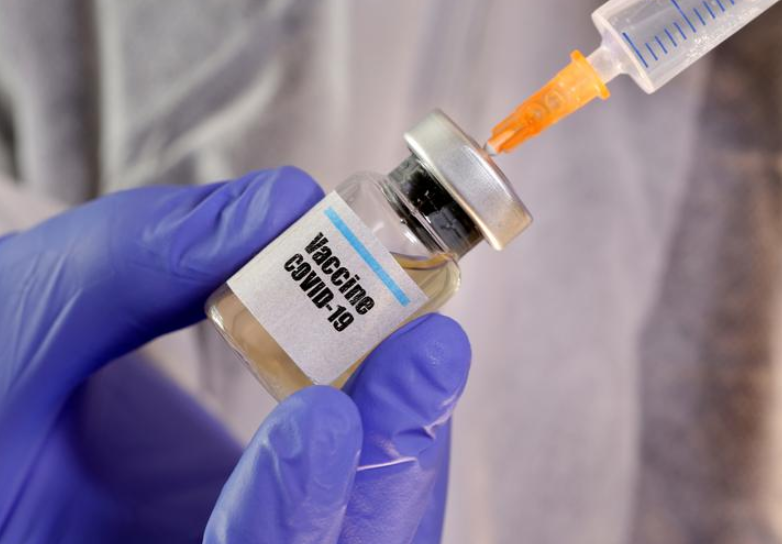
Paid volunteers will be intentionally exposed to the novel coronavirus in the United Kingdom as part of a controversial method of testing potential COVID-19 vaccines.
The UK government has signed a contract with London-based laboratory hVIVO to carry out the so-called human challenge trials, which are scheduled to commence in 2021, following regulatory and ethical approval.
The first part of the process will involve a characterization study in which researchers will identify the most appropriate dose of the virus to give volunteers, who will receive paid compensation.
After this stage is complete, new groups of volunteers will be quarantined at the Royal Free Hospital specialist research unit in London to take part in the vaccine trials. Half of the participants will be given a candidate COVID-19 vaccine, the other half will get a placebo, and all of them will then be exposed to the novel coronavirus via a nasal spray.
Christopher Chiu, an infectious disease doctor at Imperial College London, will oversee the initial characterization trial.
"Human challenge studies can increase our understanding of COVID-19 in unique ways and accelerate development of the many potential new COVID-19 treatments and vaccines," said Chiu.
The initial contract between hVIVO and the government could be worth up to 10 million pounds ($13 million), depending on the number of volunteers taking part in the study.
UK Business Secretary Alok Sharma said the "ground-breaking" study could "ultimately help in beginning our return to normal life".
Human challenge trials, which generally involve around 100 volunteers, offer a swift and efficient way to test if a vaccine works or not, as researchers can guarantee that participants in the study have come into contact with a pathogen. Traditional field trials for vaccines have to be much larger, usually involving tens of thousands of people, and they can be delayed if public health measures including lockdowns are in place because they interrupt the spread of disease through a population.
"This is an important extra tool to make available in the world during this pandemic to try and help fast-track vaccines," Andrew Catchpole, chief scientist at hVIVO, told China Daily. "Governments around the world are doing everything they can to quash the disease for obvious reasons, and the more successful they are at that, the harder it is to test vaccines, because there is not enough disease going round the community.
"That's where challenge studies have a very significant benefit. You need less people, and you can confirm efficacy in potentially as little as two months, whereas field trials can take many months."
But challenge trials also pose a number of ethical concerns, and are usually reserved for non-lethal diseases such as the common cold, or those for which highly effective treatments exist, such as malaria.
Up until this point the medical community has been divided on the question of whether COVID-19 is too dangerous for this type of study. Some experts say we do not yet know enough about the virus and its long term effects to go forward with such studies.
Others argue that the risk of medical complications among young and healthy volunteers is low, and that such trials would markedly benefit the wider population by speeding up vaccine development.
In July, more than 100 academics, including 15 Nobel laureates, signed an open letter in support of COVID-19 human challenge trials. The letter was released by the campaign group 1 Day Sooner.
Lead researcher Chiu said that his "number one priority is the safety of the volunteers".
"My team has been safely running human challenge studies with other respiratory viruses for over 10 years," he said. "No study is completely risk-free, but the human challenge program partners will be working hard to ensure we make the risks as low as we possibly can."
In the characterization study, participants aged 18 to 30 with no underlying health conditions and no known risk factors will come in for an initial screening. If no evidence of previous novel coronavirus infection is found and a volunteer is deemed fit and healthy they will return and enter quarantine for two weeks. Initially, they will be given very low doses of the virus, and this dosage will gradually be brought up until the lowest level that leads to infection is established.
The next step will then involve the testing of vaccines on fresh groups of volunteers. In a previous interview with China Daily, Cathal Friel, chief executive of hVIVO parent company Open Orphan, said he has held talks with more than a dozen vaccine developers to test their treatments, three of which are from China.
Volunteers in both the characterization and vaccine studies will be given antiviral treatment after they have been infected. Catchpole said the exact "rescue remedy" to be used is subject to change as our understanding of treatment deepens. As things stand, hVIVO has an agreement in place with United States pharmaceutical company Gilead Sciences to use the broad-spectrum antiviral medication remdesivir.
Several studies have shown that remdesivir leads to shorter hospital stays and less time on oxygen for admitted COVID-19 patients, leading researchers to believe the medication fights infection.
But last week, the World Health Organization Solidarity trial consortium released a preliminary report on a study that found that the risk of mortality was not lower among patients on remdesivir compared with those who received standard care. In a statement, Gilead disputed the validity of the findings and expressed concern that the data from the study had not "undergone the rigorous review required to allow for constructive scientific discussion".
"The emerging data appear inconsistent with more robust evidence from multiple randomized, controlled studies published in peer-reviewed journals validating the clinical benefit of Veklury (remdesivir)," the company said.