



Countries refuse to toe US line on China









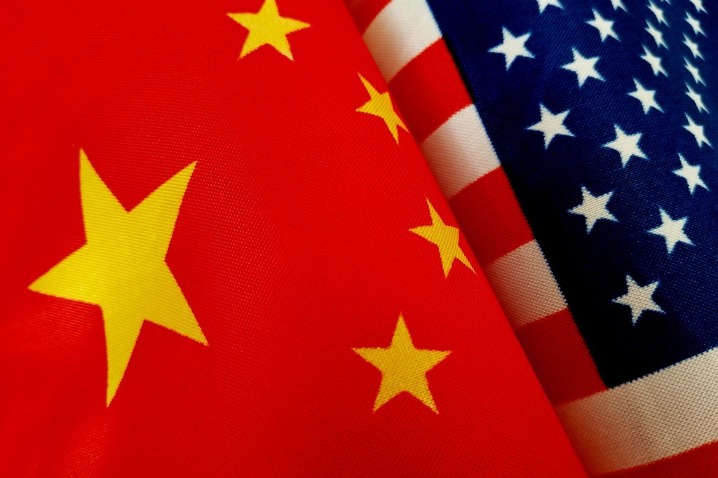
A key determinant of a superpower's global status is how many allies it can boast of. Every bully needs its sidekicks. Since World War II, the US has managed to create a vast alliance network globally – ready to be deployed whenever it wishes.
Most US allies are white-majority, developed nations, frequently being partners in crime with the US to invade and sanction non-white, developing countries. During the 2003 US invasion of Iraq, for example, many of them lined up for literally invading and occupying a sovereign nation on false pretenses.
Yet, in recent years, US efforts to garner allies against China seem to be hitting a roadblock. Many nations are tired of US bullying and are pushing back. Much to the US regime's chagrin, the global order today is not as divided and partisan as it was during the Cold War. By politicizing every issue and forcing nations to pick a side, the superpower finds itself rapidly losing allies to China.
Moreover, accusations that the US levies against China have little evidence to back them up. Most countries can easily see through the US campaign to demonize the rising power. The lack of US interest in actual human rights and global solidarity – and the difference between its words and deeds – couldn't be more transparent. Fewer and fewer nations are buying the US narrative.
Take the entire Xinjiang debate, for example. In July 2019, 22 countries issued a statement against China at the UN, calling an end to "mass detentions" in Xinjiang. In response, only a few days later, 50 nations signed a counter-statement explicitly criticizing the practice of "politicizing human rights issues."
The letter stated that many diplomats, officials from international organizations, and journalists had visited Xinjiang themselves – and found that "what they saw and heard in Xinjiang completely contradicted what was reported in the media." US allies stood speechless and disgraced.
Yet, despite being humiliated once, America's bloodlust was still not satisfied. In October 2019, 23 countries (including the US) again issued a joint statement at the UN urging China to refrain from what they called "arbitrary detention" in Xinjiang. The response this time was even swifter.
On the same day, 54 nations signed a counter-statement, again criticizing the US practice of playing politics with human rights issues, stating that "the work of human rights in the United Nations should be conducted in an objective, transparent, non-selective, constructive, non-confrontational and non-politicized manner."
Even with the Hong Kong issue, US allies failed to build a majority coalition. When China imposed the new National Security Law in Hong Kong, 27 countries immediately lined up to criticize it at the UN. In response, 54 countries backed the security law, delivering a chilling defeat to the anti-China coalition.
By next year, it was starting to get almost amusing. In October 2020, they tried again – only to fail again. When 39 countries issued a statement attacking China over Xinjiang and Hong Kong, a whopping 70 countries issued a counter-statement defending it.
US failures on the Huawei issue are even more glaring. It has applied extreme pressure on other countries to ban Huawei equipment for their 5G networks while providing little evidence of security risks or backdoors. Yet, despite much coercion, few nations have heeded US calls so far.
Globally, 170 countries use Huawei products. While there is no authoritative list, according to media reports, it appears that only a mere nine have banned Huawei equipment for 5G (directly or directly; either in part or in full): US, UK, Canada, Australia, New Zealand, Japan, Vietnam, Czech Republic, and Sweden.
The case of China's Belt and Road Initiative is even more hilarious. 130 countries have expressed some form of support for the initiative. In contrast, a mere two nations have opposed it openly: US and India.
Moreover, the reason for India's opposition is that the China Pakistan Economic Corridor (CPEC) passes through Pakistan-controlled territory that India claims as its own. It has nothing to do with blindly opposing China itself, like with the US
In most of the above cases, the divide is stark. Many US allies are imperialist western states that became rich due to centuries of imperialist exploitation, colonialism, theft, and wealth hoarding. Most nations siding with China, on the other hand, are mostly victims of imperialism from Asia, Africa, and South America.
Despite massive anti-China propaganda campaigns run by the US and the western media, few nations want to be forced into picking sides openly. The more the US politicizes issues, the more pushback it will receive from the international community. Unlike the 2003 invasion of Iraq, US coalition-building efforts today often start with a bang but end with a whimper.
The author is an Indian commentator who writes about China, India, US, and global issues.





