Blended learning the way ahead










Education experts are adamant that education technology will never entirely replace physical classes even though the COVID-19 pandemic has elevated the status of digital learning in 2020. Pamela Lin reports from Hong Kong.
Schooling for Hong Kong's elementary and secondary students took a new twist as the coronavirus health crisis hit hard, with students glued to the computer at home for virtual classes and doing exercises online.
The public health crisis thrust education technologies, especially for K-12 (kindergarten to secondary school) students, to the fore with a slew of digital solutions to help students, teachers and parents make up for the suspension of physical classes.
Although K-12 students have returned to schools in stages since September, parents, students and education experts reckon that online learning is here to stay, but will be blended with offline classes for better results.
"The pandemic has promoted the positive development of education technology and teachers know how to effectively use technologies to improve teaching methods after months of using edtech tools," said Victor Cheng Pat-leung, executive director of Hong Kong Education City — a company wholly owned by the government to help teachers and students adapt to new curriculum initiatives using technology.
Online learning double-edged sword
Education technology, or edtech, refers to software and hardware technologies designed to enhance students' learning experience and make teachers more effective in their teaching methods. Although the concept is widely practiced in tertiary education, edtech has never been the mainstream for elementary and secondary students who normally resort to pencils and paper.
As COVID-19 began its onslaught in late January, the suspension of on-campus classes caught the education sector off guard, said Cheng.
To cope with emergencies and facilitate students' online learning, Hong Kong Education City restructured its online learning resources, including teaching videos, online reading platforms, learning assessment platforms and gamified exercises, to help students "learn at home with diverse online resources".
Cheng said monthly usage of the most popular HKEdCity platform while schools remained suspended soared tenfold at its peak compared with pre-pandemic levels.
Annie Lau' two daughters Ally and Claire, aged 11 and 13, shifted to online classes in early February and continued till the start of the September semester in Hong Kong. She borrowed extra digital devices for Ally and Claire's home learning, but the two girls still had to find the privacy at home to avoid interference.
Before the virtual classes started at about 8 am, Ally and Claire would launch the desktop and log on the online platform waiting for the teachers to start. They would also use smartphones to interact with classmates throughout classes.
The two girls soon got used to the new schedule, but Lau felt she struggled to adapt to the "new reality". She worried that her children would become addicted to smartphones and be easily distracted by online games and other entertainment platforms, especially when she was at work and unable to supervise them.
Lau also fretted about her daughters' potential inability or hesitation to use pens after months of virtual classes as typing is easier than handwriting.
"I think teachers and parents should be aware of that and remind students to pick up pens and notebooks even though they have to spend hours learning online," she said.
Hong Kong students resumed the trek back to schools at the end of September as the local pandemic situation eased. Lau felt relieved as her daughters, who had been kept in front of the computer at home for so long, returned to school.
After getting to know the diverse edtech platforms, Lau maintained she would still prefer to help her children choose particular edtech platforms to supplement schoolwork, such as online speaking classes where they can interact with teachers in real time.
Nonetheless, the remote learning schedules for K-12 students have exposed the drawbacks of virtual learning and compelled educational professionals to discuss what the future classroom should be like. It's certain that online classes will never entirely replace physical ones.
According to Cheng, blended learning will be the new normal for elementary and middle-school students in future.
The idea of blended learning has long been adopted at universities while for primary and secondary students, it's still in its infancy, Cheng said, as K-12 schools aren't as tech-savvy as higher education institutions.
Cheng said the pandemic has reminded educators to consider other approaches to effective learning and teaching, which can boost students' learning motives and efficiency. He noted that the blended learning model will continue to evolve in the post-pandemic era.
Business opportunities
What can edtech companies do to grasp the opportunities and help K-12 students study more effectively?
Cheng said Hong Kong's education market is relatively small and unique which may create obstacles for edtech companies. For example, he said the pedagogies in mathematics in Hong Kong are unique, posing challenges for schools to use overseas platforms.
Cheng reckoned there're still underlying technologies that can be applied to facilitate K-12 students' learning.
Generally, edtech providers in the market can be divided into three categories — those providing learning materials with interactive elements; those analyzing students' learning process and behavior; and those providing learning systems and frameworks.
Cheng suggested that edtech companies leverage their advantages in using technologies, big data and artificial intelligence to look into students' online learning journey and behavior to assess the effectiveness of online learning.
Instead of covering a broad range of education subjects, edtech companies should focus more on offering edtech solutions with core technologies, Cheng said. They should also look into particular subjects that demand technological solutions.
Educational apps point to the future
Education technologies that ensure learning continuity have evolved rapidly since COVID-19 struck. Providers of educational apps, software and hardware solutions to support remote learning see growing opportunities with a blended educational model for K-12 (kindergarten to secondary school) students in the post-pandemic world.
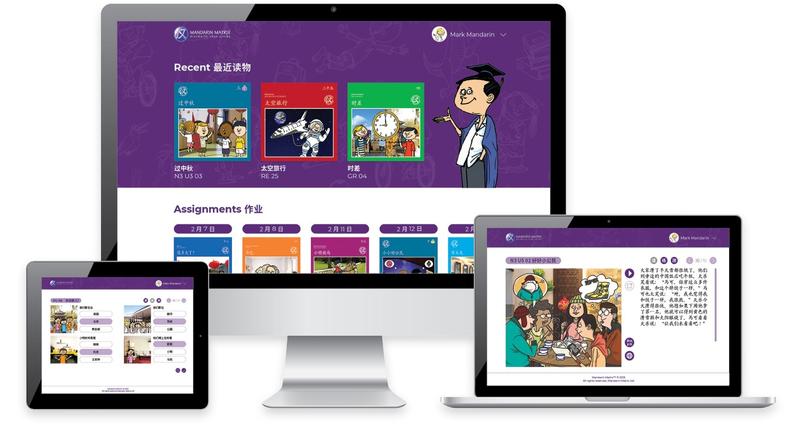
Mandarin Matrix, an online platform for K-12 students to learn Mandarin as a second language, said it has been providing free licenses for Hong Kong schools that had not registered with the platform before but need online Mandarin-learning materials.
"Many schools now say they need this because there'll be waves of the virus. And schools have to continue supporting children online, as well as in a more classical offline classroom environment," said David Tait, chief executive of MMX.
Headquartered at Cyberport, the cloud-based Mandarin learning platform offers guided reading solutions for Mandarin learners from kindergarten to middle school. Students can access the online Mandarin reading materials to consolidate what they've learned.
The platform has navigation in English, French, Spanish, Japanese and Arabic and will introduce Thai, Bahasa (spoken in Malaysia and Indonesia) and Tagalog (used in the Philippines) over the next six to nine months, according to MMX.
Tait said the pandemic has accelerated the platform's expansion plan and the company is looking at new nodes in countries and regions involved in the Belt and Road Initiative, the Middle East and the US.
MMX was created as a business-to-business model by providing licenses to schools. Tait said they're now building up a business-to-customer model amid rising global demand for learning Mandarin.
It's difficult to get enough teachers, he said, and Mandarin can be taught remotely if there aren't enough teachers.
To help students achieve self-regulated learning, the company is developing avatar technology with partners at Hong Kong Science Park that enables children to learn through the platforms themselves with the help of intelligent robots.
In Hong Kong, MMX has about 11,500 active users in 53 international schools. Tait said the company saw a 128 percent increase in license users from January to May.
"The number of schools has grown by a similar percentage partially because we offered complimentary licenses when schools suspended classes due to COVID-19," Tait said.
In April, the Department for Education in the United Kingdom approached MMX to support its Mandarin Excellence Program. The company started working with the University of London and took in 77 new schools in May to support students learning Mandarin during the pandemic.
Tait said the company expects the biggest growth in countries and regions involved in BRI as economic needs will drive educational planning with Mandarin as a foreign language.
According to a report by HolonIQ — a global education market intelligence firm — total edtech expenditure worldwide is expected to reach US$404 billion by 2025, representing a 16.3 percent compound annual growth rate.
HolonIQ said a short term surge in edtech spending brought on by COVID-19 is expected to recalibrate to a long-term integration of digital technologies and transition to a much higher adoption of online education in the next few years.
Tait believes that a blended educational model combining physical and digital will be a permanent model for students in future.
"Teachers are vital in developing children's academic performance while online education platforms can help in individual learning and supporting more repetitive learning tasks with the use of bots and avatars," he said.




- Belgian cyclist completes epic journey to Shanghai
- China issues alert on overseas study in Philippines
- Liaoning Port Group launches 'durian express' shipping service
- Well-known wild Siberian tiger spotted, thriving in NE China
- How Xi promotes sustainable development cooperation with SCO partners
- How Xi pushes for building common home of peace for SCO