



Elderly people enjoy more social benefits than in the past









Editor's Note: China's remarkable achievements in economic development, environmental protection and public healthcare have increased life expectancy. However, they have also created a new challenge for the country. What should China do to meet the aging society challenge? In the third of a series of commentaries, a senior journalist with China Daily looks for the answers:
Before turning 60, I was informed that I could apply for a senior citizen's card, through which I can avail of many benefits. So I visited the local community office and after five working days, I got a senior citizen's card. The card allows me free bus travel, entry to museums and parks, and makes me eligible for discounts at various service facilities. I am still to find out the many other functions of the card-for example, it can serve as a bank card and subway pass provided there is money in my bank account and subway card.
Elderly people in China now enjoy a lot of benefits and social respect compared with 50 years ago when I was in primary school. Perhaps the only privilege a senior citizen then enjoyed was a youngster offering his or her seat in a crowded bus out of respect. With limited resources, the government could not do much to help the vulnerable group then even though it was driven by the principle of "serving the people".
Things changed when the National People's Congress passed the Law on the Protection of the Rights and Interests of the Elderly People in 1996, which has been revised at least three times since, with every revision guaranteeing better protection of the rights of the elderly. The law says the governments at different levels, among many others obligations, should provide cultural, education and sports facilities, and free or concessional use of public transport. They should also offer free legal aid to those in need.
Thanks to the law, senior citizens today enjoy benefits that even their counterparts in some developed countries may be envious of. Pension, for instance, has been increased at an annual rate of about 5 percent for 16 consecutive years-even when China was hit by the Asian financial crisis in the late 1990s and during the COVID-19 pandemic this year. The higher-than-inflation rate increase in pension has helped the retirees improve their life and made them more confident about the future.
For housewives not included in the social insurance program, they can deposit an amount as a single premium-20,000-30,000 yuan ($3,026-4,540)-to get monthly pension and medical care. My mother-in-law is one such beneficiary-she gets 2,000 yuan per month, enough for her to lead a decent and independent life.
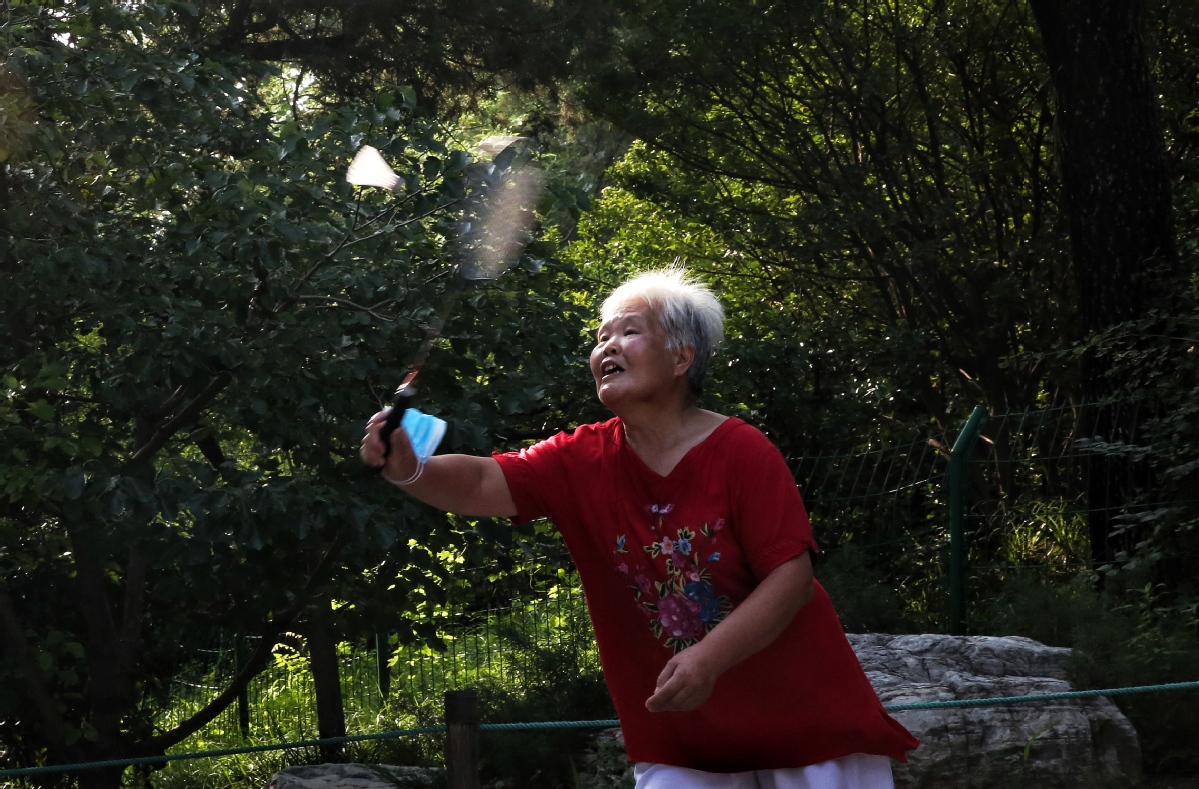
Aged as they may be, senior citizens appear to be the most mobile group in China. After the rush hours, public buses in cities are full of gray-haired passengers. With cards like the one I have, they board buses to travel to all corners of the city to visit public parks or museums, or meet relatives and friends-all for free.
Some choose to take up special courses in a university for the elderly. Every county in rural areas and every district in cities is required to set up a public university to cater to the needs of senior citizens. Paying a symbolic fee of 100-200 yuan, you can enroll in any course of your choice, from literature and calligraphy to painting and music, even ballet. Official data show about 8 million senior citizens have enrolled in such universities.
If some senior citizens hate traveling long distances to take part in an activity, they can choose to attend similar activities organized by the local communities. In China, every city has a number of districts, every district has several sub-districts, and every sub-district has several communities. A community usually comprises 50,000 residents, and has an office, and operates classrooms and gyms which local residents can use free of charge.
In most places, both urban and rural, the elderly are also provided with free yearly medical check-ups and free vaccine. For example, senior citizens infected with the novel coronavirus are treated for free.
And with the government making people's well-being its policy priority and more and more elderly people taking part in normal, everyday activities, senior citizens will likely enjoy a lot more benefits in the coming years.
The author is former deputy editor-in-chief of China Daily.
kangbing@chinadaily.com.cn





