



UNICEF: Climate acts must focus on youth









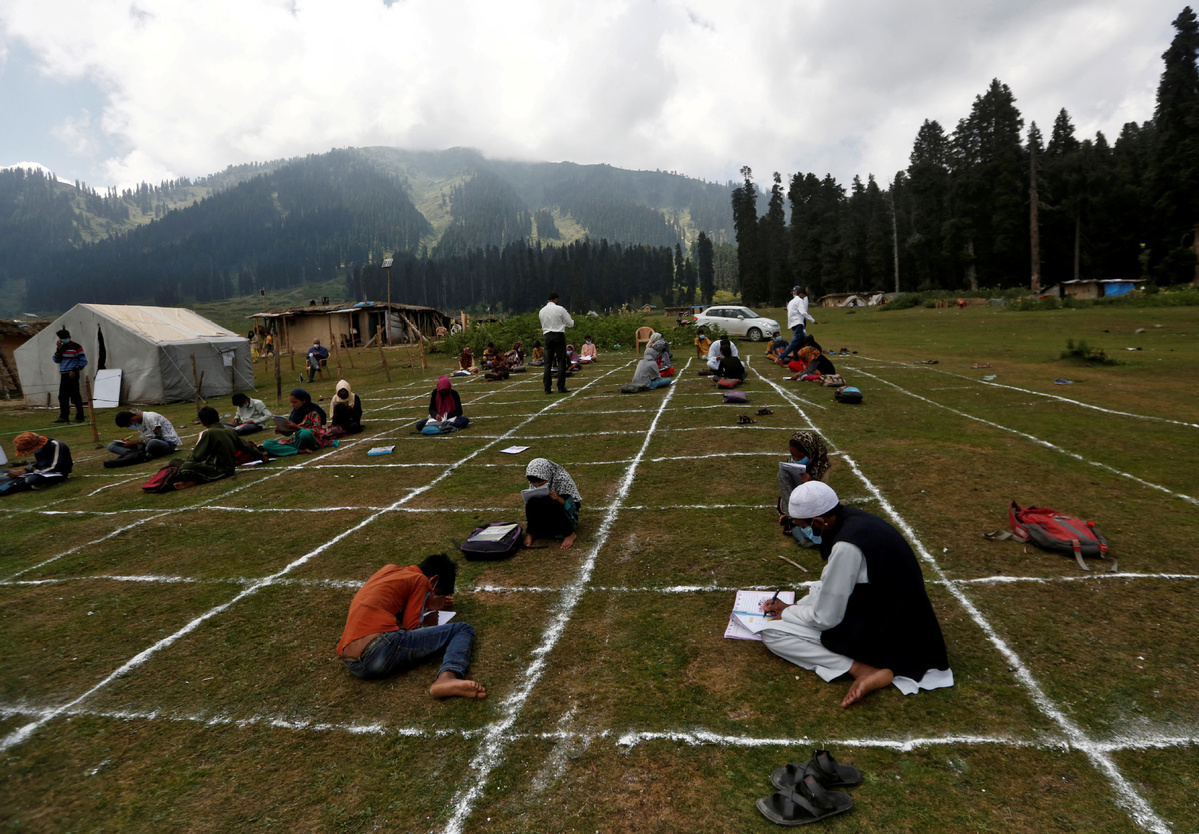
Two billion children live in areas with poor air quality, hindering brain growth
The rights of young people need to be put in a central place in a country's climate change plan as extreme weather events are threatening children's lives and destroying the infrastructure critical to their well-being.
The scientific community has sounded the alarm that climate change is a global emergency, and the risks of deadly drought, rampant floods, heat waves, extreme weather, and poverty will significantly worsen for hundreds of millions of people.
Children will continue to bear the burden of climate change as they are consistently overlooked in the design and content of climate policies and related measures.
Over half a billion children live in high flood zones and nearly 160 million live in areas of extremely high drought, said a report released in 2015 by the United Nations Children's Fund, or UNICEF.
"Children have the least responsibility for climate change, but bear the greatest burden of its impact," said Cynthia McCaffrey, the UNICEF Representative in China.
Polluted air has a huge impact on children's brain development. It is estimated about 2 billion children live in areas with air quality that is well above international pollution standards, McCaffrey said.
Air pollution, undernutrition, lack of safe water and sanitation, indoor air pollution, and inadequate access to healthcare are strongly linked to pneumonia, a leading cause of death among children, killing approximately 2,400 children a day.
"The increase of diseases such as malaria and dengue fever have the greatest impacts on young children and youth," McCaffrey said. "For example, 90 percent of the disease burden that is attributable to climate change is born by children under the age of five."
The UNICEF report said all these challenges are exacerbated by climate change.
Through the intergovernmental panel on climate change, the UN has made it clear the impacts of climate change are global in scope and unprecedented in scale.
'Ambitious' actions urged
During this year's World Children's Day on Nov 20, UNICEF specifically called on governments to place children and their rights as central to their economic and climate change plans.
"We need ambitious commitments and actions from governments and businesses to reduce emissions and pollution to levels that avoid the worst impacts of climate change," McCaffrey said during a forum on Friday.
The event initiated a series of campaigns-both online and offline-to raise awareness of environmental issues that most affect young people, hear their voices, and solutions for change.
Actively responding to climate change is not only imperative, but also key to sustainable development for generations to come as children and young people are the future of mankind, said Jiang Zhaoli, deputy director-general of the Department of Climate Change at the Ministry of Ecology and Environment.
"We will continue to strengthen our efforts in this area with greater determination and commitment. We aim to have carbon dioxide emissions peak before 2030 and achieve carbon neutrality by 2060, making positive contributions to the global response to climate change," he said.
Children and young people are encouraged to play a key role in addressing climate-related risks by promoting environmentally sustainable lifestyles and setting an example for their communities.
Together with the All-China Youth Federation, UNICEF is supporting an online campaign in China focused on educating and encouraging the youth to participate in eight actions that can reduce greenhouse gas emissions.
The actions include using green transport, reducing food waste, increasing recycling, and encouraging their communities to use clean energy.
Mu Yuxuan, 10, said "green travel "could help reduce carbon emissions. She would choose to go to school by public transportation and also encouraged her family to do so.
"They (The children) can learn and build their knowledge about climate change and its impact. They can take action with things that can make an impact (on combating climate change), and to advocate and share that information with decision makers," said McCaffrey.










