



United Kingdom government is still dreaming of empire









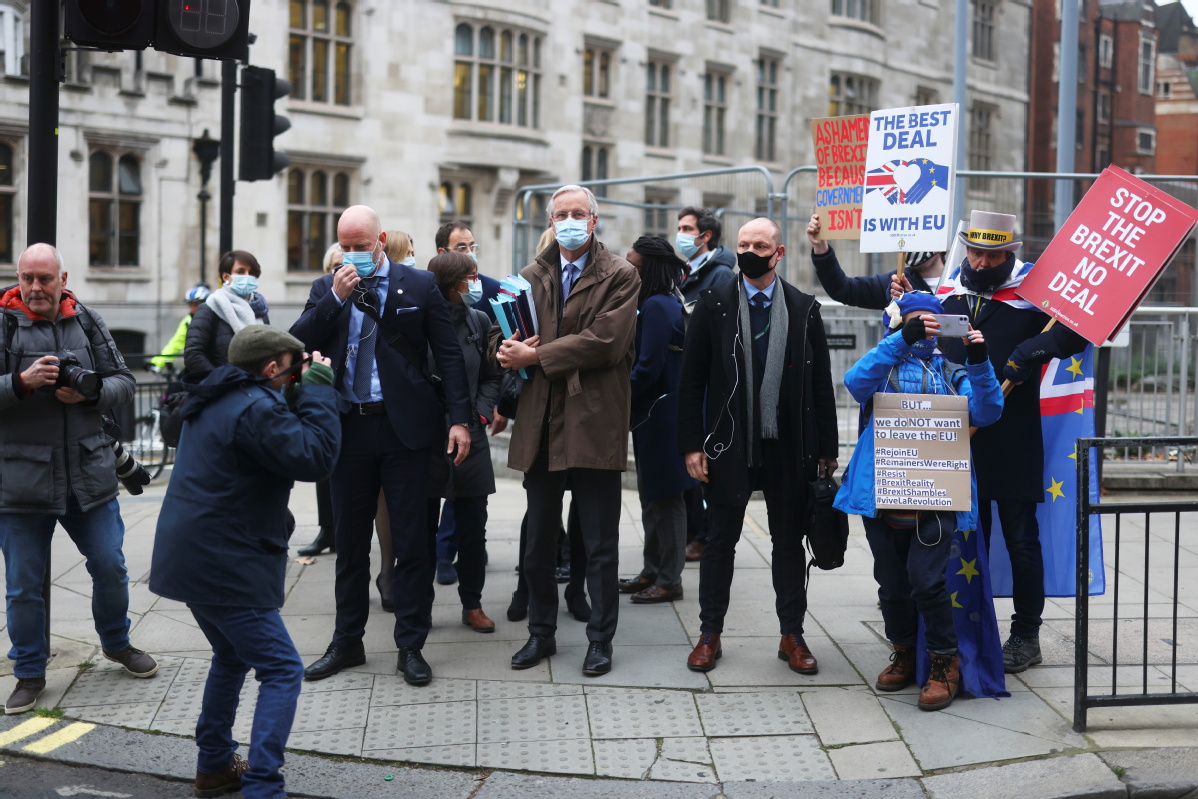
It is clearly challenging for some former colonial powers to accept the reality that the days of their grandeur, might and international influence are over. The United Kingdom is an excellent example of this constant longing for a past era when its power stretched across the globe. "The Empire on which the sun never set". Ironically, the UK government continues to struggle with its voluntary purely self-inflicted European sunset, namely Brexit.
Notwithstanding the seemingly endless Brexit saga, and despite its less than perfect handling of the COVID-19 pandemic, the UK government continues to spend time focusing on its former colony, Hong Kong. Perhaps it serves as a useful distraction from its various domestic issues.
The latest, 47th, "The Six-Monthly Report on Hong Kong" (The Report) has been released by the Foreign Office, harking back to the days when annual situationers are filed from all colonies of its Empire. Hong Kong clearly has a special place because there are no regular reports in the same vein regarding, for example, India, Israel, Libya, or South Africa, all former British colonies or protectorates. The all too regular killing of black civilians by their police force, or the forced separation of children from their parents in another former British territory apparently does not warrant the same British concern.
The argument used is that as Britain is a signatory to the Sino-British Joint Declaration, it has a vested interest, or even an obligation, to closely follow Hong Kong affairs. In fact, the only obligations that the UK had pursuant to this Declaration have already been fulfilled: the actual Handover of the territory to China, and the removal of British forces and government entities. In the language of the Declaration "To restore Hong Kong to the People's Republic of China with effect from 1 July 1997". There was a Sino-UK Liaison Group to manage the practical transfer of regulations under UK law to Hong Kong local laws. When this was accomplished, this advisory group was discontinued in 2000. Nowhere does the Declaration mention a British duty to monitor Hong Kong, nor a Chinese obligation to report to the UK. This sudden altruistic shouldering of a "duty to the Hong Kong people" in the Report does not seem to square with British colonial history when it pays lip service to the wishes of Hongkongers who now rule themselves under the "one country, two system" formula as laid down by their constitutional document, the Basic Law.
According to the British Foreign Secretary, the Chinese government has not respected its obligation, made in the Declaration, that Hong Kong would continue to enjoy a "high degree of autonomy". This is ironic considering the total control the British government had over their former governors, who could be replaced by Whitehall at a moment’s notice without any local input whatsoever.
As co-drafters of the Declaration, the British government surely understands that a "high degree" is not the same thing as full autonomy. After all, each and every word and clause was discussed, debated, and agreed upon during the drafting of the Declaration. Hong Kong is not a separate nation; it is a territory of the People’s Republic of China. To suggest that Hong Kong does not have this high degree of autonomy displays a wilful distortion of reality. Hong Kong is itself a party to multiple international treaties, has its own currency, own legal system, and own border controls. Even the official languages set it apart from the rest of China. Apart from the other SAR, Macao, no other part of China enjoys such autonomy. The Basic Law, which is a derivative of the Chinese Constitution, even tasks Hong Kong with legislating “on its own” to safeguard national security. Will the Foreign Office also protest when finally, Hong Kong does fulfill this obligation and legislate according to Article 23?
The Report suggests that the passing of the National Security Law is a breach of the Declaration, but conveniently does not specify which clause it deems to be breached. After many months of violent protests, with clear foreign influence and backing, during which public and government infrastructure was destroyed, Hong Kong citizens and Chinese mainland visitors were violently attacked, and foreign government officials lobbied for restrictive economic measures against China, and most disturbingly, with some protestors openly clamoring for independence, it is difficult to argue that these actions did not impact China’s security. The Basic Law gives the Chinese government the exclusive jurisdiction over matters related to Hong Kong’s defense and foreign affairs. The Chinese Constitution on the other hand clearly tasks the State with suppressing actions that jeopardize national security. If Hong Kong had already legislated according to Article 23, (like Macao has done) then perhaps the National Security Law would not have been necessary.
It is noted that the UK government was much less vocal when a European national government strongly intervened after a semi-autonomous regional government had its own parliament declare independence, its leader having had to flee the country. Not unlike the Hong Kong relationship with Beijing, the Spanish central government has full authority over matters related to national security, and any actions taken by the semi-autonomous Catalan government in breach of the Spanish constitution are illegal. The British response was as follows: “We continue to want to see the rule of law upheld, the Spanish constitution respected, and Spanish unity preserved.” Why the UK sings to a vastly different tune regarding Hong Kong can only be guessed at.
The 47th Report reveals both an arrogance and lack of understanding of the (not so) new realities. The Handover did occur on that rainy day of July 1, 1997, and the fact that Hong Kong was returned to its motherland was never disputed by any country, including the United Kingdom. And yet the British government has appointed itself a special status as rapporteur on Hong Kong affairs. With people worried about a possible resurgence of the struggles in Northern Ireland post-Brexit, perhaps China, as a goodwill gesture of reciprocity, should appoint itself a special observer and rapporteur of developments in that part of the UK? Or is that a status only reserved for former colonial powers?
The author is a specialist in International Public Law, an adviser on China-related matters to both the private and public sectors. He has lived in Hong Kong for over 18 years.
The views do not necessarily reflect those of China Daily.





