Survival of a species









When massive floods in 1998 destroyed the fences in Shishou Nature Reserve, north of Yangtze River, over 30 milu bravely swam across the river. They found a new home near East Dongting Lake where they formed what became the first wild herd of milu.
As a species adapts to a new environment, they will gradually develop certain genetic features, keeping the useful traits and eliminating the bad ones. If members of the same species from different locations interbreed, it enriches their genetic diversity and reduces the possibility of disease.
Which is why the milu from Nanhaizi are being transported to East Dongting Lake, says Bai Jiade, director of the Beijing Milu Ecological Research Center.
The center has sent 546 milu to 41 nature reserves across the country since 1989.
"There are more than 8,000 milu in China now. To have milu from Beijing integrate into the wild groups in other places is an important way to help protect the species," Bai says.
The 10 milu that were transported to East Dongting Lake this time consists of both young and elderly deer. In the summers to come, they will compete for leadership and mates.
They have no idea of the plan laid out for them. The 30-hour trip has just made them sullen and tired.
As the truck drives into the reserve, they perk up after smelling the marsh.
What awaits them is a broad field of 190 hectares with abundant water, grasses and sedges, over 200 bird and plant species, and others of their kind.
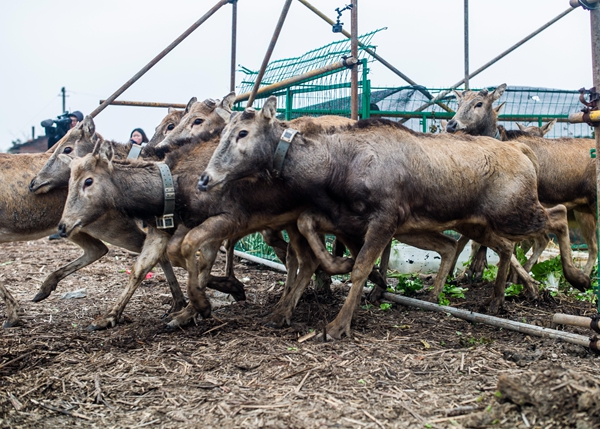
Getting off the truck, they take a short break in a shelter. The moment the fences open, they bounce out and into a trot, vanishing into the reeds. But this is not the end of their story.
Soon they will be put to the test. A waterproof GPS collar is attached to each of them, which will enable the researchers to observe their habits after being released.
In the upcoming decades, researchers will further analyze the behavior and evolution of the species with genetic tools, and their influence on the ecosystem as a flagship wetland species.
"The revival of milu in China has set a good example for species reintroduction. Our ultimate goal is to enable them to survive on their own. After all, they belong to nature," says Yang Sheng, director of the reserve.