



Chinese-Russian missile notification deal stabilizes Eurasia









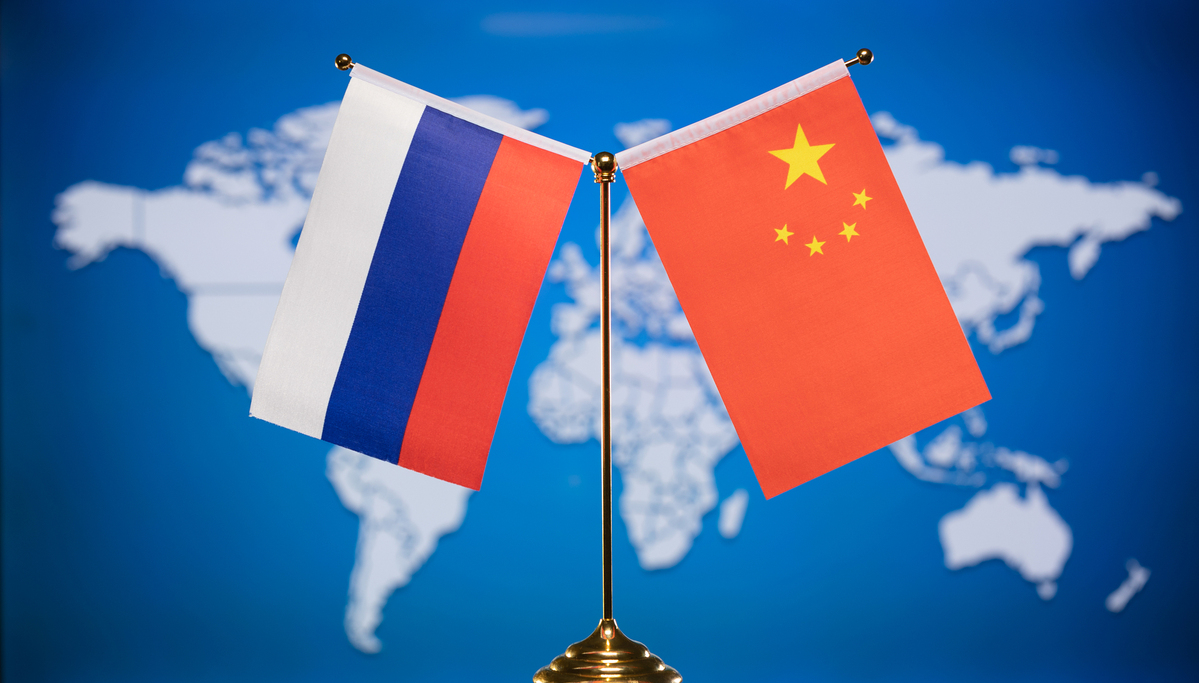
The Chinese and Russian Defense Ministers signed an agreement to prolong their countries' missile notification deal for another 10 years. This agreement requires each side to notify the other before conducting any ballistic missile or space rocket launches and shows the deep degree of mutual trust between them.
Randomly launching such objects without informing one's neighbors risks generating what international relations scholars describe as a "security dilemma." This term refers to one country regarding the other's defensive or at least non-hostile actions as threatening, which in turn could provoke a self-sustaining cycle of distrust and escalation.
China and Russia harbor no suspicions about the other's strategic intentions, but it's still important to keep everything predictable between them. Each of them would be surprised, for example, if the other carried out a missile test near their long mutual border without notifying their counterpart. With this in mind, not only is the prolongation of their missile notification deal a sign of how closely they trust one another, but it's also representative of the profound respect that they hold for each other. Their strategic partnership is much too important to risk having sudden events unwittingly raise questions about the other's intent.
The end result is that strategic stability is ensured across a broad swath of the Eurasian supercontinent, which in turn makes international relations more peaceful. The China-Russia comprehensive strategic partnership of coordination is the perfect example of multipolar cooperation, especially between large – and particularly nuclear-armed – countries. Their mutually beneficial relations stand in stark contrast to their individual ties with the U.S., which recently withdrew from many arms-related pacts with Russia over the past few years and thus far refuses to enter into anything remotely similar with China on a bilateral basis.
America's arrogant attitude towards them is directly responsible for provoking a security dilemma between both sides. China and Russia simply do not understand the U.S.'s strategic intentions, nor do they trust its public explanations for moving provocative infrastructure such as "missile defense shields" near their borders.
Without the same level of trust, respect, and predictability between them as China and Russia have with one another, it's only natural for those two countries to suspect the worst just in case. After all, America has a long history of carrying out acts of aggression, so it's better to be safe than sorry.
Despite only reacting defensively to the U.S.'s offensive actions near their borders – which includes violations of their territorial integrity, random weapons tests and the deployment of provocative infrastructure such as "missile defensive shields" – American pundits and their allies dishonestly misportray China and Russia's actions as "unprovoked aggression" even though the reality is really the inverse. It's America's refusal to enter into the same agreements with China and Russia that those two have with one another that the Eurasian Rimland is becoming destabilized even though its Heartland is stabilizing due to Chinese-Russian cooperation.
If the U.S. continues to provoke China and Russia, then they should seek to reach their own missile notification and other such deals with their neighbors in the hopes of denying America the use of their mainland and maritime territories to destabilize the Eurasian supercontinent.
With this in mind, it would do wonders for Eurasian stability if India agreed to enter into such an agreement with China, considering how alarmed many observers are by the South Asian state's growing military ties with the U.S. If fellow BRICS and SCO member India has the same political will as its Russian partner does, then Chinese-Indian ties would stabilize.
The whole world should look to China and Russia as an example of the right way to conduct trusted, respectful, and predictable relations between equal partners. Those two countries are pioneering the future, and the prolongation of their missile notification pact is the epitome of multipolarity. Both countries understand the importance of closely communicating on issues of strategic sensitivity, hence why their ties are nowadays better than at any prior moment in history.
The same might soon be true of their relations with other countries as well so long as their partners realize that entering into such cooperation is in everyone's interests.
Andrew Korybko is a Moscow-based American political analyst.





