



Rental housing key to solving housing problems









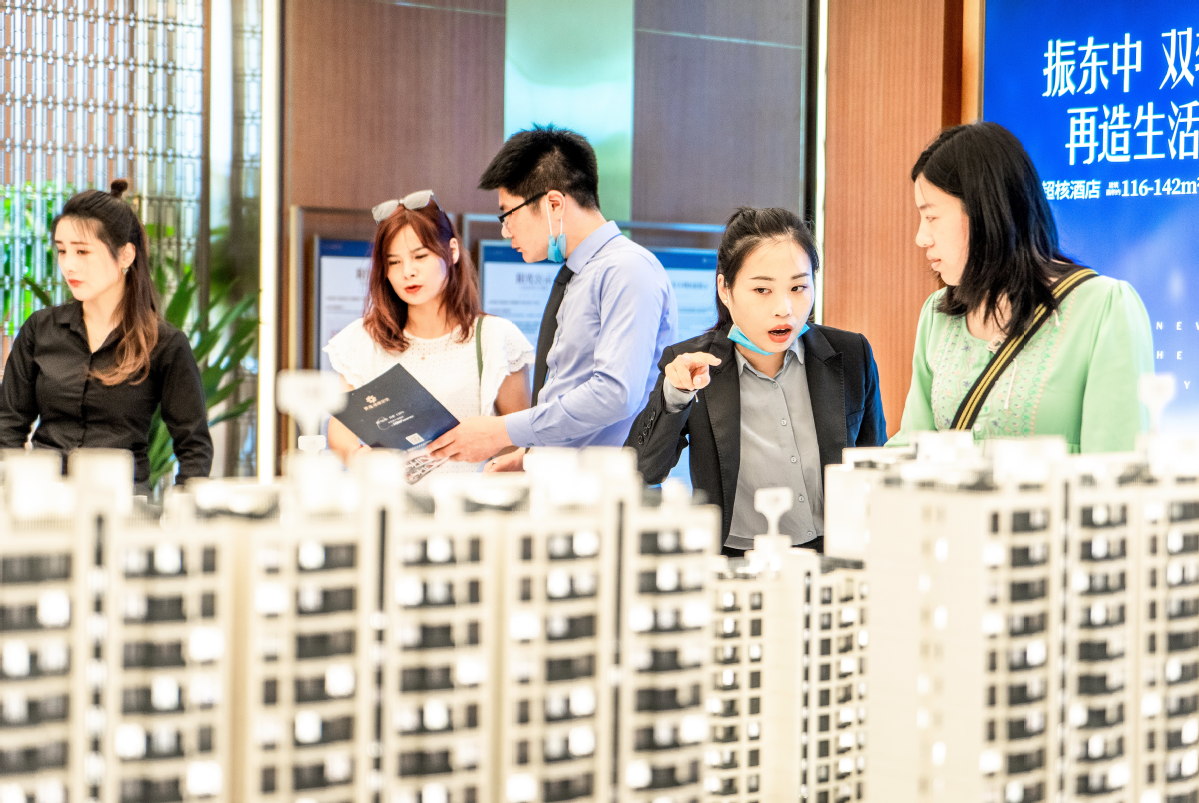
On Thursday Shanghai took urgent measures trying to rein in the recently rapidly rising housing prices in the metropolis. In fact, it’s worrying that in 2020 the average land sales in China reached 676.2 yuan per square meter, an 18 percent year-on-year increase.
The Central Economic Work Conference, held in December to set the agenda for China’s economy and its financial and banking sectors for 2021, reiterated that “houses are for living in, not for speculation” and emphasized that improving the rental housing market is key to providing housing affordable in big cities.
In fact, improving the rental housing market is a necessary step toward strengthening the “dual circulation” development paradigm, with domestic circulation being its mainstay and domestic and global circulations reinforcing each other.
First, high housing prices will undermine consumption and investment, and developing the rental housing market is conducive to boosting consumption and investment, which will promote the new development paradigm. Thanks to rapid urbanization, a growing number of people are migrating from the countryside to cities where housing demand is extremely high. But the high housing prices have significantly suppressed consumer spending and investment because people tend to save as much as possible in order to buy a house.
Excessive financing in the real estate sector will divert capital from the manufacturing sector. So if the housing problem in big cities is solved, the potential for consumption and investment in other fields will greatly increase. In other words, a mature rental housing market may ease the pressure on some people for buying a house and prompt them to use the money, which otherwise they would spend as down payment and paying mortgage, to purchase other commodities. The less people spend on real estate the better will be the allocation of resources and the potential for growth in other fields.
Second, rapid urbanization needs the support of a sound rental housing market. By the end of 2019, permanent urban residents accounted for 60.6 percent of the country’s total population, still lower than that of developed countries. A study conducted by the Guanghua School of Management of Peking University indicates China’s urbanization rate is likely to be 75-80 percent by 2035. Which means 200-300 million rural people are likely to migrate to cities in the next 15 years. And a mature rental housing market can effectively meet the housing demand of those people and help them integrate into cities.
Third, many advanced economies have addressed the urban housing problem by strengthening the rental housing market. Perhaps keeping this fact in mind the CEWC said special attention should be paid to building affordable rental housing, including tilting land supply toward rental housing construction to divert demand from the commercial housing sector and optimize supply.
But some obstacles remain to be cleared in developing a mature rental housing market.
To ensure tenants enjoy the same rights as homeowners, especially to ensure their children can get admission to the same schools as those of homeowners, may be the hardest reform problem to solve. Since the 19th National Congress of the Communist Party of China, the central and local governments have introduced a series of policies to strengthen the rental housing market, which has partly solved the housing problem for talents. But many tenants’ children still cannot get admission to “good” schools in cities.
If this problem is not solved, it would difficult to develop a mature rental housing market. Also, the rental housing market needs more financial support from diverse sources including social capital and government funds.
Besides, since the land-use transfer fee being one of their main sources of income, many local governments are reluctant to transfer land-use rights, especially in convenient locations, at a lower price for building rental apartments. That’s why social or affordable housing units usually come up in relatively remote areas, leading to a mismatch between spatial layout and actual demand and high vacancy.
So, local governments need to allocate more land for building rental housing. And to ensure this, efforts should be made to use market-oriented means to revitalize the existing stock of housing units while reinforcing supervision on the property sector and allocating rural collective land to build rental housing. In this regard, the CEWC’s proposal of having a “separate list of land use plans for leased housing” may be a good start.
The author is chief economist at PingAn Securities.
The views don’t necessarily represent those of China Daily.





