



Better solutions for maternal health









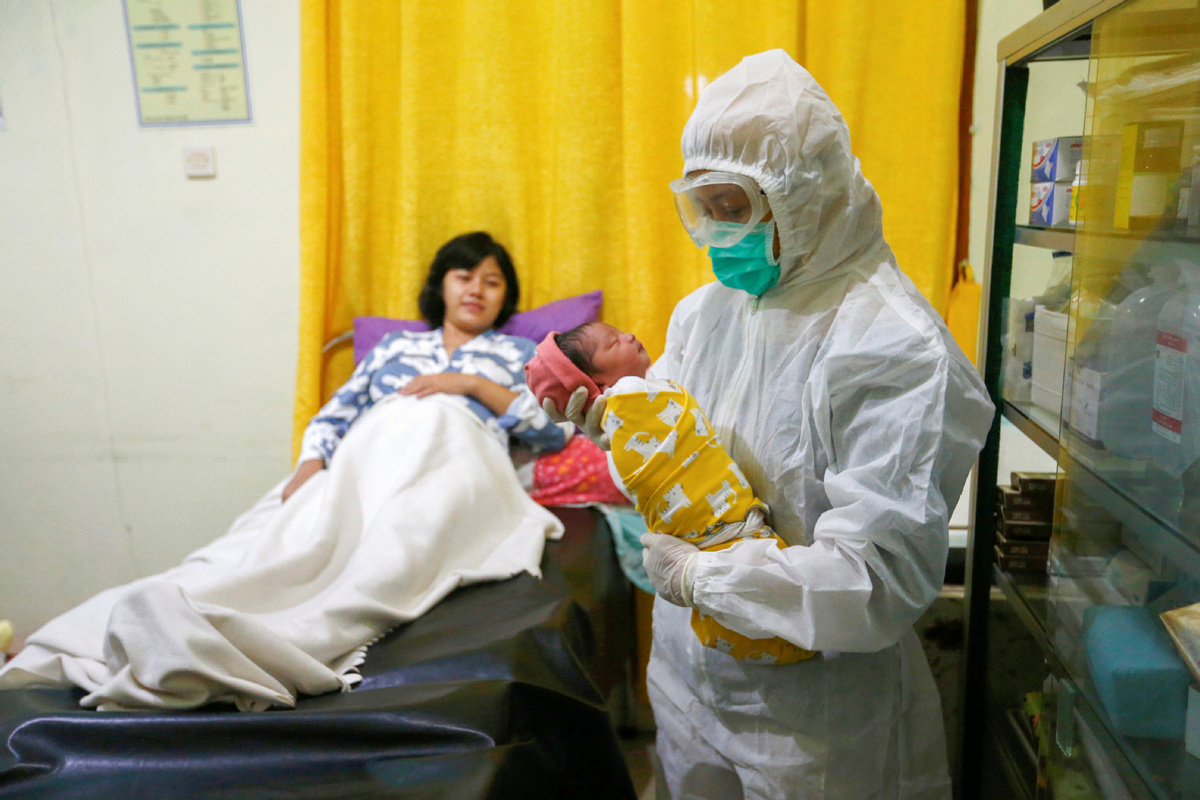
In the next two minutes, one woman will die from complications related to pregnancy and childbirth. She will die from entirely preventable causes during one of the most beautiful moments of human life, giving birth. The good news is that there are some solutions that are inexpensive and effective.
In a world besieged by problems from COVID-19 to climate change, it's hard to pay attention to the many other challenges that still remain. For the vast majority of the world's population, these are simple problems of survival: not dying from tuberculosis, getting enough food, breaking free of poverty and getting adequate education.
Vying for scarce resources, these problems often lose out because they don't attract enough media attention, famous spokespersons or viral imagery. The harsh truth is, we can't afford to fix all the problems. That is why we have to ask hard questions: how big is the problem, what is the solution-and crucially, how much will it cost compared with its effects?
The tragedy of pregnant women and their children dying has been on the global health community's radar for a long time. Twenty years ago, the United Nations promised to address the issue. But progress to date has not been enough. Yes, maternal deaths have declined by about one-third, from 451,000 per year in 2000 to about 295,000 today, but we had committed to more than two-thirds reduction by 2015. Since then, we've promised to reduce it even further to about 100,000 deaths by 2030.
But commitment without action doesn't save pregnant women and their children. It takes financing and simple procedures.
Mothers in the hardest-hit developing countries are still 80 times more likely to die than their rich-country counterparts. And their newborns also die-last year 2.4 million children died in their first 28 days on Earth. They die because many women either give birth at home, without access to trained and skilled midwives and birth attendants, or in facilities with limited basic emergency care. The mothers die from infections that abound with low hygiene, and high blood pressure, which can lead to seizures. And severe bleeding that can happen after childbirth kills 46,000 mothers every year.
Clearly, something needs to be done. Development professionals have put forward many proposals on how to address this global crisis, but trying to fix everything everywhere comes at a cost of more than $30 billion per year, and it is unlikely that such funds can be mobilized.
Instead, my think tank Copenhagen Consensus, supported by funding from Merck for Mothers, worked with leading maternal health experts to use cost-benefit analysis to find the most cost-effective policies first.
The research focused on the highest-burden 59 countries that account for 91 percent of all maternal deaths globally. Using the recognized LiST (Lives Saved Tool) model from Johns Hopkins Bloomberg School of Public Health, the researchers analyzed more than 30 different ways to help, and found that while all would have an impact, some would help much more per dollar spent.
Two interventions stood out as the very best investments for additional resources. These are straightforward, without requiring cutting edge technology, but perhaps that is exactly why they are not well known, lacking for celebrity endorsement and media coverage.
To drive the greatest impact for investments, the world should consider focusing on what is known as "Basic Emergency Obstetric and Newborn Care" (BEmONC) along with family planning. An estimated 217 million women who want to avoid pregnancy still don't have access to safe and effective family planning methods. Scaling up access to 90 percent in the 59 countries would mean that fewer women would become pregnant, preventing the deaths of 87,000 mothers every year.
Getting more mothers into more facilities while also improving the quality of those facilities could greatly increase their and their children's survival chances. In practice, this means ensuring that adequately trained staff are present with the right equipment and medicines to help with simple and well-known lifesaving procedures. These include immediate drying and thermal protection of the newborn, controlled cord traction, skin-to-skin contact of newborns and mothers, assisted vaginal delivery along with neonatal resuscitation.
All of this will entail costs. Midwives and nurses have to be educated, trained, recruited, and salaried; drugs procured; infrastructure needs to be paid for and management expanded. Moreover, women also have to be incentivized to give birth in facilities.
But overall, BEmONC and family planning would cost just $2.9 billion per year-less than a tenth of the $30 billion typically asked for, which would save only a fraction more lives.
It would save the women we have already promised to save at a very low cost: in total it would save 162,000 mothers every year along with 1.2 million newborns. If we measure the total value of these efforts, each dollar spent would achieve $71 of social benefits, making it one of the best investments in the world.
While you read this, at least one more mother died. We owe it to her and all the millions whose lives we can save to invest $2.9 billion smartly to bring hundreds of billions of dollars of economic and health benefits to people around the world.
The author is president of the Copenhagen Consensus and visiting fellow at the Hoover Institution, Stanford University. The views don't necessarily reflect those of China Daily.





