Nation to help tackle more global tech issues, expert says









Seeking self-reliance in science and technology does not mean that China is decoupling from the world. Rather, this is to reduce its overreliance on imports of key technologies and to make a greater contribution to tackling shared issues ranging from climate change to public health, an expert said.
During the annual Central Economic Work Conference, which concluded last month, China's top policymakers said the country would focus on eight major objectives this year, with strengthening national strategic science and technological power listed as the top priority.
The conference also stressed that self-reliance in science and technology is the fundamental basis for facilitating overall development. Enhancing basic research, talent training, academic integrity and international cooperation are among the key ways to achieve that goal.
However, some Western media have frequently portrayed China's drive for self-reliance as a means to create its own innovation ecosystem and decouple from the world, especially from the United States and other Western countries.
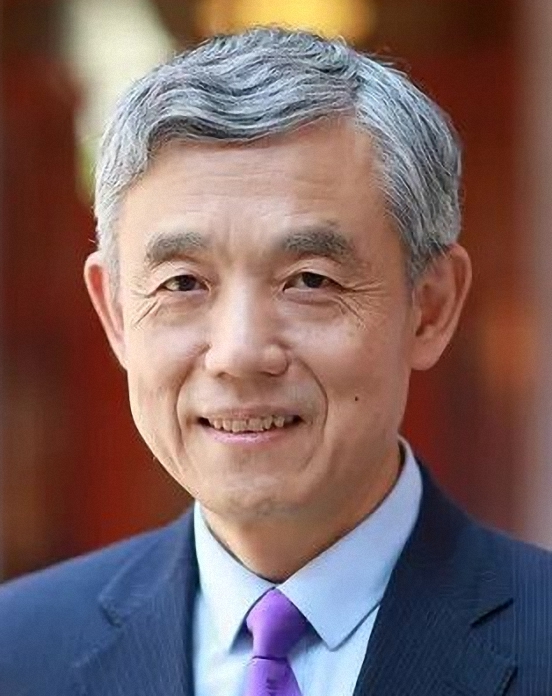
Xue Lan, dean of Schwarzman College at Tsinghua University, said this notion is unreasonable because China is a major economy and a big contributor to global scientific research. "No country can innovate all by itself in this day and age, and I don't think any country can withdraw itself from the international innovation system," he said.
Over the past four decades, China's scientific capability has seen tremendous progress, thanks to continuous reforms to remove barriers to innovation, integrating into the global innovation system by attracting foreign capital and working with global research institutions, and benefiting from a relatively stable and open external environment, Xue said.
"Riding the trend of globalization, China didn't need to make everything by itself from scratch. It could import key parts from around the world to make its final products," he said. As a result, the country didn't devote enough resources to making breakthroughs in basic research and key enabling technologies, such as semiconductors.
Now, the international situation has changed. Western countries, led by the US, have started to restrict China's access to key technologies and products, and to block China's innovations, such as 5G technologies, from entering the global market, he said.
The most obvious manifestation is the US Department of Commerce placing dozens of Chinese companies and institutions on its Entity List in the name of protecting US interests and national security, which effectively blocked those companies from doing business with US firms without first obtaining a US government license.
"Looking back at the last few years, we see that it was less about China trying to decouple itself from the global innovation system, but rather it was more about the Trump administration trying to isolate China," he said, adding that the reason behind the US effort was to slow down the progress of Chinese companies and maintain US technological dominance.
"Being on the Entity List will undoubtedly create tremendous difficulties for those companies. Now with their access limited, Chinese companies are compelled to make breakthroughs in core technological fields if they wish to stay competitive in the global market," he said.
Japan's lessons
Xue said Japan was in a similar situation in the 1980s and 1990s when its semiconductor and electronics industries were gaining more global market share, resulting in the US lodging trade actions against the country that ranged from investigating its products to imposing tariffs on Japanese electronics.
Those types of measures against emerging technological powers impede progress, hurt the global innovation system and undermine the interests of global consumers, Xue said.
"The emergence of innovative Chinese companies in the global market will not only benefit Chinese customers, but also US and global customers," he said.
Meanwhile, the world is currently facing numerous challenges, including climate change, resource depletion, public health challenges and economic recession. "No single country can address these alone," he said.
As China's scientific and economic capabilities increase, the country will be in a stronger position to collaborate with others and jointly tackle these global issues.
This will require China to keep investing in basic research, enhance international cooperation, train quality young scientists and create a conducive research environment for these talents to make original breakthroughs, he said.


- Xizang's remote villages gain access to express delivery services
- Egyptian man explores 460-year-old fair in Tianjin
- 10,000-ton electric container ship tests off Jiangxi province
- China's construction sector sees drop in energy use, emissions during build phase, rise in operations
- Guangdong sees surge in holiday arrivals as travel pattern shifts
- International commercial court established in Guangzhou