Biden era a positive signal for revival of globalization









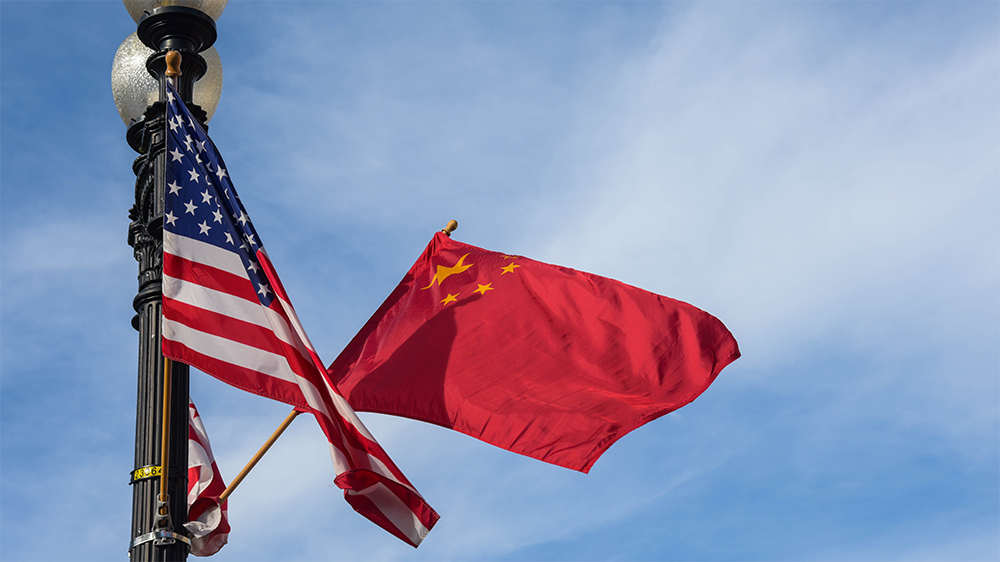
As soon as United States President Joe Biden took office on Jan 20, he signed 17 executive orders, including those returning the US to the World Health Organization and the Paris climate agreement. This conveyed a positive signal to the world that the US will return to the international community based on an approach of multilateralism.
Hua Chunying, spokeswoman for China's Foreign Ministry, has said China and the US need to be united, and that China-US relations need to be repaired.
"Many knowledgeable people in China, the US, as well as the international community, all hope China-US relations will get back to the right track in a timely manner, so the two countries can work together to solve the major pressing challenges facing the world today," Hua said.
Biden's presidency is a positive signal for the revival of globalization and an opportunity for China and the US to resuscitate cooperation. The new administration will likely focus more on domestic issues and is expected to deal with a rising China in a much more rational, consistent and predictable way than its predecessor.
Bilateral high-level, multichannel dialogue and exchange mechanisms between China and the US should be resumed in a timely manner. In the Trump era, exchanges and communication between China and the US made no progress-only economic and trade negotiations were maintained.
Political scientist Graham Allison, who coined the term Thucydides Trap-which describes the tendency toward conflict when an emerging power threatens to displace an existing power-believes that the Biden administration will establish a multilevel dialogue like the Obama administration did and will try to map out a clear plan.
Pandemic control brings arguably the best opportunity for Sino-US cooperation and for restoring multilateral global governance. Since China has accumulated rich experience in managing the pandemic, it would be significant for the two countries to communicate and promote global cooperation on pandemic control.
After the US rejoins the WHO, China and the US can promote international anti-pandemic cooperation, collaborate on global vaccine distribution through a multilateral framework, and jointly help vulnerable countries, which will benefit the whole world.
In addition, there is huge space for the two countries to jointly tackle the climate crisis. China and the US share similar goals and common interests regarding climate change. As the world's two biggest carbon emitters, cooperation between China and the US can significantly promote realization of the United Nations' Sustainable Development Goals. President Biden's commitment to tackle climate change is aligned with President Xi Jinping's proposal, made at the 75th UN General Assembly, that China will achieve carbon neutrality before 2060.
President Biden committed in his campaign to his administration investing $2 trillion to tackle global warming and environmental protection over the next four years, aiming at improving clean energy infrastructure in the US. China's capital and experience could be helpful to Biden's plan.
The US intends to return to the driver's seat of global climate governance. Of course, the efforts of just China and the US are not enough. To accelerate global carbon reduction and meet the development needs of underdeveloped and developing countries, an expansion of the G7 to G10 to include China, Russia and India may be considered. This G10 would include the world's top six carbon emitters and facilitate international multilateral climate cooperation.
This inclusion would also bring together representatives of developed and developing countries, which can build a bridge of communication and cooperation among countries at different developmental levels, and consider various green development cooperation models in an integrated manner.
The recovery of the global economy and improvement of global economic and trading rules amid the pandemic require China-US cooperation. Reform of the WTO has stagnated and COVID-19 has brought a negative impact to the world economy, which has prompted countries to seek new multilateral and bilateral agreements.
At the end of 2018, the Comprehensive and Progressive Agreement for Trans-Pacific Partnership took effect.
About two years later, the Regional Comprehensive Economic Partnership was formally signed. Then, on Dec 30 last year, negotiations on the EU-China Comprehensive Agreement on Investment were completed.
Just after the signing of the RCEP, President Xi announced that China will actively consider joining the CPTPP. Under this circumstance, not only can China and the US resume talks for a US-China bilateral investment treaty, but also take negotiations for joining the CPTPP as an opportunity to promote reform of the WTO.
China should also continue to deepen its reform and opening-up to create a favorable environment and implement "three zeros" trade-namely zero tariffs, zero non-tariff barriers and zero subsidies.
China and the US should ease restrictions on market access for each other's investments, which would be beneficial for both sides. Even though the US is restricting Chinese companies, China should adhere to its course of opening-up.
For China, there are benefits to cautiously allowing US companies, such as Google, Twitter and Facebook, to operate on the Chinese mainland. In this way, China could follow through on its commitment to continue opening-up.
For the US, relaxing sanctions on Chinese companies and apps such as Huawei, TikTok and Tencent would promote healthy competition among high-tech enterprises and accelerate innovation.
Sino-US cooperation is also important to international nuclear safety. China and the US share common interests on the nuclear issue of the Democratic People's Republic of Korea. The US and the DPRK could restart dialogue in due course, while China and the US could also enhance political dialogue and build mutual trust in mediating the DPRK nuclear issue.
The author is the president of the Center for China and Globalization in Beijing.