



The multilateral era has begun









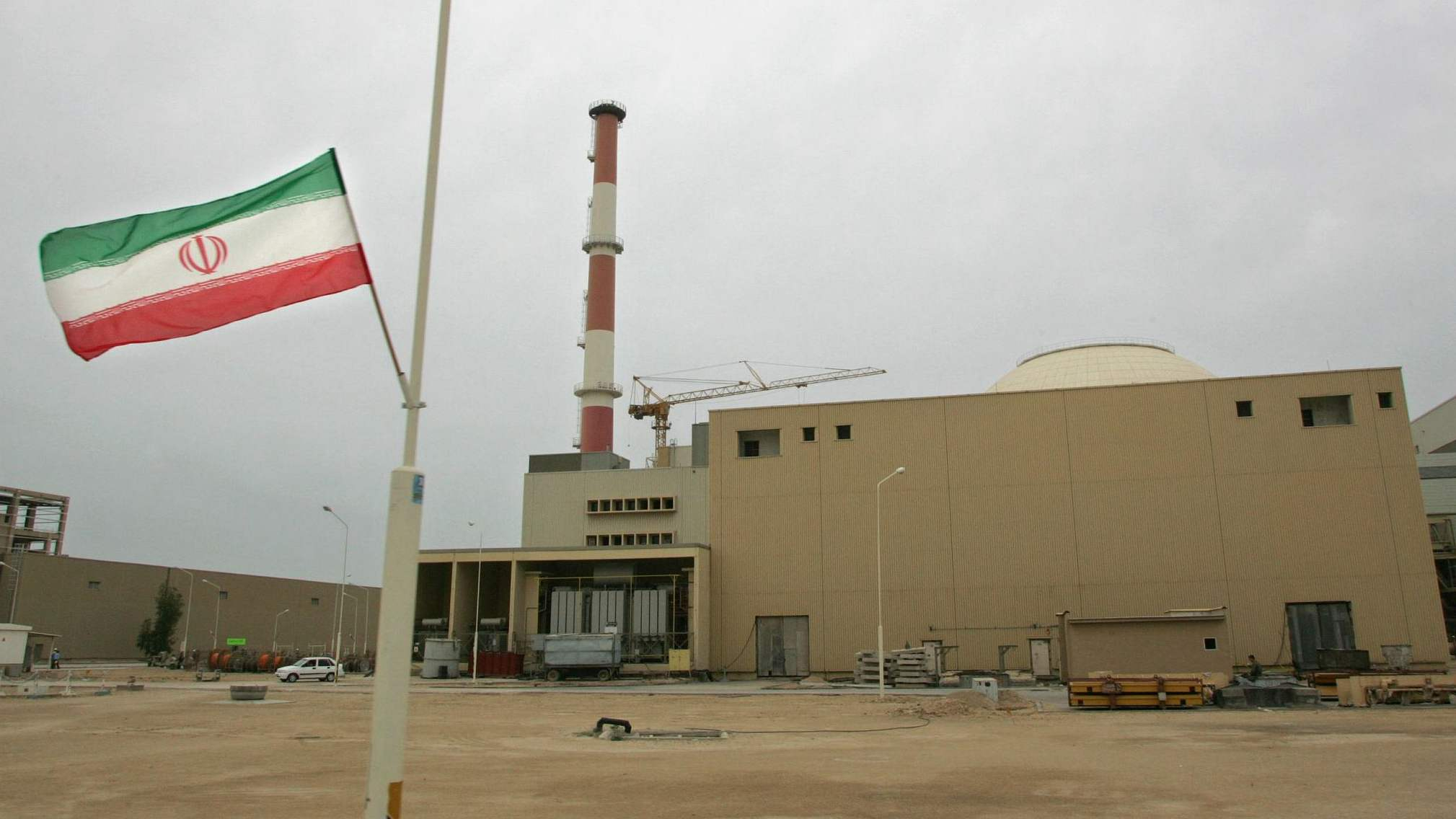
Iran's Supreme Leader Ayatollah Ali Khamenei took to Twitter on February 7, leveling heavy criticisms against the United States over its domestic and international affairs, pointing to Washington's freefall and also striking a confident tone by saying that Iran would reverse its steps toward nuclearization if the US first lifted sanctions.
With Iran having suffered greatly in 2020 due to COVID-19 and in serious need of access to international markets, what is behind Khamenei's proud declaration that "the post-US era has started" while a new, perhaps more friendly American administration is filing in?
Firstly, it should be noted that the demands from Tehran to lift sanctions would be in line with the 2015 Joint Comprehensive Plan of Action (JCPOA) that the previous US administration under President Donald Trump reneged on. It means that this would not actually be any sort of hand out. Iran had made good on its commitments until Trump breached the agreement and has made clear repeatedly that it would like to seek a mutually agreeable path moving forward.
More deeply, the confident tone from Khamenei about the "post-US" era beginning shows that his government doesn't even believe Washington is the main power broker on the agreement anymore. Mere days ago, Iranian Foreign Minister Mohammad Javad Zarif asked the European Union (EU) to mediate the situation regarding a return to the JCPOA, saying that Tehran could return to its commitments "in less than a day."
Such a development would be positive for the world. Nuclear proliferation in the Middle East – or anywhere else in the world – would be harmful to global security and avoiding it at all costs is mutually beneficial for everyone. Continuing sanctions against Iran, a country that has been devastated by COVID-19 largely due to the sanctions themselves, is also hopelessly immoral, pointless and disproportionately harms innocent civilians.
Europe understands this reality and has been working hard to mediate with Iran even as the previous US administration doubled down, hoping that his successor would reverse the aggression – a development that has yet to play out so far and will need some European nudging.
The US side under new Secretary of State Antony Blinken has not been as outwardly aggressive as the previous administration, but is obviously less committed to swift action on the issue. Blinken himself said that making good on the JCPOA commitments "may take some time" due to verification purposes.
While it might actually be true that verification might take some time, in the present context any diplomatic language that puts no emphasis on resolving the issue of sanctions as soon as possible is a non-starter because it assumes the same kind of unilateral thinking that led to this point. Washington thinks that it has all the chips – but it doesn't.
The evidence that the "post-US era" has begun, as Khamenei said, can also be seen in other situations. On February 4, for example, French President Emmanuel Macron joined a growing consensus of European leaders when he told the Washington-based think tank the Atlantic Council that the EU should not join the US in ganging up on China.
Generally speaking, the entire bloc, which was Washington's most proud partner for so long, is committing itself to strategic autonomy in international relations – with a heavy emphasis on multilateralism – after enduring decades of bad foreign policy from the US side. This was not just Trump – but also, for example, President George W. Bush who divided European countries during the 2003 invasion of Iraq.
In fact, the very thing that's happening right now, i.e. a sharp divergence in international relations due to US decline, was famously predicted by Russian President Vladimir Putin in his 2007 speech at the Munich Security Conference – about 10 years before Donald Trump ever became president.
"Unilateral and frequently illegitimate actions have not resolved any problems. Moreover, they have caused new human tragedies and created new centers of tension," Putin said.
The Russian president went on to reference the fact that issues are resolved on "so-called issues of political expediency, based on the current political climate," which often flouts fundamental international law (like the sanctions against Iran) and that "no one feels safe" because "no one can feel that international law is like a stone wall that will protect them."
Bizarrely taken in the West at the time to be the invocation of a new Cold War, Putin's words have undoubtedly been vindicated today and were echoed in Ali Khamenei's statements on Sunday. We are now in fact seeing the deconstruction of Cold War thinking and the emergence of a real rule-based world order.








