



Facial recognition problems can be solved with supervision, not outright ban









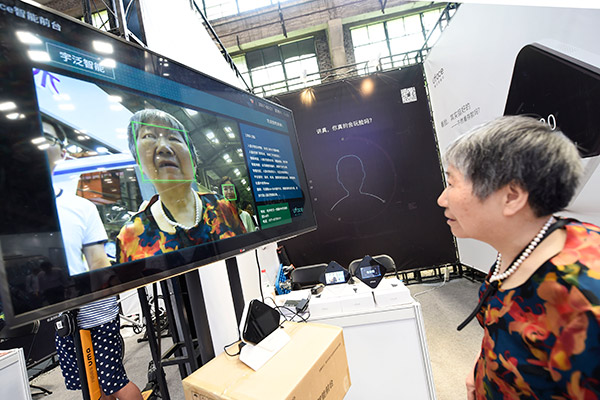
Earlier this year, the US city of Minneapolis proposed disabling facial recognition technology. "If we have cameras all over the city tracking in real time, keeping a record in real time of where everybody goes, that feels dystopian to me and that feels like it's open for abuse," said City Council member Steve Fletcher, a proponent of the proposed ordinance. If approved by the full committee on Feb 12, Minneapolis will completely ban facial recognition technology.
In fact, this is not the first city in the US to propose a ban on facial recognition technology. As early as the first half of 2019, San Francisco passed a proposal for a complete ban on facial recognition technology. Immediately afterwards, cities such as Los Angeles, Boston and Oregon also joined the ban on facial recognition technology groups. In addition, technology companies such as Amazon and IBM also said they would ban "biased" facial recognition technology.
Indeed, facial recognition technology has the risk of privacy leakage and abuse. At present, it also has its own "bias" problem; that is, the detection accuracy of light-skinned people is higher than that of dark-skinned people, and it is more accurate for men. This "bias" is regarded as racial prejudice in the United States, and the George Floyd incident has made the issue of racial prejudice in the United States more sensitive. At the same time, embarrassing incidents have occurred. Last June, a black man was mistakenly arrested in Michigan in due to an error in facial recognition. Facial recognition technology does have certain defects.
In the digital era, countries all over the world are accelerating the development of intelligent technology, and algorithms and machines have gradually entered life. We must admit the development of any technology has two sides. While bringing convenience, it can also be accompanied by risks. For example, deep synthesis technology also faces the risk of fraud. Intelligent recommendation systems also have the risk of spreading "fake news" in disguise. Facial recognition technology is certainly not perfect. But in any case, we should not "give up eating for fear of choking", or give up development because of the fear of technological risk.
Machine recognition of human faces began in the 1970s and has a 50-year history. So while acknowledging valid concerns, we should also see that facial recognition technology has been widely used to benefit mankind. For example, in criminal investigation, the non-profit organization Thorn provided Spotlight in 2015 to help investigators identify victims of human trafficking. In recent years, it has been used in more than 40,000 cases in North America and helped rescue 15,000 children and identify 17,000 traffickers. In addition, human facial biometrics are used in personal identity verification due to their convenience and stability. Facial recognition technology has brought many conveniences and benefits.
Facial recognition has also been used as a basic technology to serve a variety of other technologies. For example, as "data flooding" becomes more common, data retrieval and classification storage has become the basis of automation technologies. Facial recognition is key to this, especially as it involves the retrieval and storage of pictures and videos, and it almost impossible to bypass. Disabling facial recognition technology might "fundamentally" solve some problems, but this is not conducive to the healthy development of society and technology.
Furthermore, the risk of abuse of facial recognition technology, as mentioned by Congressman Steve Fletcher, is not an inevitable defect of the technology itself. It is more due to inadequate regulation and supervision. Minimizing risk should start with the sound supervision of the government and society at all levels, and laws and regulations to ensure orderly development of technology, rather than blindly banning it. The problem of prejudice is not a unique defect of facial recognition technology; algorithms will have an unavoidable bias problem. Facial recognition technology based solely on algorithms cannot achieve absolute fairness, so corrections will have to be made.
"All rivers run into the sea, and tolerance is great." The development of technology is a process of continuously discovering and repairing defects. We should give adequate tolerance to technical defects and give facial recognition technology the time it needs to update and improve. A uniform ban does not fundamentally solve social problems and will hinder social progress and development.





