



Kimchi vs paocai: Is there a rising cultural conflict?









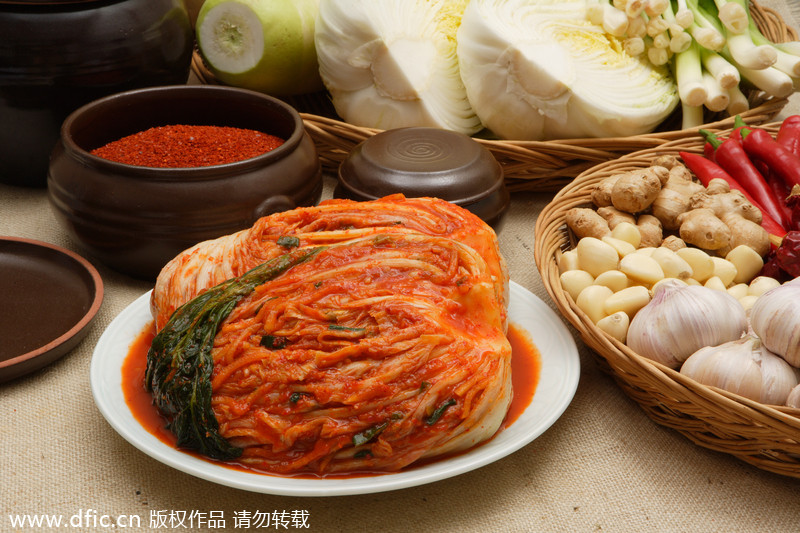
Li Ziqi, a well-known Chinese online video blogger and internet celebrity, released on Jan 9 a video about making paocai in the winter, which aroused a heated discussion among netizens from all over the world. The most controversial part of it was the debate between Chinese and South Korean netizens on the attribution and origin of paocai, as paocai and Korean kimchi are similar fermented foods.
In November last year, since Sichuan paocai was listed in the international standard, it had caused a dispute between Chinese and South Korean netizens. Some in the media called it a "kimchi war". However, I don't think this incident can reflect the reality between China and South Korea.
First, although both Sichuan paocai and Korean kimchi are fermented foods, there are big differences in the production process and taste. There are many similar fermented foods in Japan and other East Asian or Southeast Asian countries as well, so it does not mean that Sichuan paocai and Korean kimchi are the same kind of food. The addition of Sichuan paocai to international standards does not affect the status of Korean kimchi as a traditional Korean food. Sichuan paocai and Korean kimchi have different names, so they are not easily confused; it's meaningless to argue about their origin.
Secondly, this so-called "kimchi war" is mainly concentrated in the social media of China and South Korea, and the participants are mainly Chinese and South Korean netizens rather than officials. Social media is always flooded with negative comments from netizens, regardless of the news. Plus, in response to this, Chinese Foreign Ministry spokesperson Hua Chunying also commented that this type of food is widely available in various countries and has different flavors, so it should not generate antagonism between countries. Clearly the so-called "kimchi war" does not represent the opinions of the majority of the people in society or government.
So is there really an escalating cultural conflict between China and South Korea?
In fact, China and South Korea really don't have a great number of conflicts. With the development of the internet, China and South Korea have continuously deepened their understanding of each other at all levels. With the increase in international exchanges, China-South Korea relations have not regressed, but have deepened in terms of mutual understanding.
The exchanges between China and South Korea continue to expand within political and social levels. At the political level, it's not difficult to see that China-South Korea relations have been improving in recent years; for example, consider the multiple visits and meetings between China and South Korea in 2020 and the mutual assistance between China and South Korea during the pandemic. At a social level, such continuous and in-depth exchanges appear in all aspects of the lives of the people of China and South Korea in a broader and more obvious way. For example, Chinese delicacies such as malatang and hotpot are everywhere on the streets of Korea. The popular combination of Tsingtao beer and lamb kebabs has been sweeping the streets and alleys in South Korea and become widely embraced by the people there. Many Chinese TV series, movies and idols are also hot in South Korea, as are Chinese tech products such as those from Xiaomi and DJI.
The inherent misconceptions of a small number of South Koreans about China's backwardness have gradually disappeared in the deepening of such cultural exchanges. China has imposed restrictions on entertainment and tourism in South Korea since 2016, which has led to a sharp decline in China-South Korea nongovernmental cultural exchanges in the past few years. Still, with the improvement of political relations between the two countries, especially in 2020, restrictions on the South Korean entertainment industry's entry into the Chinese market are gradually decreasing. Some South Korean celebrities have participated in the endorsement of Chinese products, and South Korean entertainment idols have frequently appeared in Chinese variety shows. Such signs indicate that China-South Korea relations have recovered significantly in recent years, especially at the social level.
In summary, the so-called "kimchi war" is not representative of the true reality of Sino-South Korean ties. In the post-pandemic era, with the gradual recovery of tourism and international trade, relations between the two countries will further improve with the deepening of mutual exchanges.
The author is a student from Underwood International College at Yonsei University. The opinions expressed here are those of the writer and do not necessarily represent the views of China Daily and China Daily website.
If you have a specific expertise and would like to contribute to China Daily, please contact us at opinion@chinadaily.com.cn, and comment@chinadaily.com.cn.





