



Canada is exactly trampling upon human rights by fabricating lies about Xinjiang-related issues









The Xinjiang-related motion recently passed by Canada's House of Commons, which seriously distorts facts and attacks China's Xinjiang policies, is a gross interference in China's internal affairs and malicious provocation against the 1.4 billion Chinese people.
It fully exposed the hypocrisy and vicious intention of certain Canadian politicians to undermine Xinjiang's development and stability, and interfere in China's internal affairs.
The essence of Xinjiang-related issues is about combating violent terrorism, radicalization and secession. China's Xinjiang Uygur Autonomous Region has sincerely implemented the UN's Plan of Action to Prevent Violent Extremism, learned from similar practices in other countries, and conducted de-radicalization practices in accordance with the law. What it has done completely conforms to the principles and spirits in the UN Global Counter-Terrorism Strategy, and is important and effective for preventing terrorism and combating radicalization. The fact that there has been no violent terrorist case for more than four years in a row in Xinjiang is the best proof.
The so-called "genocide" claimed by Canada's House of Commons is complete nonsense.
China's constitution and law on regional ethnic autonomy have made clear regulations on the protection of the development and interests of ethnic groups. According to these laws, all people in Xinjiang, including women from all ethnic groups, enjoy human rights protected by the constitution and laws.
From 2010 to 2018, the Uygur population in Xinjiang rose from 10.17 million to 12.72 million, an increase 25 percent. The growth rate is higher than that of the whole population in Xinjiang, which is 14 percent, and that of all ethnic minority groups, which is 22 percent. The growth rate of the Han population stood at 2 percent during the same period.
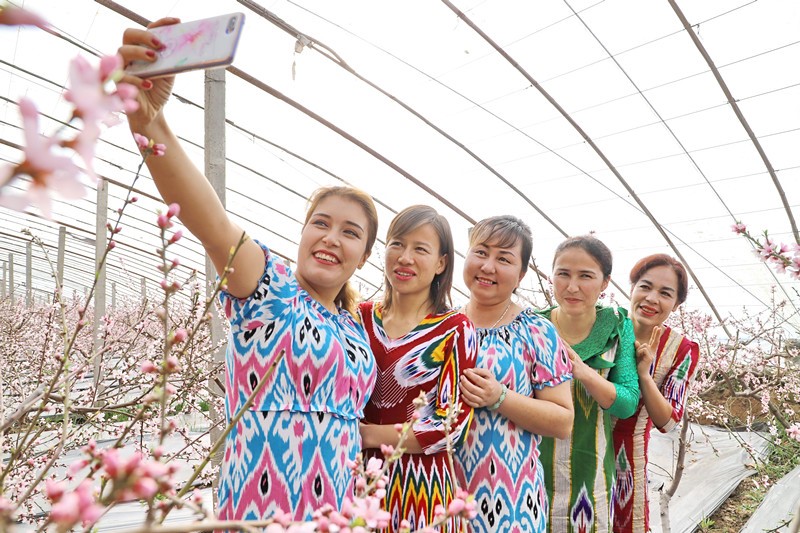
Xinjiang now enjoys social stability, with the people living and working in peace and contentment. All ethnic groups in the region are united in harmony, and the basic human rights of people from all ethnic groups, including the rights to life, health and development, are well protected. This is an undeniable fact.
Some Canadian politicians have never been to Xinjiang, or even China, but are engaged in political manipulation on Xinjiang-related issues under the pretext of human rights, trying to destroy Xinjiang's social stability by fabricating lies. What they have done has exactly undermined human rights.
Posed as a human rights preacher, Canada indeed has a very poor record of human rights protection. In 1870s, the Canadian government put assimilation of aboriginal people on its official agenda, and implemented a policy of cultural extinction against aborigines through the establishment of boarding schools. School-age aboriginal children were forcibly taken away from their families, forced to convert to Christianity, and banned from using indigenous languages. Many children involved were sexually assaulted and beaten.
From establishing the first boarding school in 1870, to shutting the last one in 1996, this policy lasted for over a century. According to incomplete figures, over 150,000 aboriginal children were forced to go to these schools, 50,000 of whom were beaten to death.
Canada's Truth and Reconciliation Commission reached a conclusion in 2015 that the country's former policy of forcibly putting aboriginal children into boarding schools can best be described as "cultural genocide."
Besides, a report released in 2019 concluded that Canadian governments at all levels held serious prejudices and had structural problems in dealing with cases related to indigenous women, which is even amounted to a "Canadian genocide."
Obviously, what Canada needs is introspection.
Xinjiang-related affairs are China's internal affairs that allow no foreign interference. China is determined to safeguard national sovereignty, security and development interests.
Being addicted to ideological confrontation and fabricating stories about China, some Canadian politicians would only end up in vain. What awaits them is condemnation.
The Xinjiang-related motion recently passed by Canada's House of Commons, which seriously distorts facts and attacks China's Xinjiang policies, is a gross interference in China's internal affairs and malicious provocation against the 1.4 billion Chinese people.
It fully exposed the hypocrisy and vicious intention of certain Canadian politicians to undermine Xinjiang's development and stability, and interfere in China's internal affairs.
The essence of Xinjiang-related issues is about combating violent terrorism, radicalization and secession. China's Xinjiang Uygur Autonomous Region has sincerely implemented the UN's Plan of Action to Prevent Violent Extremism, learned from similar practices in other countries, and conducted de-radicalization practices in accordance with the law. What it has done completely conforms to the principles and spirits in the UN Global Counter-Terrorism Strategy, and is important and effective for preventing terrorism and combating radicalization. The fact that there has been no violent terrorist case for more than four years in a row in Xinjiang is the best proof.
The so-called "genocide" claimed by Canada's House of Commons is complete nonsense.
China's constitution and law on regional ethnic autonomy have made clear regulations on the protection of the development and interests of ethnic groups. According to these laws, all people in Xinjiang, including women from all ethnic groups, enjoy human rights protected by the constitution and laws.
From 2010 to 2018, the Uygur population in Xinjiang rose from 10.17 million to 12.72 million, an increase 25 percent. The growth rate is higher than that of the whole population in Xinjiang, which is 14 percent, and that of all ethnic minority groups, which is 22 percent. The growth rate of the Han population stood at 2 percent during the same period.
Xinjiang now enjoys social stability, with the people living and working in peace and contentment. All ethnic groups in the region are united in harmony, and the basic human rights of people from all ethnic groups, including the rights to life, health and development, are well protected. This is an undeniable fact.
Some Canadian politicians have never been to Xinjiang, or even China, but are engaged in political manipulation on Xinjiang-related issues under the pretext of human rights, trying to destroy Xinjiang's social stability by fabricating lies. What they have done has exactly undermined human rights.
Posed as a human rights preacher, Canada indeed has a very poor record of human rights protection. In 1870s, the Canadian government put assimilation of aboriginal people on its official agenda, and implemented a policy of cultural extinction against aborigines through the establishment of boarding schools. School-age aboriginal children were forcibly taken away from their families, forced to convert to Christianity, and banned from using indigenous languages. Many children involved were sexually assaulted and beaten.
From establishing the first boarding school in 1870, to shutting the last one in 1996, this policy lasted for over a century. According to incomplete figures, over 150,000 aboriginal children were forced to go to these schools, 50,000 of whom were beaten to death.
Canada's Truth and Reconciliation Commission reached a conclusion in 2015 that the country's former policy of forcibly putting aboriginal children into boarding schools can best be described as "cultural genocide."
Besides, a report released in 2019 concluded that Canadian governments at all levels held serious prejudices and had structural problems in dealing with cases related to indigenous women, which is even amounted to a "Canadian genocide."
Obviously, what Canada needs is introspection.
Xinjiang-related affairs are China's internal affairs that allow no foreign interference. China is determined to safeguard national sovereignty, security and development interests.
Being addicted to ideological confrontation and fabricating stories about China, some Canadian politicians would only end up in vain. What awaits them is condemnation.
The Xinjiang-related motion recently passed by Canada's House of Commons, which seriously distorts facts and attacks China's Xinjiang policies, is a gross interference in China's internal affairs and malicious provocation against the 1.4 billion Chinese people.
It fully exposed the hypocrisy and vicious intention of certain Canadian politicians to undermine Xinjiang's development and stability, and interfere in China's internal affairs.
The essence of Xinjiang-related issues is about combating violent terrorism, radicalization and secession. China's Xinjiang Uygur Autonomous Region has sincerely implemented the UN's Plan of Action to Prevent Violent Extremism, learned from similar practices in other countries, and conducted de-radicalization practices in accordance with the law. What it has done completely conforms to the principles and spirits in the UN Global Counter-Terrorism Strategy, and is important and effective for preventing terrorism and combating radicalization. The fact that there has been no violent terrorist case for more than four years in a row in Xinjiang is the best proof.
The so-called "genocide" claimed by Canada's House of Commons is complete nonsense.
China's constitution and law on regional ethnic autonomy have made clear regulations on the protection of the development and interests of ethnic groups. According to these laws, all people in Xinjiang, including women from all ethnic groups, enjoy human rights protected by the constitution and laws.
From 2010 to 2018, the Uygur population in Xinjiang rose from 10.17 million to 12.72 million, an increase 25 percent. The growth rate is higher than that of the whole population in Xinjiang, which is 14 percent, and that of all ethnic minority groups, which is 22 percent. The growth rate of the Han population stood at 2 percent during the same period.
Xinjiang now enjoys social stability, with the people living and working in peace and contentment. All ethnic groups in the region are united in harmony, and the basic human rights of people from all ethnic groups, including the rights to life, health and development, are well protected. This is an undeniable fact.
Some Canadian politicians have never been to Xinjiang, or even China, but are engaged in political manipulation on Xinjiang-related issues under the pretext of human rights, trying to destroy Xinjiang's social stability by fabricating lies. What they have done has exactly undermined human rights.
Posed as a human rights preacher, Canada indeed has a very poor record of human rights protection. In 1870s, the Canadian government put assimilation of aboriginal people on its official agenda, and implemented a policy of cultural extinction against aborigines through the establishment of boarding schools. School-age aboriginal children were forcibly taken away from their families, forced to convert to Christianity, and banned from using indigenous languages. Many children involved were sexually assaulted and beaten.
From establishing the first boarding school in 1870, to shutting the last one in 1996, this policy lasted for over a century. According to incomplete figures, over 150,000 aboriginal children were forced to go to these schools, 50,000 of whom were beaten to death.
Canada's Truth and Reconciliation Commission reached a conclusion in 2015 that the country's former policy of forcibly putting aboriginal children into boarding schools can best be described as "cultural genocide."
Besides, a report released in 2019 concluded that Canadian governments at all levels held serious prejudices and had structural problems in dealing with cases related to indigenous women, which is even amounted to a "Canadian genocide."
Obviously, what Canada needs is introspection.
Xinjiang-related affairs are China's internal affairs that allow no foreign interference. China is determined to safeguard national sovereignty, security and development interests.
Being addicted to ideological confrontation and fabricating stories about China, some Canadian politicians would only end up in vain. What awaits them is condemnation.
(Zhong Sheng is a pen name often used by People's Daily to express its views on foreign policy.)





