



Will India be cat's paw in Indo-Pacific strategy?









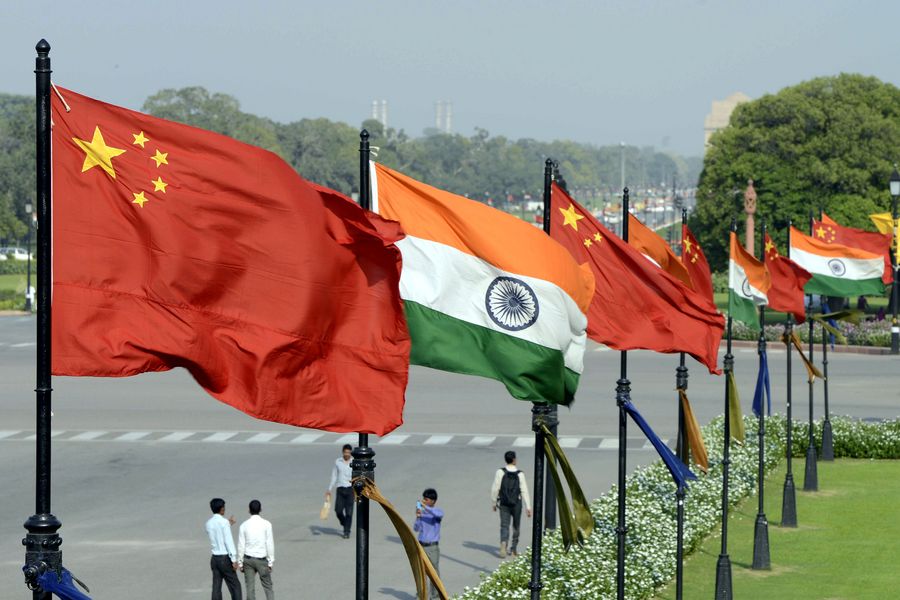
The United States seems desperate to include India into its Indo-Pacific strategy, especially after China-India relations suffered a setback due to the border clash last year.
But despite that, can China and India still repair their damaged ties and maintain cooperation under a multilateral framework?
The months-long military standoff along the disputed border in 2020 not only soured Sino-Indian relations but also raised regional tensions. And the deaths of four Chinese and 20 Indian soldiers in the border clash dealt a heavy blow to the two countries.
Fortunately, China and India managed to control the situation by holding several rounds of talks at different levels. The two sides also agreed to military disengagement, pulling back troops and setting up buffer zones in February. Still, the two countries need to make more efforts to put bilateral ties back on track.
The good news amid all the grim headlines last year was that despite the Indian government banning hundreds of Chinese apps, which caused huge losses to companies on both sides, China replaced the United States to become India's top trade partner in 2020, according to Indian official data. This shows that it's not easy for either side to abandon bilateral ties, especially economic and trade ties.
Chinese companies' growing competence and competitiveness have helped them to establish a firm footing in global markets including India. Not for nothing do Chinese enterprises, including those from Hong Kong, account for 131 of the Fortune Global 500 companies-exceeding the US' 121.
The complementary economic and trade structure of China and India is the basic reason for the relatively stable trade and economic ties between the two sides notwithstanding the border clash. India desperately needs to build new infrastructure facilities to boost its economic growth and China's rich experience in infrastructure construction opens up innumerable opportunities for mutual development.
India has been importing telecommunication and electronic products, machinery, and pharmaceutical chemicals from China, and China has been purchasing minerals, iron-ore and chemical products from India. Also, China has a fast growing entertainment market where Indian films have gained increasing popularity reaping rich benefits. The complementary nature of the Chinese and Indian economies has not only increased mutual economic benefit but also deepened cultural exchanges.
In his meetings with Indian Prime Minister Narendra Modi in 2017 and 2019, Chinese President Xi Jinping said healthy and stable relations between China and India are in line with the fundamental interests of their people.
China and India are the world's largest and second-largest developing countries, with rich histories marked by both prosperity and suffering. With a combined population of 2.7 billion, the two countries are also the fastest-growing economies. And by strengthening mutual trust and overcoming the setbacks, the two neighbors can better serve their interests and contribute more to global development.
Under the BRICS mechanism, China and India have expanded cooperation with three other major emerging economies, Russia, Brazil and South Africa, to promote mutual economic development. China and India are also part of a group of countries with the highest potential for growth in the next 50 years.
Global cooperation mechanisms are important platforms for deepening China-India cooperation. For instance, BRICS countries have been working together to address global issues, and speaking for all developing countries. India will host the BRICS summit this year and China has conveyed its willingness to advance dialogue, push forward the agenda of greater political, economic, and cultural cooperation, and expand "BRICS Plus" to benefit more developing economies.
After the border clash and the monthslong standoff, and the COVID-19-induced global economic recession, China has taken measures to promote win-win cooperation with India. And it is expected that India will make similar efforts to continue the meaningful dialogue and cooperation with China to realize mutual benefit and boost the development of the Asian region and beyond.
The author is a distinguished professor and director of the Institute of Bay of Bengal Studies, Shenzhen University.
The views don't necessarily reflect those of China Daily.





