Downturn highlights how much London relies on tourism









More than a year of lockdowns and international travel restrictions has had a devastating effect on tourism, a sector that contributed almost $3 trillion to the world economy in the year before the COVID pandemic struck.
Among the biggest per capita losers have been small island nations whose economies are almost exclusively dependent on foreign visitors flocking to their resorts.
But the downturn has also affected the economy of major cities, where the contribution made by visitors from overseas is often dismissed as an afterthought.
Take the example of London. A trip to the United Kingdom's capital has been on the wish list of a growing number of international travelers in recent years, with Chinese tourists alone accounting for almost 400,000 visits in 2019.
They and the more than 20 million other tourists who visit London annually account for around 12 percent of the capital's income and support one in seven of its jobs.
Before the pandemic, the London authorities had looked forward to boosting visitor numbers to an annual 40 million by 2025, earning the city£22 billion ($30.6 billion) a year.
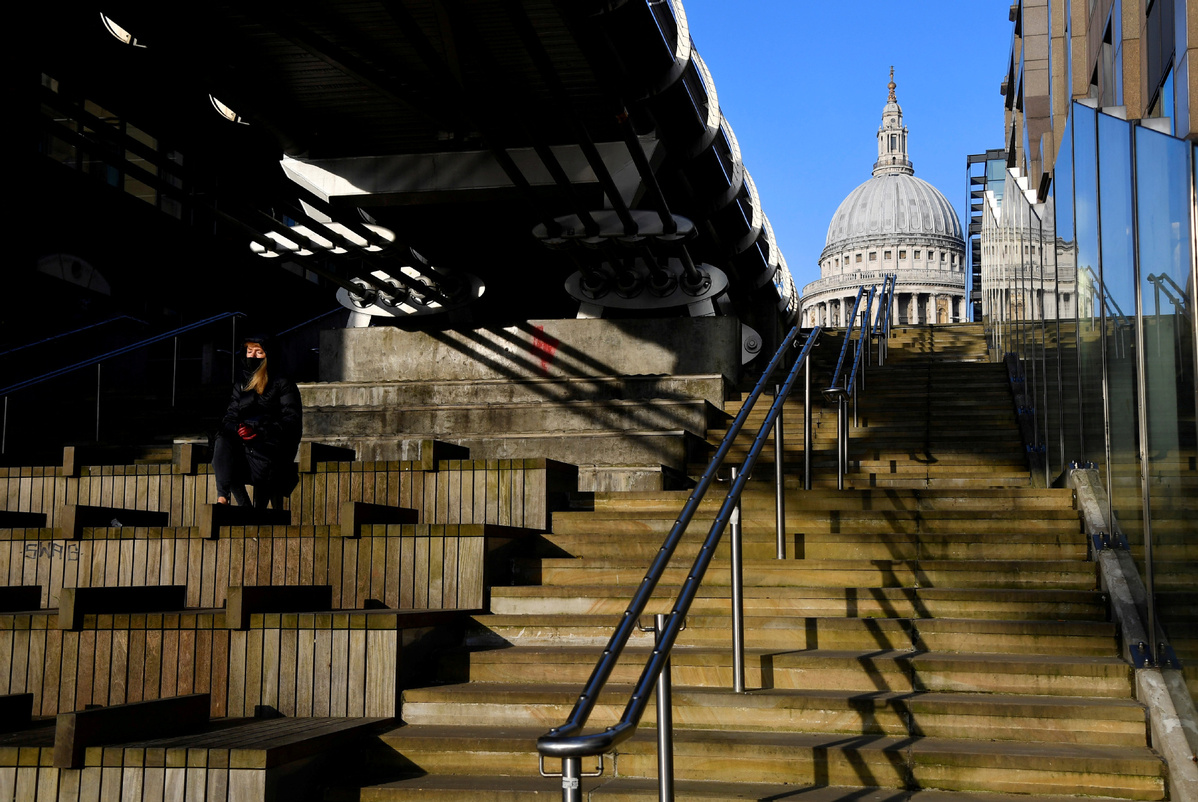
For now, however, the place that boasts of being the world's most international city has turned into a tourist wasteland. Even if foreign visitors were able to travel freely to London at the moment, there is not much for them to do after months in which the main attractions have been locked, restaurants and clubs shuttered and shops deserted.
The same bleak picture is apparent in other major European cities, many of them now confronting a resurgence of COVID cases. In London, however, prospects are unusually stark after a year in which the UK notched up one of the highest death rates from the pandemic.
With the economy slowly opening up again, tourism officials predict a modest revival in 2021, but visitor numbers are still likely to be well below 50 percent of those previously predicted.
At the height of the pandemic, the office of the London mayor estimated that spending by overseas visitors would plunge by£7.4 billion in 2020, far more than the losses incurred from having much of the commuting London workforce working from home during the crisis.
Mayor Sadiq Khan said "the eye-watering drop in the money spent by visitors" meant many businesses were in danger of closing, putting thousands of jobs at risk.
Londoners who had been only half aware of the contribution that tourism makes to their city's economy are waking up to the fact that all the attractions they take for granted-the shops, the museums, the world-leading theaters-rely on income from abroad.
In London's West End theater and entertainment district, foreign tourists account for half of visitors.
Patience Wheatcroft, who chairs the Association of Leading Visitor Attractions, said: "Tourism is one of London's largest and most important industries, and we know that four in five overseas tourists to London are motivated to come here for our culture-our theaters, museums, galleries and attractions."
The tourism downturn has come at a time when the UK is already grappling with the consequences of its departure from the European Union. Many of the workers in London's hospitality sector are EU citizens. During the pandemic, many of them returned home, and it is unclear how many will return, given concerns about their post-Brexit status.
Their departure has been one factor in a fall in London's population, the first since 1988. The accountancy firm PwC estimated the population would fall by 300,000 this year from about 9 million in 2020, in part as a result of fewer job opportunities in the city and lower international migration because of the pandemic and the Brexit effect.
Mayor Khan, facing reelection in May, has announced plans to hold a series of major events in London to attract domestic and foreign visitors alike and head off a potential£36 billion hole in the city's finances over the next decade.
"London's brand is an amazing global asset for the UK, and the income it generates is vital to the whole country's economy," Khan said.
London has undergone many transformations in its illustrious history. In the past half-century, it has evolved in a post-industrial age into a financial powerhouse, although that status may yet be challenged by the consequences of Brexit.
Let's hope the initiative of Khan and others has a positive effect. A post-tourism London might be just too much to bear.
Harvey Morris is a senior media consultant for China Daily UK.