Patent waivers alone won't improve access to vaccines









Disparate access to vaccines is leading to the creation of two classes of countries, the haves and havenots. Countries with wealth or the capacity to make vaccines against the novel coronavirus are in a place that's very different from those without.
Unfortunately for the world, life will not really return to a pre-pandemic normal until the virus is controlled pretty much everywhere. And that will require protection on a global scale. The fastest and least painful way to achieve this level of protection is vaccines.
Global immunization campaigns to protect against diseases on a global scale have taken decades. Over time, they are quite doable. The challenge now is that time is an issue. The cost of keeping borders shut, restaurants closed, tourism industries crippled and hospitals full for another month or year is prohibitive and translates directly into higher poverty rates and human suffering.
But knowing what has to be done is one thing. Knowing how to do it is another.
The sheer speed at which companies developed vaccines to protect against COVID-19 has been nothing short of miraculous. The challenge is to make and distribute billions of doses-tens of billions-to reach everyone.
What is required is for vaccines to be made in more places. Higher-income countries or countries with vaccine manufacturing capacity-like China, India and Brazil-are making them fast, but not fast enough.
Nations like the United States, Canada and the United Kingdom have given first shots or fully vaccinated around half (or more) of their populations. China, administering millions of doses to its citizens, has sent millions more to other countries.
But other places, from Argentina to Kenya, from Thailand to South Africa, are moving nowhere near as fast. So the calls for vaccines to be made more widely available are getting some attention.
The announcement in early May that the US government was considering waiving patents for COVID-19 vaccines generated vigorous, if somewhat meaningless, debate.
Companies have invested billions in developing vaccines and patenting the technologies used to develop them. Patents allow companies to protect their investments.
However, to be clear, waiving patents for badly needed COVID-19 vaccines or drugs is not likely to bring down pharmaceutical companies; nor will it destroy innovation. In the mid-1990s, patent waivers were issued for HIV/AIDS drug cocktails, and the ultimate impact was a good one for everyone. HIV/AIDS was brought broadly under control. But it took time, and time now is short.
Part of the truth is, even if the US or other rich nations were to forcibly waive patents for COVID-19 vaccines, poorer nations with no vaccine manufacturing capacity would see virtually little immediate benefit.
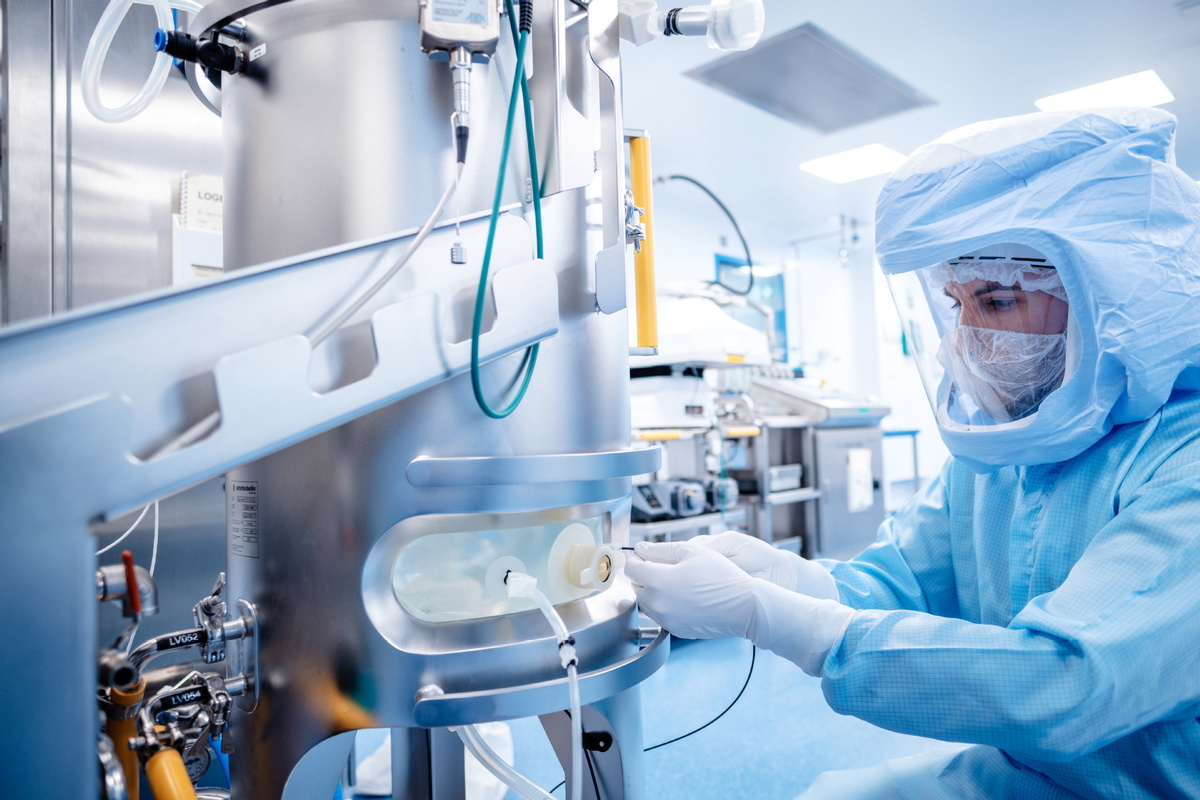
Making vaccines is not easy. They have to be made in controlled facilities that require a lot of technology that is not available everywhere. Even with a patent waiver, many countries will not be able to produce vaccines.
Even with a patent waiver, it could take years for some countries to put in place the capacity to manufacture vaccines.
What poorer nations need is not patent waivers but the ability to manufacture vaccines at scale. They need the technology to manufacture vaccines, and not just traditional inactivated virus vaccines but also the relatively new (and harder to make) mRNA vaccines.
The good news is that these transfers are already happening in pockets.
Chinese companies Sinovac Biotech and CanSino Biologics are considering technology transfers. Yin Weidong, Sinovac's CEO, has said the company will try to sort out technology transfers to 10 different countries. CanSino CEO Yu Xuefeng said the company is considering technology transfers to places like Mexico and Pakistan.
Elsewhere, AstraZeneca is working with the Serum Institute of India to make its vaccine en masse, and is working on technology transfer agreements with the Oswaldo Cruz Foundation in Brazil.
A lot more such transfers are needed, and fast.
To speed up the production of vaccines, companies should be given incentives to transfer their technology. If the threat of waiving patents can speed up such transfers, then great, but just waiving patents is not necessarily a useful goal in itself.
The author is managing director of Bahati, an editorial services agency based in Hong Kong. The views do not necessarily reflect those of China Daily.