



Compensation mechanism key to protection of wild animals









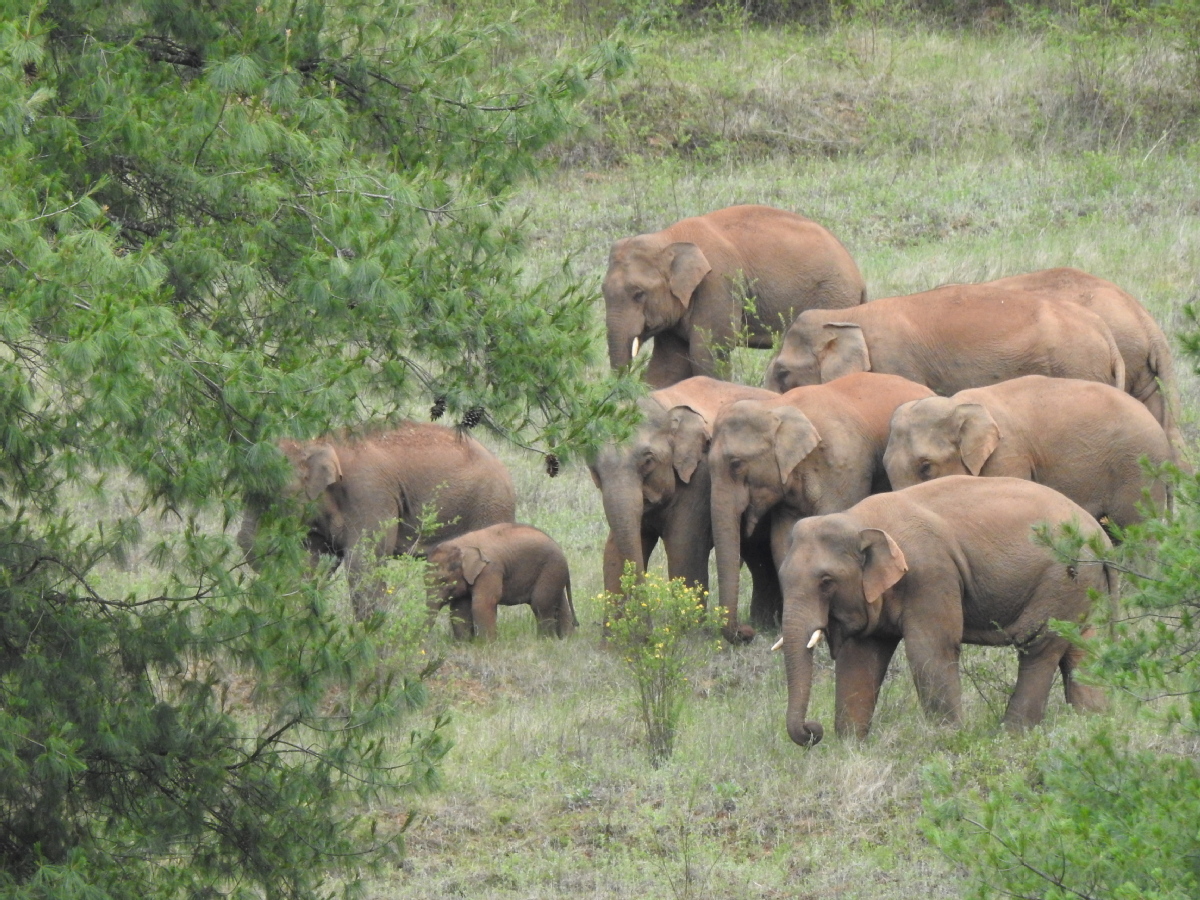
More than a dozen wild Asian elephants have wandered away from their habitat in the Xishuangbanna National Nature Reserve in Yunnan province and are moving northward. People are curious to know where the herd is headed, and when and how it will return to its habitat, while many want to know how to prevent human-animal conflicts, especially around forests.
Establishing nature reserves is the most effective way of protecting flora and fauna, endangered and threatened species in particular. China established its first nature reserve in 1956. By the end of 2019, it had built 2,750 such reserves, spread across 1.47 million square kilometers, effectively helping protect 90 percent of China's terrestrial ecosystem and 85 percent of key wildlife.
Because of such nature reserves, the ecology of habitats is improving, and the number of non-key protected animals such as wild boars is on the rise.
When wild boars damage crops, farmers need to apply to the local government to seek compensation, but in some areas funds for such compensation have not been arranged yet.
Considering that wild Asian elephants, Siberian tigers, black bears and some other animals under first-class State protection are entering villages from time to time, how to protect the economic interests and safety of people living in areas around the nature reserves is a major challenge.
The 19th National Congress of the Communist Party of China in October 2017 called for the establishment of a system of protected natural areas led by national parks. To further promote the reform of the protected natural areas, the country should improve the compensation mechanism for economic losses caused by wild animals. Also, effective measures need to be taken to improve the living conditions of residents living around protected natural areas.
First, the government should increase the compensation, even explore the option of raising funds for compensation through the market.
Second, the country should promote the establishment of public liability insurance for crops damaged by wild animals under State protection, which can be fully or mostly paid by a local government, to jointly introduce public liability insurance with insurance companies.
Third, measures should also be taken to explore the compensation mechanism for crop damage caused by non-key protected animals and explore a new economic compensation mechanism, especially for determining the extent of the damage and setting the compensation standards.
Certain policy support can also be introduced as part of an innovative compensation system.





