In harmony with nature
Chinese inroads in wildlife conservation,biodiversity offer balanced approach to global sustainability, leading environmental expert tells Alexis Hooi.









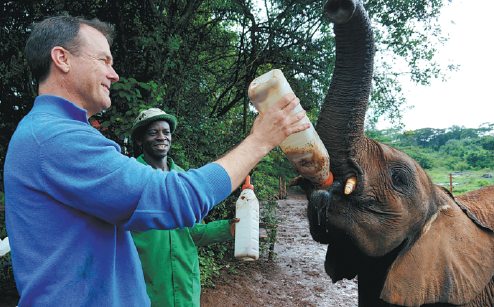
From Asian elephants to the giant pandas and Tibetan antelopes, China's major achievements in protecting wildlife and its natural habitat amid rising environmental challenges can serve to inspire other countries, according to a leading conservation specialist.
"China's successes are the result of sustained efforts and resources being allocated to wildlife conservation that are commensurate with the challenges. During my many visits, I have seen for myself the respect that China shows for its wildlife and protected areas, and the strong measures it takes to safeguard them, recognizing they are an integral part of China's cultural and natural heritage and to achieving a 'harmonious society'," John E. Scanlon says.
Between 2010 and 2018, Scanlon served as secretary-general of CITES (Convention on International Trade in Endangered Species of Wild Fauna and Flora), then with nonprofit group African Parks as its first special envoy (2018-20). He is now chief executive officer of the Elephant Protection Initiative Foundation, chair of the Global Initiative to End Wildlife Crime and chair of the United Kingdom's Illegal Wildlife Trade Challenge Fund.
Scanlon has visited about 50 countries in the course of his conservation work, including China on more than 10 occasions. He has participated in multiple CITES workshops hosted by China, covering crucial issues such as the Asian snake trade, sharks and ray listings, and demand-side strategies for combating illegal trade in ivory.
"I have always been taken by China's eagerness to learn from others. It has an appetite for lifelong learning. When visiting China, I saw how it was blending what was being learned from outside of China, with local and traditional knowledge, and applying it to China's own circumstances," he says.
"China is one of the oldest civilizations in the world, with a rich natural and cultural heritage. It is the most populous nation on Earth, representing close to one-fifth of the world's population.
"Despite the challenges, China has achieved many great successes in protecting its wildlife and wild areas, which can serve to inspire many other countries. The wild population of Asian elephants in China is one of the few in the world that is healthy and growing. And the giant panda and Tibetan antelope were removed from the list of endangered species on the IUCN (International Union for Conservation of Nature) Red List thanks to the success in protecting the species in the wild," he says.
Scanlon says he sees wonderful opportunities to share China's experiences, including those that involve preventing and mitigating human-elephant conflict, which poses a common challenge.
"We have a lot to learn from China about how to successfully manage wildlife and protected areas in a very heavily populated country, including how to manage human-wildlife conflicts. China works to find the right balance. This is of particular relevance to African countries as the population of the African continent is expected to grow from 1.2 billion to 2.4 billion by 2050, with many countries coming under pressure from increasing incidents of human-wildlife conflict," he says.
When China banned its domestic ivory market at the end of 2017 to fulfill conservation commitments, the move "affected the processing, trade and movement of elephant ivory both within and between the Chinese provinces, which gave it extraordinary reach across the country", Scanlon says.
"I witnessed for myself the commitment of the Chinese government to implementing this ban in Beijing 2017, and the success of these measures was recently reflected in the results of a 2020 ivory survey," he says.
"The banning of domestic ivory markets was not initially supported by everyone, most particularly those involved in legal domestic ivory sales. China placed the interests of protecting Africa's elephants above those of the traders, but it did so in a manner that balanced its decision with the concerns of traditional master craftsmen. Its ban did not prevent certain master craftsmen from traditional carving for noncommercial purposes, drawing upon existing ivory stockpiles. This enabled China to achieve a balance between both stopping the commercial demand for ivory, while preserving its ancient tradition."