



Fast-moving consumer goods showing steady improvement









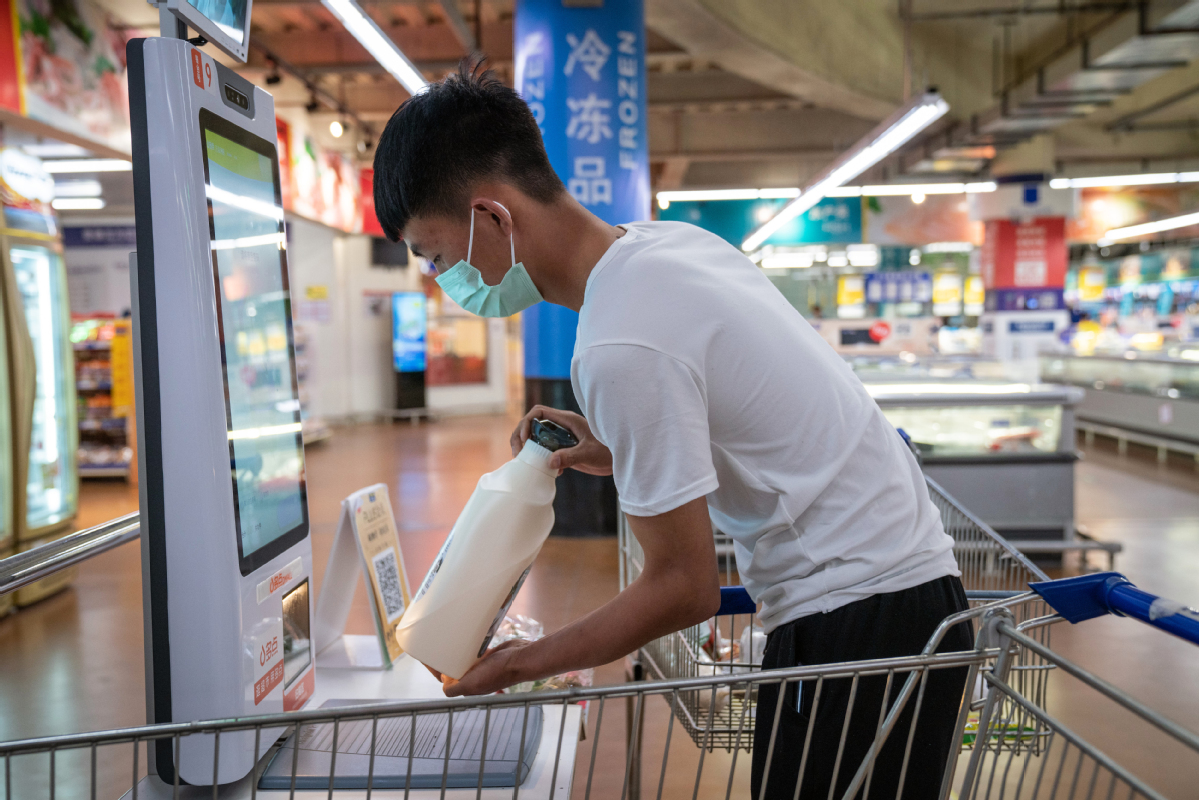
Pandemic creates transformation in buying platforms; focus is on hygiene
Fast-moving consumer goods spending ticked up slightly in the first quarter, with the lingering COVID-19 pandemic exerting an impact on purchasing habits of Chinese consumers across many categories, according to a recent retail report.
Modest spending gains between January and March this year contributed to a 1.6 percent year-on-year growth, according to the first edition of China Shopper Report 2021, jointly commissioned by Bain & Company and Kantar Worldpanel.
The consultancies monitored 26 key categories spanning the four largest consumer goods sectors-packaged foods, beverages, personal care and home care.
The report said that volume was the key contributor to value growth, spurred by a recovery in the frequency of shopping trips.
"We have seen that COVID-19 altered the way Chinese consumers think about why and how they purchase fast-moving consumer goods," said Bruno Lannes, a partner at Bain based in Shanghai. "Throughout the crisis, the drive has been to keep themselves and their families healthy and safe, so they have been focused on purchasing products in a way to help them achieve this goal."
For instance, in certain categories, COVID-19 led to some unexpected consumption habits that when combined with a return to pre-pandemic market trends, compounded the effect.
"In China, ice cream was not a popular treat at home until the pandemic, when locked-down consumers sought comfort food. Now they are still buying ice cream at record rates," said Jason Yu, general manager of Kantar Worldpanel China.
It was similar when public health expert Zhang Wenhong suggested milk should be a regular part of the Chinese breakfast, dramatically stimulating sales of milk and also propping up the yearslong trend toward foods and beverages perceived to be healthy.
The report also took a retrospective look at retail performance last year. Food categories experienced a 3 percent price deflation, which was offset by a 5.7 percent volume growth to deliver 2.7 percent value growth.
The deflation and value gains resulted from consumers purchasing large quantities of instant noodles, soup mixes and other relatively inexpensive ready-to-eat food categories during the lockdown.
Beverage sector revenue fell 4 percent, reflecting the steep decline in social gatherings at home and reduced gifting occasions.
Home care achieved the strongest sales growth of 7.7 percent, which was slightly lower than in each of the previous two years. Home care volume grew 6.1 percent as health-conscious consumers stocked up on hygiene products such as household cleaning supplies and tissues during the pandemic year.
The same hygiene awareness led to a 3 percent volume gain in personal care products. But personal care product prices dropped by 2 percent.
The pandemic has further accelerated many channel trends that existed before the pandemic in China. Among them was the robust shift of FMCG sales to online channels and the steady growth of online-to-offline (O2O) channels-both at the expense of all offline channels other than convenience stores. E-commerce grew by 31 percent in 2020, roughly the same impressive rate the sales channel enjoyed before the crisis.
Another noteworthy trend that took root during the pandemic is community group buying practices. In this context, internet platforms source directly and sell to "community leaders" who coordinate orders and manage offline pickup points.
The new distribution approach resulted in a 27 percent penetration rate by the first quarter and is becoming so important that nearly all major retail internet platforms are investing heavily in the segment to stay connected with consumers.
"Chinese consumers' pursuit of health and hygiene, which existed before COVID-19 and became accelerated during the pandemic, is likely to be around for the long haul," said Derek Deng, a partner at Bain & Company.
"Lower-tier cities will remain a strong growth engine for FMCG after COVID-19, exhibiting the same resilience they demonstrated during the pandemic."




















