



Inland regions' share of foreign trade grows









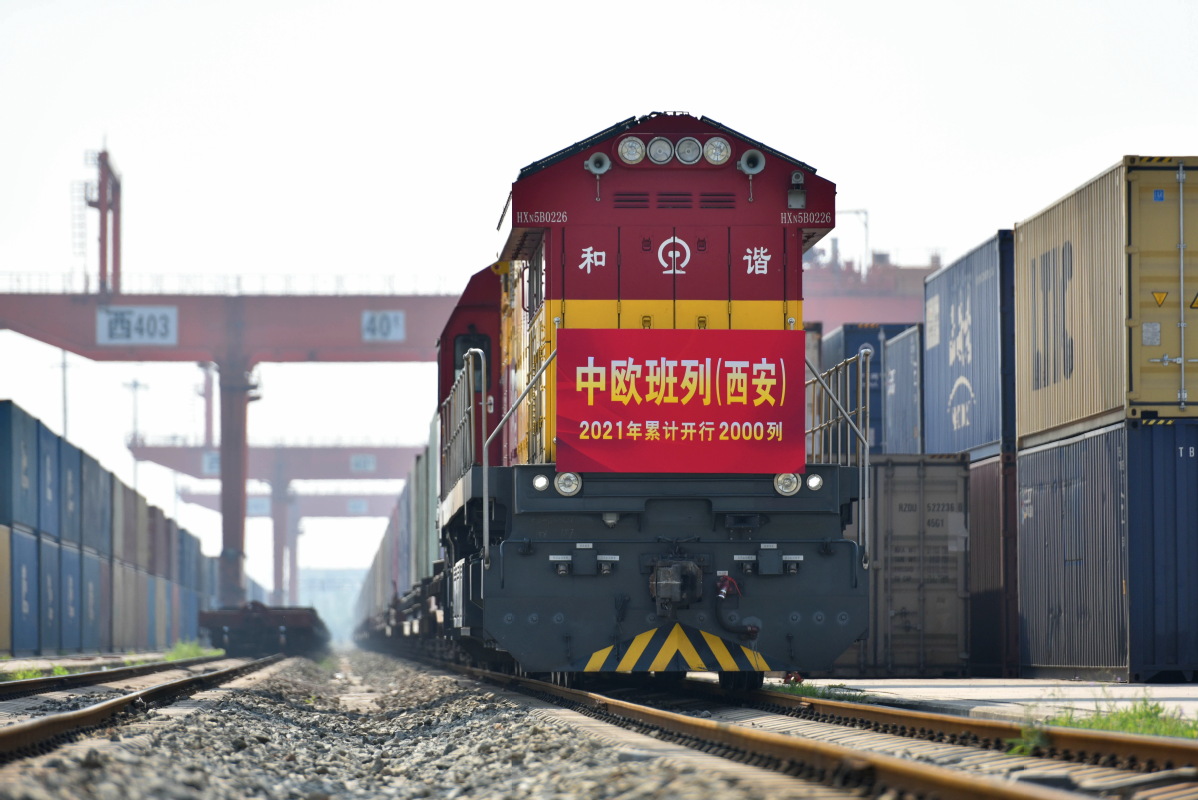
China's inland provinces and autonomous regions, which have found a new edge in foreign trade, are shaping up as potential competitors to three established eastern and coastal provinces, if first-half data are any indication, experts said on Thursday.
Typically, Guangdong, Zhejiang and Jiangsu in the coastal region account for about half of China's exports and imports. But central and western provinces such as Shanxi, Yunnan, Henan and Guizhou are rewriting China's trade script.
Data released by the General Administration of Customs earlier this month showed that 31 provinces, municipalities and autonomous regions released their foreign trade figures for the first half; 18 of them reported year-on-year growth rate higher than the national average. Among them, 12 provinces and autonomous regions were from China's central and western regions.
The export growth rate of Shanxi and Yunnan provinces led the rapid increase in these two regions during the first half. Shanxi's first-half exports soared by 120 percent year-on-year. Yunnan's first-half exports surged nearly 117 percent year-on-year.
Thanks to China-Europe freight train services, air cargo networks, growing involvement in the development of the Belt and Road Initiative, and industrial transfer from the eastern region in recent years, foreign trade of provinces in China's central and western regions achieved rapid growth in the first half, said Bai Ming, deputy director of international market research department at the Chinese Academy of International Trade and Economic Cooperation.
"They have been less affected by the COVID-19 epidemic than the eastern regions and have responded quickly to the resumption of work and production since the second quarter of last year," he said.
Business opportunities have been generated by BRI-related growth and signatory countries' efforts to operationalize the Regional Comprehensive Economic Partnership agreement from next year. Besides, many goods orders now flow into China's inland regions as countries in Southeast Asia and South Asia have stopped production because of the epidemic, said Zhang Jianping, director-general of the China Center for Regional Economic Cooperation, which operates under the aegis of the Ministry of Commerce.
Consequently, first-half foreign trade of Shanxi, Guizhou and Henan provinces grew by 108.4 percent, 69.7 percent and 60 percent year-on-year, respectively, according to Customs data.
Although the provinces in China's inland regions are not as well developed as the eastern regions, provincial capitals such as Chengdu, Xi'an, Changsha and Zhengzhou have cultivated competitive industrial advantages, said Ren Xingzhou, a research fellow at the Institute of Market Economy, which is part of the Development Research Center of the State Council, China's Cabinet.
Combined with the central government's policy support, higher-level reform and opening-up, and their regional economic characteristics, the distinct advantages of the central and western regions have become more pronounced of late, including the improvement of technologies and the quality of management, relatively lower labor cost and growing amount of foreign direct investment.
For instance, Henan province reported 60 percent year-on-year growth in its first-half foreign trade to 365.66 billion yuan ($56.4 billion), data from Zhengzhou Customs showed.
The figure was up 72.7 percent from the same period of 2019 before the outbreak of the COVID-19 epidemic. The United States, the European Union and the Association of Southeast Asian Nations remained the province's top three trading partners.
Supported by the country's complete industry chains and global goods demand, China's foreign trade expanded 24.5 percent year-on-year to 21.34 trillion yuan in the first seven months of this year. January-July exports rose 24.5 percent year-on-year, while imports jumped 24.4 percent, according to latest Customs data.
Even though China's economic growth still faces uncertainties due to the global spread of the pandemic and expensive international shipping costs, the volume of China's foreign trade, and its constituent exports and imports all posted record highs in the first seven months of this year, while their respective year-on-year growth rates reached 10-year highs, said the Ministry of Commerce in a statement.
- Shanghai plans glory for Lujiazui
- Lingang Special Area releases growth targets in new Five-Year Plan
- Eye-catching performance of Chinese market boosts European multinationals' confidence
- China-US container shipping rates hit new record high
- China's foreign trade sustains upward momentum under pressure




















