China can accelerate race to green future for climate vulnerable nations










The latest IPCC Assessment Report released in August 2021 has officially confirmed that due to inadequate global emission reduction measures, the 1.5-degree limit of the Paris Agreement may be breached this decade. Severe climate impacts, originally thought to be more long term, will thus materialize much sooner than expected. In short, climate change is now in a constant state of acceleration. This spells economic and financial destruction and devastation for the world’s most climate vulnerable developing countries, especially the Vulnerable Twenty Group (V20). Yet, climate and multilateral finance continues to fall short of expectations.
At the 76th session of the United Nations General Assembly, Chinese President Xi Jinping confirmed "China will step up support for other developing countries in developing green and low-carbon energy, and will not build new coal-fired power projects abroad." This commitment from a developing country sends a strong signal to the G7 nations, the richest and largest historical emitters, to follow suit and stop all financing of fossil fuel projects.
In his speech, President Xi also highlighted that "we should always put people and their lives first, and care about the life, value and dignity of every individual. We need to respect science, take a science-based approach and follow the laws of science." Safeguarding the 1.5 centigrade limit, through scientifically proven solutions, is an urgent humanitarian need, as the climate crisis threatens billions of lives in climate vulnerable countries. It is also critical to build a more climate resilient economy in today’s highly interconnected world. The fact, however, is that resources are currently not correlating to where, as science warns, vulnerability and opportunity is located.
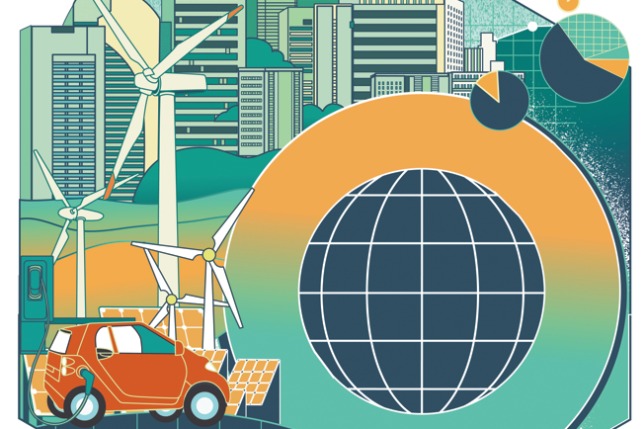
China is increasingly a global leader in developing low-carbon industries of the future, from upstream (lithium ion, rare earths) to downstream processing and manufacturing (transmission lines, batteries, solar modules, wind turbines, electric vehicles), and in the engineering, procurement and construction (EPC) sectors of installation through to the ongoing ownership, financing and operation of businesses. This covers the broad spectrum of activities from hydroelectricity, solar, wind, batteries, energy efficiency, grid transmission and electric vehicles. China has a clear government directive to lead these sectors, both for domestic application but also increasingly to leverage global economic partnerships, while preparing and transforming these leading domestic companies, such as the State Grid Corporation of China (SGCC), into globally significant entities.
This approach perfectly addresses the Climate Prosperity Plans that have been put forward by climate vulnerable countries earlier this year. This is their “survive and thrive” strategy to build and develop green, low-carbon, safe and resilient economies for their people, by 2030. With China’s financing capacities and manufacturing capacities, the Climate Prosperity Plans have opened a window of opportunities for timely climate investment from China.
While supporting these other developing countries to realize this vision, China also needs to recognize the cost of capital and the looming debt crisis. There is mutual interest for China and host nations to not be left with stranded assets leading, sooner or later, to credit default situations due to infrastructure damage from climate disasters, shifting project economics and transition risk. This is a role Chinese banks, such as the Industrial & Commercial Bank of China (ICBC) and Bank of China (BOC), can play to tackle the cost of capital issues in these countries, while boosting the sustainability of their infrastructure. China’s technologies and capacity in storage and transmission will also be a key driver for the global energy transformation this decade.
This is where the people-centered and science-based Global Development Initiative, proposed by President Xi at his UNGA speech, and the Climate Prosperity Plans proposed by the climate vulnerable countries, meet, and build that future that no one, neither China nor climate vulnerable countries, can afford to lose.
Sara Jane Ahmed is a finance advisor to the Vulnerable Group of Twenty (V20) Ministers of Finance of the Climate Vulnerable Forum (CVF). She is also part of the advisory board of various institutions including the Global Renewables Congress.
The opinions expressed here are those of the writer and do not necessarily represent the views of China Daily and China Daily website.
If you have a specific expertise, or would like to share your thought about our stories, then send us your writings at opinion@chinadaily.com.cn, and comment@chinadaily.com.cn.