Cautious welcome for US trade policy shift









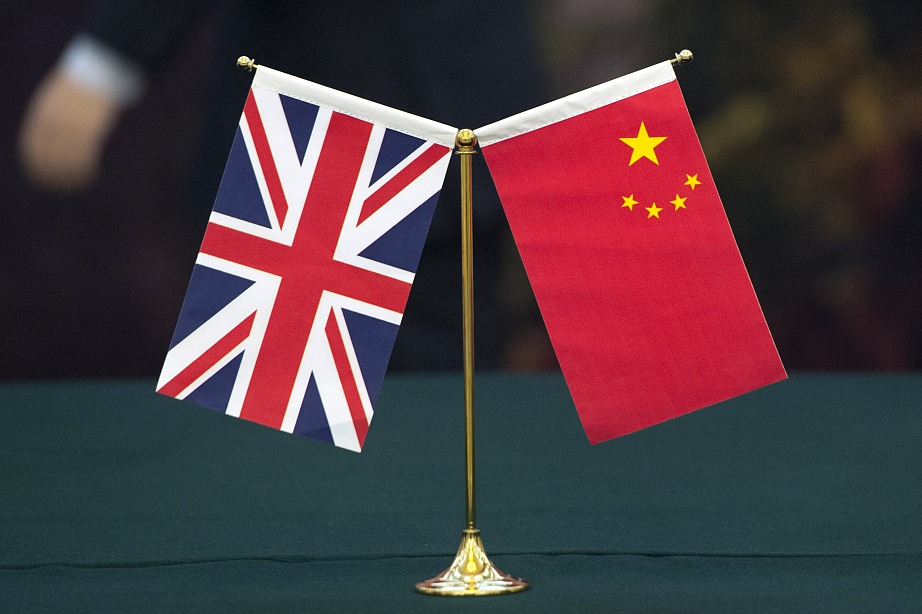
Trade groups and experts have given a cautious welcome to the Biden administration's new China trade policy, which includes "recoupling" with the world's second-largest economy instead of "decoupling", but they said it was "distressing" that US tariffs on Chinese goods would remain.
In a highly anticipated speech on Monday, the Biden administration's top trade official, Katherine Tai, said that she plans to hold "frank" talks with Chinese officials in the coming days, and that the tariffs are to remain in place and could be bolstered by additional rounds, but a "targeted tariff exclusion process" would be reinstated for companies hard hit in the trade war.
She also put forward a new phrase to frame the future of the trade relationship-"durable coexistence", and called for a "recoupling" of the two economies, a clear swerving from the calls for "decoupling" that US trade hawks have advocated for years.
"We liked her focus on dialogue with her Chinese counterparts and the desire to continue targeted tariff exemptions. Overall, her remarks ...were pragmatic, especially the desire to recouple, not decouple the world's largest economies," said Doug Barry, director of communications at the US-China Business Council.
The council, a trade association representing more than 200 US companies doing business in China, is among a multitude of US organizations calling for an end to the punitive tariffs imposed on goods flowing between the two countries.
"The exclusion process is important to both US and China businesses and to supporting workers. We hope the promise of more high-level talks will eventually create conditions for lifting the tariffs," Barry told China Daily on Tuesday.
The United States retains tariffs imposed by the Trump administration covering over $135 billion-or 93 percent-of imports of intermediate inputs from China, noted Chad Bown, a senior fellow with the Peterson Institute for International Economics in Washington.
Tariffs on such parts and components increase costs for US companies seeking to compete not only for business from US consumers, but also globally and in China through exports. The Trump administration granted some product exclusions, but most of the waivers have expired, according to Bown.
Gary Hufbauer, a senior fellow and trade expert at the institute, said the nuances of Tai's speech on China trade policy were constructive, as she offered reopening the exclusion process, with no rhetorical decoupling, which set a constructive tone for upcoming talks.
But new tariff exclusions will be narrow, which is "very different" from repealing the Trump tariffs.
"My guess is that the best we can hope for is no new tariffs or export restrictions," Hufbauer said in an email interview.
Jake Colvin, president of the National Foreign Trade Council, a Washington-based business organization, said it was "encouraging" to see US Trade Representative Tai unveil the outlines of a comprehensive strategy to "engage China firmly and directly".
"In the short term, it is important for the USTR to press ahead with a robust tariff exclusion mechanism that provides some relief to industries buffeted by the effects of the pandemic and supply chain shortages," Colvin said in a statement.
But some other organizations were quick to point out that the trade strategy was "lackluster", and fell far short of US businesses' expectations, particularly on the tariffs.
"Although restarting an exclusion process is an important step forward, the far better course would have been to discontinue use of these tariffs entirely," American Apparel & Footwear Association President and CEO Steve Lamar said hours after Tai's speech.
Lamar noted that at a time when industry is struggling with an unprecedented supply chain crisis due to crumbling infrastructure, economic fallout from a damaging pandemic and unprecedented freight costs, "it is distressing that the administration has chosen to continue to subject US companies to these damaging taxes".
"The tariffs currently being imposed on clothing, footwear, and travel goods were part of a failed trade war strategy. As we have learned during the past couple of years, trade wars are not 'good and easy to win' and, in fact, such tariffs are hurtful to American consumers, American workers and American business," Lamar said in a statement.
David French, senior vice-president of government relations with the National Retail Federation, said US businesses across the country continue to be severely impacted by the tariffs introduced by the previous administration.
"Today's long-awaited announcement proved the Biden administration's trade strategy on China to be lackluster at most, and will further inflict unnecessary damage to the American economy and retail supply chains," he said.
Tu Xinquan, dean of the China Institute for WTO Studies at the University of International Business and Economics in Beijing, said his impression of Tai's speech was generally "positive", as she does not support decoupling and used words like "durable coexistence" and "recoupling", which are both new terms and basically positive for US-China trade relations.
But Tai's speech lacked references to trade rules that both sides should abide by, as bilateral dialogue is important, but both sides need a "benchmark" to make some judgment, Tu said in a webinar from Beijing on Tuesday.
"So otherwise, for example, after maybe a couple of conversations, then finally the US government is not satisfied with the results, and it uses Section 301 again. Then what's the good of this conversation?" he said.
"But we think Section 301 is not consistent with WTO rules," he added.
Tu said international rules are even more important for countries like the US and China, because the two sides have the capability to hurt each other, while having the same set of rules to follow would make it easier for the two to resolve their conflicts.
Tu also said the role of the state in the economy should not be "demonized", alluding to Tai's comments that "Beijing has doubled down on its state-centered economic system".
"I think, at least in recent years, the role of the state has become more and more important in many economies, not only in China, I think even in the US, and also from her speech, Ambassador Tai also mentioned that the US will increase its investment in a lot of infrastructure (projects), or education or people's lives," he said.