Artificial intelligence still fighting for inventor's rights









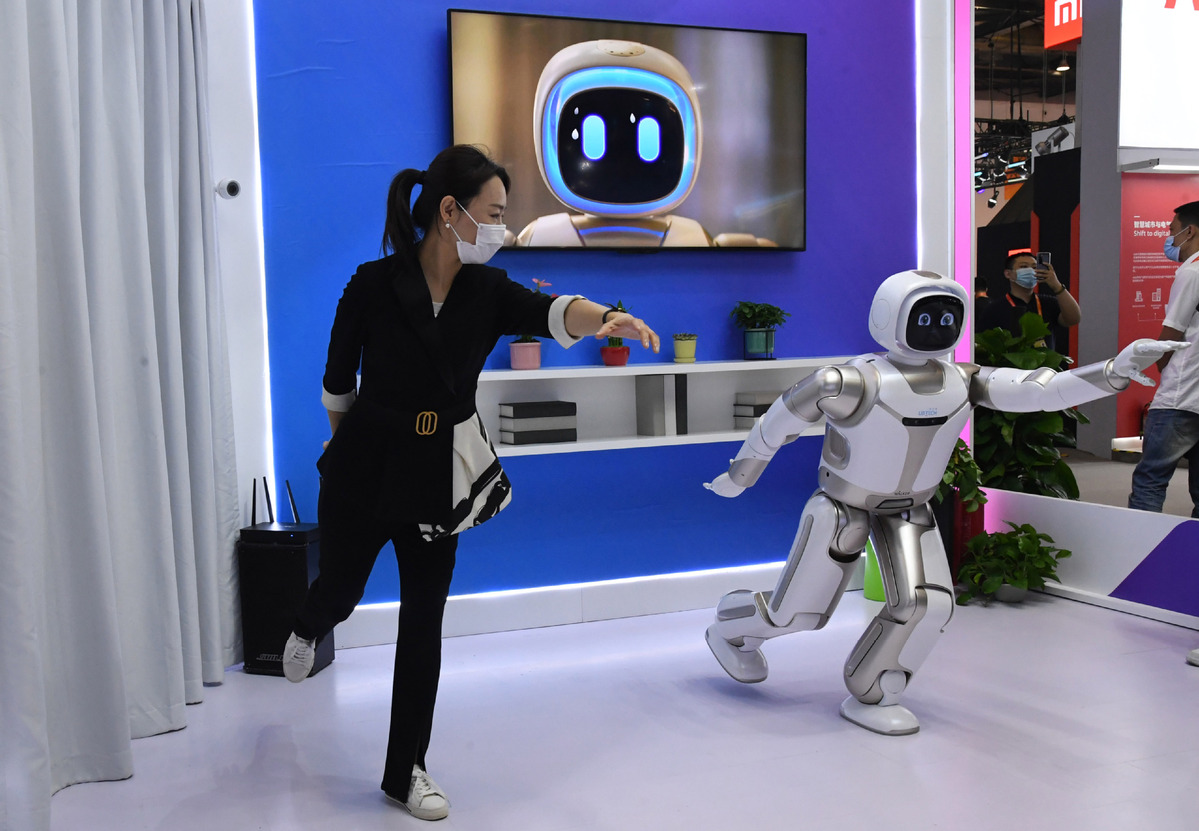
Can robots be inventors? A recent ruling in the United Kingdom's High Court decided, when asked to consider a program written by British inventor Stephen Thaler, they cannot.
The patent, for a food container and flashing light, could only be attributed to Thaler because the judges ruled artificial intelligence cannot have rights, and therefore are incapable of ownership.
However, rulings in other parts of the world, such as one in Australia, have ruled in favor of artificial beings, and as more innovation comes from AI in the next few years the legal landscape may be forced to adapt.
China is a world leader in AI technologies, and AI inventions that stem from the country are fast accumulating. However, there is yet to be a strictly confining legal framework.
According to the World Intellectual Property Organization, although first priority is given to the natural entity of the human inventor, there are no obstacles to recognizing AI as the original creator on legal or practical levels. Even if the human behind the AI invention claims credit, there is still room to create a legal subject status for AI.
Other schools of thought, such as the dissenting judge Lord Birss in the aforementioned UK Thaler case, state that the fact that no physical inventors can be identified simply means that no human name is attributed to the IPO patent that otherwise should still stand as legally protected.
Such flexibility in attitudes is important as AI continues to unleash what many consider to be a new industrial revolution. AI is capable of processing data in capacities far beyond what the human mind can consciously achieve, and work much faster without needing breaks.
Since 2013, there has been a surge in patent applications for ideas born from AI minds in a variety of industries. Drug discovery, for example, is one area being turned upside down by machine learning.
Traditionally, life-saving medicines are discovered through huge processes of trial and error, and the number of small molecules that could be potentially useful are almost infinite in number. The combinations of possibilities outstrip the total estimated number of atoms in the entire solar system. Expecting a human to pick through and test each chemical candidate while needing to take breaks, eat, sleep, and live a life outside of work further limits the rate at which discovery can take place. AI trained specifically on data covering existing chemicals and biological knowledge is a much faster, more accurate, and reliable way to approach problem.
AI, therefore, gives us the possibility to reinvent the very way we invent and innovate things, offering the exciting prospect of exponential technological growth in the coming decades.
By denying the rights of AI to their patents, problematic issues can arise. By allowing humans, solely, to own rights, individuals may be motivated to claim rights to inventions they did not create. An AI program cannot stand up for its own intellectual property rights, and so little would stop a human from fraudulently claiming an invention they did not create.
Legal frameworks must ensure that ideas can be appropriately catalogued to their respective origins, not in the least for posterity's sake.
Encouraging a world in which businesses are incentivized to invest in AI systems is important, as it would build motivation to invest into systems in which there is confidence that fruits of labor can be appropriately protected. Countries that adapt their patent systems the quickest may find they pull ahead in the AI arms race, as commercial incentives are protected by well-established law.
The risk of missing out on vital innovations for society is a substantial one.
Long-term, AI is projected to become more potent at researching and creating than many people, and ensuring that, globally, we do not miss out on the next eureka moment is more important than ever.