



China-US exchanges need fairer perspectives









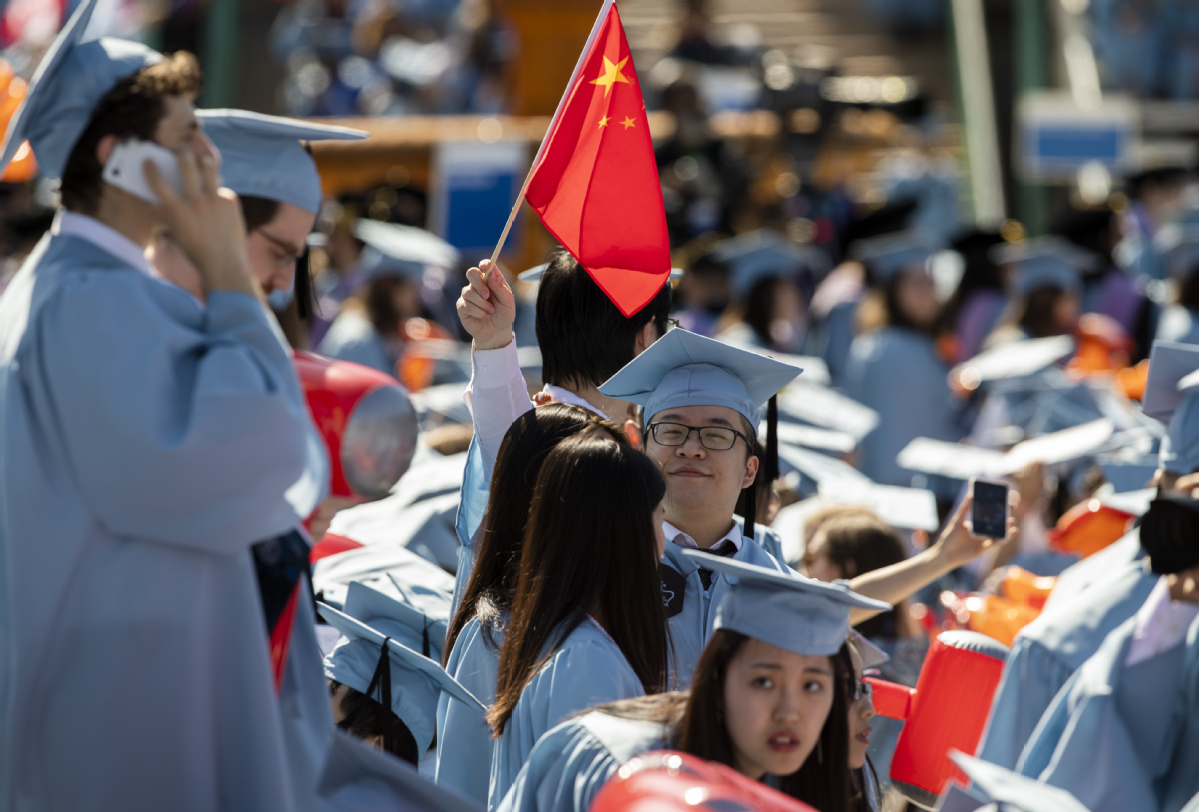
The COVID-19 pandemic has had a profound impact on communication and exchanges across the globe, combined with the growing tension between China and US, thus disrupting normal ties between the two countries. People-to-people exchanges, nevertheless, are even more important at such difficult times.
For the shared interests of the two peoples and the common expectations of the international community, it is necessary to have fairer voices now to ease the current tensions and put relations back onto the right track.
Disappointingly, some US politicians with anti-China biases are still using their power to impede bilateral ties by obstructing academic exchanges and imposing restrictions on programs, such as international students and Confucius Institutes in the US, as well as scholarly exchanges.
US congressmen and senators have been threatening universities and colleges to either close Confucius Institutes or lose federal funds, regardless of opposition from the higher education community. More recently, the Attorney General of Indiana Todd Rokita, widely refuted among the Valparaiso University community in Indiana, has wrongfully initiated an investigation into Confucius Institutes at the university, which may have incited anti-Asian sentiment in the community.
However, amid all the groundless allegations and criticism against the Confucius Institutes, there are fairer perspectives from those more familiar with the program. President José D. Padilla of Valparaiso University addressed the university faculty and students that CIVU, which would be closed next March, worked over the past decades to "help Northwest Indiana citizens learn about Chinese music." He also stated in a letter that the university "strongly disputes the allegations the Indiana Attorney General has made" against its Confucius Institute.
Jamie P. Horsley's article It's time for a New Policy on Confucius Institutes published on Lawfare also stands out. In this piece, Horsley, a fellow at the Brookings Institution and Yale Law School, stated that, "In an era of tight funding for and decline in interest in Chinese language and culture programs, and a clear need for cultivating Mandarin speakers and China expertise across multiple disciplines, the modest financial contribution and native Mandarin language professionals provided through an appropriately managed Confucius Institute network should be welcomed, not castigated."
Michael D. Swaine, director of the East Asia Program at Quincy Institute for Responsible Statecraft, commented on Twitter that "It is important to do due diligence and guard against any threats to academic freedom, but CIs perform positive functions and should not be banned because of highly overblown fears of their threat to US society, as people like Marco Rubio would have you believe."
As is reported by SupChina, some universities have seen the end of their CIs as a major loss. And while some well-funded private schools or large public institutions have filled the gap left behind by CIs, it's the smaller and lesser-funded schools that are taking the hit, Horsley said.
A cohort of 177 Stanford University professors recently wrote to the Justice Department to stop the notorious China Initiative, which they stated " is harming the United States' research and technology competitiveness and it is fueling biases that, in turn, raise concerns about racial profiling". That letter is now being supported by about 140 University of California, Berkeley professors.
Although the rhetoric around Confucius Institutes and other US China people-to-people exchange programs has been mostly negative, it is encouraging to see that the US higher education community has raised more concerns about the effects of the damage caused by a few politicians, out of their own political interest. Let's hope more individuals will continue to raise public awareness of the role of Confucius Institutes in facilitating global understanding and help avoid further conflicts between the two nations.
Lu Yanjun and Yuan Li are officials at the Center for Language Education and Cooperation.
The opinions expressed here are those of the writer and do not necessarily represent the views of China Daily and China Daily website.
If you have a specific expertise, or would like to share your thought about our stories, then send us your writings at opinion@chinadaily.com.cn, and comment@chinadaily.com.cn.





