China and Bangladesh: Brotherly relations through trade and commerce









South Asian developing countries are today confronting challenges of economic vulnerability as a result of the COVID-19 pandemic, climate change and the rise of serious geopolitical rivalry posed by emerging military groupings and showdowns.
Simultaneously, a rising trend of trade protectionism with new hidden barriers and de-globalization in the world market are restricting the ability of the economic and investment sectors to promote global trade sustainably.
In this context, China's open door and cooperation policy offers a glimmer of hope for the region's prosperity and development, resuming economic growth at a faster rate.
China has taken a number of concrete steps in recent years, including an all-round opening-up strategy that allows foreign enterprises greater access to the domestic market and a foreign investment law that ensures a business-friendly environment.
At the same time, China has taken new steps to strengthen bilateral, multilateral, and regional cooperation by joining trade blocs such as the Regional Comprehensive Economic Partnership (RCEP), and the Comprehensive and Progressive Agreement for Trans-Pacific Partnership (CPTPP), hosting a series of mega trade exhibitions and improving connectivity through the Belt and Road Initiative (BRI).
Of them, China Import and Export Exhibition (Canton Fair), China International Import Expo (CIIE), China International Fair for Trade in Services (CIFTIS), China-ASEAN expo, China-South Asia expo, Euro-Asia Economic Forum and Trade Cooperation Expo, Inter-textile Shanghai Apparel Fabrics, and China Yangling Agricultural High-tech Fair are all key exhibitions that will undoubtedly be of great significance to developing economies like Bangladesh. It is expected that Bangladesh's participation in these forums would open vistas of business opportunities and further enhance bilateral relations and co-operation.
According to data, From January to July 2021, the overall import and export volume of China and Bangladesh was $13 billion, a rise of 58.9 percent year on year. Despite the fact that bilateral trade favors China heavily, Bangladesh has enormous potential that has yet to be realized. Dr. Ma Razzaque, head of Research and Policy Integration for Development (RAPID), conducted a research that shows Bangladesh can earn $25 billion if it can grab only a 1 percent share of China's imports.
It is mentionable that China imported goods worth $2.4 trillion in the 2019-20 fiscal year and Bangladesh's share was very insignificant (0.05 percent). In the next 10 years, China is expected to import a total of $22 trillion worth of goods. Hence, China's Expo platform will provide a great opportunity for Bangladesh to explore the vast Chinese market and expand exports to bridge the bilateral trade gap and increase revenue.
Bangladesh's major export items, ready-made garments and others including leather goods, jute and jute goods, agricultural products, frozen and live fish, pharmaceutical products, plastic, sports goods, handicrafts, and tea have strong competitive edge in the international market. But its limited exports destination (mainly the US and EU) might put Bangladesh in a more challenging position. Because, the US has suspended GSP for Bangladesh in June 2013 and India imposed anti-dumping duty on the export of Bangladeshi jute goods in January 2017 for a period of five years.
Also to note, there is no guarantee to get into the EU's GSP+ scheme on expiry of the EBA initiative after graduation from the LDC group in 2026. Amid such looming economic uncertainty, the good news is that China has provided duty-free access to 97 percent of Bangladeshi products (a total 8,256 products) from July 2020. The expos are important ways to learn about Chinese consumer preferences and to tap into the vast China market.
Participating these expos Bangladesh can display and popularize its flagship products and diversify its export destination globally as a large number of buyers, entrepreneurs and companies from Europe, America, Australia, Southeast Asia, Middle East, and Africa attend there. For example, the China-ASEAN Expo (CAEXPO) could give Bangladesh trilateral trade expansion opportunity to enter China and the ASEAN market which has a combined population of 2 billion and a GDP of $18.5 trillion.
Bangladesh's development-first strategy, population of 170 million people, low-cost and skilled labor market, appealing geo-strategic location as well as investment-friendly policies make it an ideal investment destination. Bangladesh needs to highlight the vast investment potential and create confidence in a large number of foreign investors.
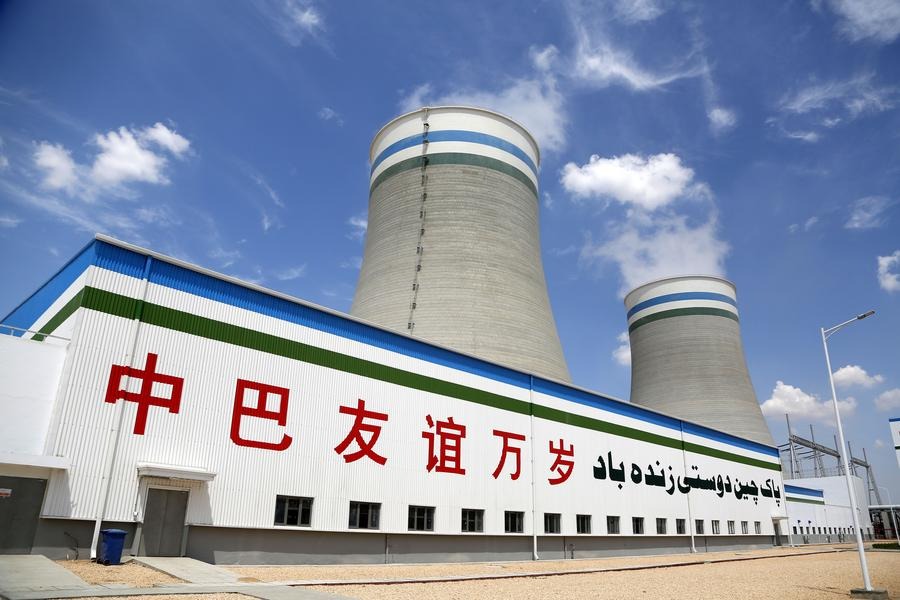
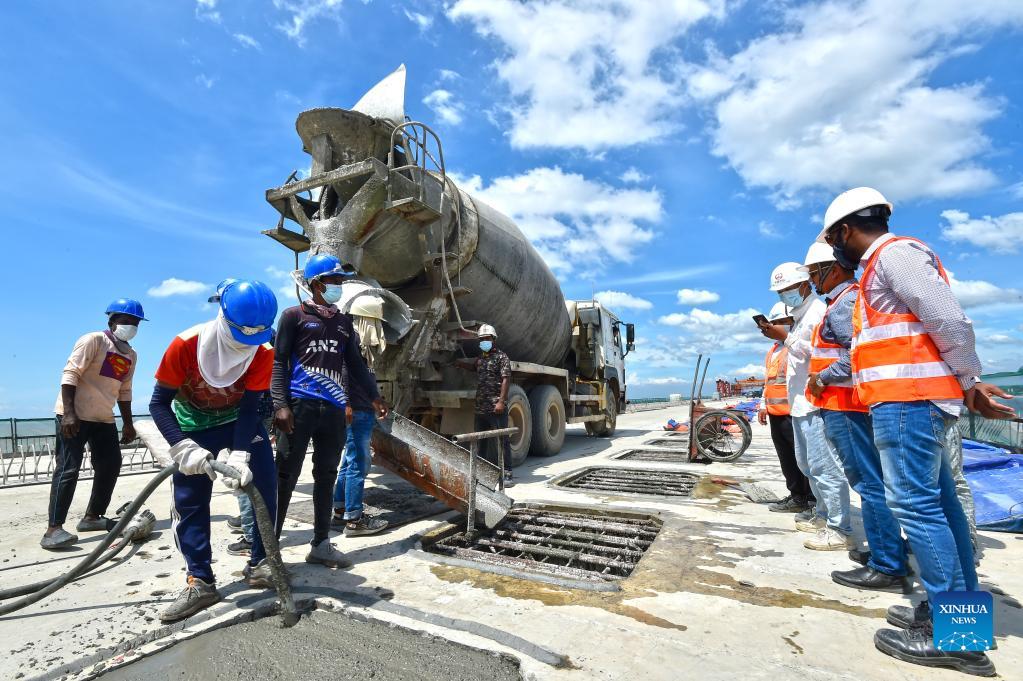
It is noteworthy, Bangladesh is constructing high-quality infrastructure, such as power plants, bridges, highways, railways, and ports, in collaboration with China. The Bangabandhu Bangladesh-China Friendship Exhibition Center (BBCFEC) was recently opened in Dhaka, to host export and sourcing fairs throughout the year, aiming at reaching Bangladeshi products to new international markets.
In short, the expos offer a platform to understand Chinese market and China's development as well as to make new linkage with consumers, companies, experts and different technologies which could lead product specialization and value addition in order to adapt to the conditions in China, a market with 1.4 billion people and over 400 million middle-income people. In this regard, China can provide technical assistance in framing policy positions and export-development strategy to help Bangladeshi products reach the Chinese market.
Like Bangladesh, South Asian countries, can also use the expos to promote their brands, build new trade image and expand their business opportunities in China and the worldwide market. Along with economic and commercial gains, such platforms would forge stronger cultural cooperation which will further enhance the bilateral brotherly relations and promote partnership for common prosperity.
The author lives in Dhaka, Bangladesh.
The opinions expressed here are those of the writer and do not necessarily represent the views of China Daily and China Daily website.
If you have a specific expertise, or would like to share your thought about our stories, then send us your writings at opinion@chinadaily.com.cn, and comment@chinadaily.com.cn.