US' China policy driven by self-interests









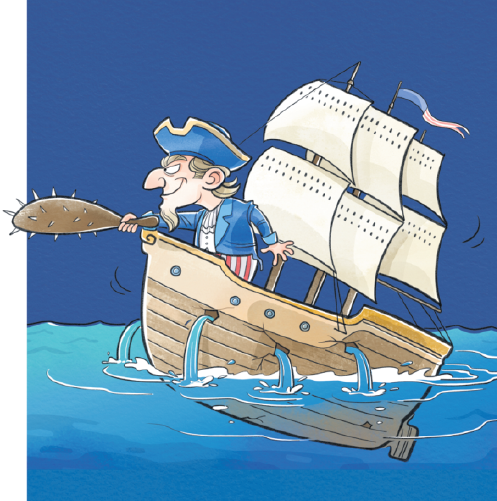
A review of the available information on the US president's National Security Strategy, the US defense secretary's National Security Strategy, and the US Department of Defense's Study on Future Force Structure and Deployments, the three strategic documents the US is expected to release in January 2022, and the views of some US experts, give us an insight into the key points of the Joe Biden administration's strategy toward China.
The Biden administration's Indo-Pacific strategy is likely to be different in many ways from that of the Donald Trump administration, but its purposes are likely to be the same: containing China and maintaining the United States' hegemony and strategic advantage in the Indo-Pacific region. In recent years, there has been a bipartisan consensus in the US on the need to contain China's rise and maintain the US' global supremacy.
The Biden administration considers China as the most serious challenges facing the United States, which is in line with the Trump administration's policy. No wonder the main purpose of the Biden administration is still to contain China and serve the US' interests by cooperating with China in some areas to gain as much benefit as possible.
In April, the US Congress introduced the 2021 Strategic Competition Act targeting China. The 283-page bill lays out a diplomatic strategy toward China, reaffirming the US' commitment to its allies and asserting its vow to regain its global leadership. It also emphasizes the US will invest in "universal values" so that it can meddle in China's internal affairs, confront China's "predatory international economic practices" and strengthen its military buildup to counter China's military modernization and "military expansion".
According to Democratic Senator and Chairman of the Foreign Relations Committee Bob Menendez, the bill reflects an unprecedented bipartisan consensus and cooperation on the mobilization of the US' strategic, economic and diplomatic tools to pursue its Indo-Pacific strategy so that it can meet the "challenges posed" by China to its national and economic security. And for that, the Biden administration pursues a policy of protecting and promoting the "vital interests and values" of the US.
In fact, the new US Indo-Pacific strategy is likely to be included in the Biden administration's national security strategy and be an important part of the 2022 fiscal budget.
Besides, on March 3, the Biden administration released the Interim National Security Strategy Guidance, which, as its first policy guidance for a comprehensive US response to international and domestic situations, named China as the only competitor with comprehensive strength to challenge the international system established by the US. To deal with China, the US believes it needs to regain its international leadership, strengthen its ties with allies, work with like-minded partners, and pool collective strength to advance common interests and jointly contain threats, primarily from China.
These US plans, statements and deeds reveal the Biden administration's concerns over China and give an indication of its China policy.
It is clear that the US is striving to strengthen its alliance system. It has built a new alliance against China, AUKUS, a tripartite security grouping of the US, the United Kingdom and Australia according to which, among other things, the US and the UK will help Australia build at least eight nuclear submarines; it has also reinvigorated the QUAD, a loose security arrangement among the US, Japan, Australia and India; and the Five Eyes intelligence-sharing alliance between the US, the UK, Canada, Australia and New Zealand.
For some time now, the Five Eyes have been talking about including the Republic of Korea, Japan, Germany and India in the intelligence sharing network. The US has also been trying to drive some wedges between China and some Southeast Asian countries, especially the Philippines and Vietnam, which have maritime disputes with China in the South China Sea and draw them into its alliance network, with the ultimate aim of containing China's rise and pushing forward its Indo-Pacific strategy.
The US is also worried about the rise of "anti-democratic totalitarian populism", mainly because the superiority of China's socialist system, the leadership of the Communist Party of China and its international influence outweigh the US' so-called democratic system and values, which is one of the major reasons for Biden's so-called democracy summit convened on Dec 9-10, 2021. The US is worried that China's development path and model may be accepted and implemented by more and more developing countries. Washington is also concerned about the growing patriotism among the Chinese people.
But there are some factors that could ease tensions between Beijing and Washington. To begin with, the Biden administration sees diplomacy, rather than the threat of sanctions, as a way to deal with China. This is mainly because the Biden administration has realized the Trump administration's policy of sanctions against China didn't achieve the desired results. And unlike its predecessor, the Biden administration emphasizes two major challenges-COVID-19 and climate change-which require collective action and cooperation with China.
Moreover, trade relations with China are critical to the US' economic prosperity. No wonder on Sept 24, 2021, Gina Raimondo, US secretary of commerce, said that the US must improve its commercial ties with China. The US also needs to cooperate with China in order to boost its economic recovery, which has been badly affected by the pandemic.
The views don't necessarily reflect those of China Daily.
The author is a research fellow with the Institute of International Law, Chinese Academy of Social Sciences.