



New US law only serves to harm people in Xinjiang









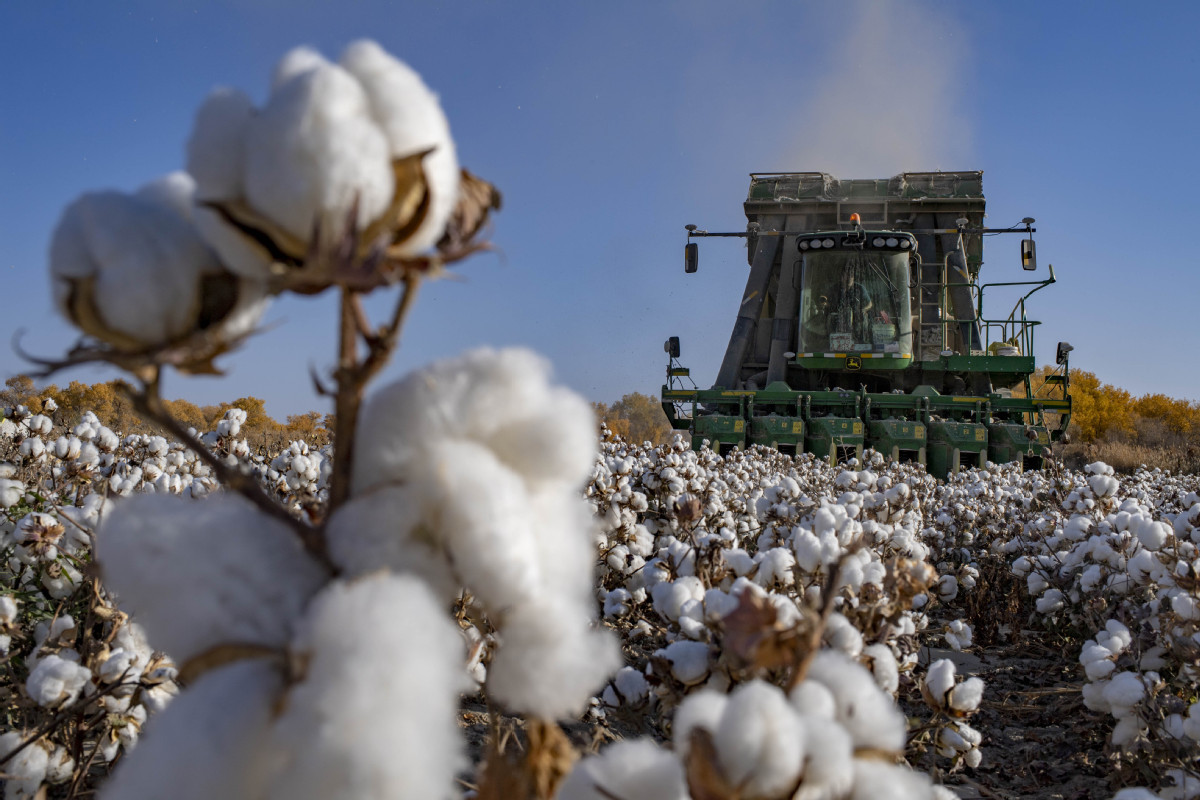
One of the world's best cotton producers, with exceptional quality of fabric, is Northwest China's Xinjiang Uygur autonomous region.
Technological advancements have allowed machines to do most of the work that a couple of decades ago was done by manual labor. This has resulted in sustainable growth, effective farming techniques, a surge in production, an efficient agricultural mechanism and diversification of regional and integrational networks.
Disregarding all these facts, United States President Joe Biden recently signed into law the so-called "Uyghur Forced Labor Prevention Act" as part of the US' negative rhetoric and propaganda to use Xinjiang to contain China's rising global influence.
The US law bans imports from various sectors in Xinjiang, including cotton, tomatoes, garment supplies and solar panels, due to allegations of so-called "forced labor" and "human rights violations". The Muslim community in Xinjiang is being portrayed by the US as "facing abysmal poverty", "acute injustice", "genocide "and "grave oppression".
However, all of the allegations run counter to the facts and amount to US-backed political and economic crusades against the rising Chinese economy. The act had been criticized by many big companies doing business in the area.
The propaganda against the Chinese cotton industry is an orchestrated attack fueled by Western interests against China's rising influence. It has been seen that the US is trying to balkanize China in an effort to create civil unrest among its Muslim population, harm unity and cause disruptions within the region. The hostile rhetoric and vicious tactics clearly demonstrate the US imperialistic approach.
The cotton and solar panel bans will outright disrupt the global supply chain, because a major portion of both products has been imported from China. One should not forget the US track record of Muslim genocide worldwide. Imposing sanctions on Chinese products in the name of "human rights violations "is just a facade. The groundless sanctions and allegations are aimed at maintaining the US' fading global hegemony.
Contrary to its claim of protecting human rights, the US act attempts to deprive workers and farmers in Xinjiang of their very right to pursue better lives. Worse yet, fabricating a false narrative to disengage and restrict Xinjiang's cotton supply would be detrimental to the availability of cotton on the international market.
US domestic problems such as entrenched structural failures, social polarization, a dysfunctional democratic model, rising Islamophobia and racial discrimination only make the White House more brazen.
China is a socialist state that works for the well-being of its people, including ethnic minorities. The dynamic leadership of the Communist Party of China has taken robust initiatives to enhance the living standard of farmers and workers of more than 20 ethnic groups in the Xinjiang region.
No doubt, the US is used to playing tricks with sanctions and political manipulation at a frantic pace against China. The US government has a policy of weaponizing human rights concerns against countries like China to undermine them strategically, while ignoring similar violations committed by its own forces and allies.
Looking at past US actions against Muslim states, it is hard to comprehend that the government actually cares about the Uygurs in China rather than being more focused on undermining what it views as its chief global rival.
In contrast, China has provided Muslim countries around the world with development opportunities, donated vaccines and helped them with medical aid, pharmaceutical supplies, expertise and training.
Moreover, China's cotton industry has become an irreplaceable industrial link in the global cotton textile industry because of its quality raw materials, agricultural productivity, skilled workforce, efficient supply chain and extended industrial chain. Therefore, the disruption of China's cotton industry is tantamount to disrupting the global cotton industry chain.
The US should be ashamed of its own wrongdoings and human rights abuse record. As the Chinese saying goes, "He who perpetrates many injustices is doomed to destruction". Thus, the US should end its belligerence toward China and lift the sanctions for the sustainability of the global cotton supply chain.
The author is executive director of the Center for Global & Strategic Studies in Islamabad, Pakistan.










