One plus one greater than two










Despite their differences, it is imperative that the United States and China stand together to address the complex common challenges the world faces
Both the United States and China face a significant number of challenges, but many of them are common challenges. We have common problems and shared interests in ending the pandemic and engineering a robust economic recovery, not just in our own countries but globally.
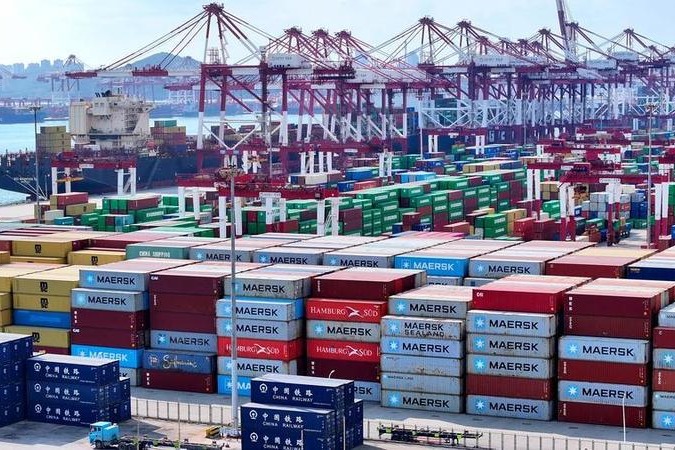
And certainly an important part of that is to try to unblock the global supply chains which are causing significant problems and even in some parts of the world a pattern of inflation we haven't seen for a very long time.
We also need to vaccinate the world's population in a collaborative fashion, otherwise we're going to have new variants continually emerging and it will be extremely difficult to end the pandemic.
We have to regulate the digital economy, the big tech platforms, the handling of data, the cross-border movement of data, the financial side of the digital economy, so that it's a level playing field, and not an exclusive, almost monopolies club.
These are major challenges. We don't really have a road map for how to do this because we haven't done it before. But we share the challenges and we probably ought to share insights and ideas on how to limit downside risks of a variety of kinds, to people, to privacy, to systemic stability.
On the one hand, we share the problem of dealing with inequality. Certainly on the US side, we have a multi-decade pattern of rising inequality and rising wealth inequality, and the pandemic has undoubtedly made it worse.
Indeed, the pandemic made inequality worse domestically in most countries and it has made it worse globally for obvious reasons and that's notwithstanding the fact that countries with significant amount of physical space, including both the US and China, had major programs to buffer the shock for households and businesses.
So we need to tackle this set of issues. On the Chinese side, common prosperity has received wide attention and I assume it refers, not only to a challenge, but an extremely important goal in terms of economic and social development in China.
There are powerful technological and market forces that are pushing us away from that and it's not an easy challenge to tackle, to ensure that we end up with inclusive growth patterns.
We have benefited enormously in the past from close trade, investment, technology and personal interactions, as people moved around the world.
We have to construct new rules of engagement for this, because we're living in a different world in many different dimensions. We all know that, but we need to get on with it or we will underperform globally, relative to our potential in a fairly serious way.
We have a shared interest in finding ways to limit, what I call the offensive uses of digital technology. We are increasingly building our economies on digital foundations.
The benefits of that, and the opportunities for productivity growth, for inclusive growth patterns are simply enormous, not least the increased accessibility to critical services such as healthcare and education.
Again, the opportunities are simply enormous, but like any powerful technologies, digital technologies have negative uses. We need rules of engagement that focus on agreements to limit the negative use of these technologies, whether it's in warfare or in areas such as cybersecurity.
The US-China relationship is not going in the right direction at all. There are many of us on the US side, and also many on the Chinese side, that wish and hope that the trajectory of the relationship can be redirected.
On the US side, we are clearly dealing with the polarized domestic political situation. This makes governance difficult but there is at the moment a pretty broad bipartisan sentiment that is negative with respect to China.
This, in part, has caused the international relations agenda to shift rather markedly in the direction of national security issues and markedly away from a broader set of common interests including most in the domain of economics and economic interaction. This negative trend in our relationship has made us experience a negative result in virtually all areas.
Strategic competition has essentially shunted aside strategic cooperation. We need a rebalancing of this. In order to do that, it's going to take leadership, not only from our leaders but also from the rest of us, and we need to make a really serious effort to contribute whatever we can as individuals to try to reverse these trends.
Take climate change in particular, because it may be the most complex and challenging global issue before us. There is a great deal we can do with our existing technologies, mechanisms, incentive structures and so on, to deal with this problem.
We can't get the whole job done with the tools we have available to us now. More new technologies are needed to address the climate change crisis. At the same time, there is essentially no chance whatsoever of getting to the place we need to go in terms of greenhouse gas emissions, unless technology flows freely and frictionlessly to all corners of the Earth.
Whatever our other differences, we are faced with complex common challenges. We need to at least find a way to agree on that proposition and act accordingly.
The author is Nobel laureate in economics, an emeritus professor at Stanford University and a senior fellow at the Hoover Institution. The author contributed this article to China Watch, a think tank powered by China Daily. The views do not necessarily reflect those of China Daily.
Contact the editor at editor@chinawatch.cn