Experts: Tensions won't rattle macroeconomic scene









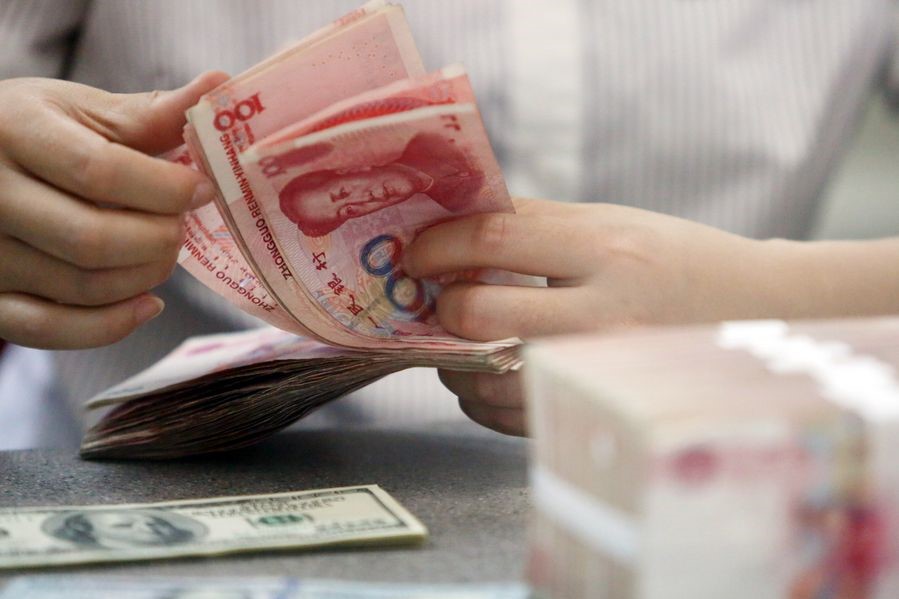
The ongoing geopolitical risks are unlikely to send China's inflation soaring or derail the Chinese central bank's cycle of easing, experts said on Wednesday.
"I think China's producer price inflation (which gauges factory-gate inflation and narrowed to a half-year low of 9.1 percent in January) will still be on a declining trend that started in the past couple of months, though the disinflationary process will take longer because of higher global energy and commodity prices now," said Tommy Wu, lead economist at British think tank Oxford Economics.
As inflation-China's consumer price index grew by 0.9 percent year-on-year in January, the lowest in four months-remains largely mild while economic growth is under pressure due to domestic factors and a more complex external environment, Wu said more easing measures are on the horizon in China.
Wu said he expects the People's Bank of China, the country's central bank, to implement another cut in the interest rate of medium-term lending facility, a key policy rate, in the second quarter of the year, following a cut in January.
The comments came after geopolitical tensions sparked concerns that tighter oil and food supply could further inflame already elevated global inflation. The International Monetary Fund and the World Bank jointly released a statement on Tuesday warning that "commodity prices are being driven higher and risk further fueling inflation".
Some experts, however, said the price shocks might have only modest impacts on China as the country's food supply is largely self-reliant while oil-related products have a limited weight in the basket of China's consumer price index, a key gauge of inflation.
The impacts of tighter external supplies of wheat and corn to China are likely to be limited given the country's relatively low grain import reliance, grains' small weight in the CPI and the ability to substitute across different types of grains, a Goldman Sachs report said, adding only 4 percent of wheat consumed in China is imported.
Also, the report said rising oil prices have not posed a significant upside risk to Goldman Sachs' forecasts about China's inflation, which had already incorporated a bullish estimate of oil prices.
Experts said China's softening price rises have widened the room for monetary easing. The country has the "capabilities and conditions" to effectively cope with external shocks and domestic downward pressure, maintain overall stability of inflation and remain a bright spot in the global economy, said a PBOC statement published on Monday.
The central bank will flexibly and properly adjust the intensity, pace and focus of monetary policy, guide financial institutions to boost credit expansion and promote a decline in corporate financing costs, the statement said.
Wang Tao, head of Asia economics and chief China economist at UBS Investment Bank, said she expects the PBOC to further reduce the reserve requirement ratio in March or April, adding that the loan prime rate, the benchmark lending rate, may drop slightly in the remainder of the year.
The upcoming two sessions-the annual sittings of China's national legislature and top political advisory body-are likely to set a "prudent" monetary policy tone as usual but emphasize that the monetary policy should provide appropriately ample liquidity and increase financial support to the real economy, Wang said.
"This means that the monetary policy will be biased toward easing, but without liquidity flooding," she said.
Experts nevertheless remain wary of any unexpected worsening of geopolitical tensions that could significantly exacerbate inflationary pressure facing China and curtail the monetary policy in supporting the economy.
According to Wu from Oxford Economics, there remains an upside risk to China's food inflation as Ukraine accounts for 30 percent of China's corn imports used in feeding hogs, while pork prices serve as a main component of the CPI.