



Cooperation in Asia viewed as way to counter food crisis









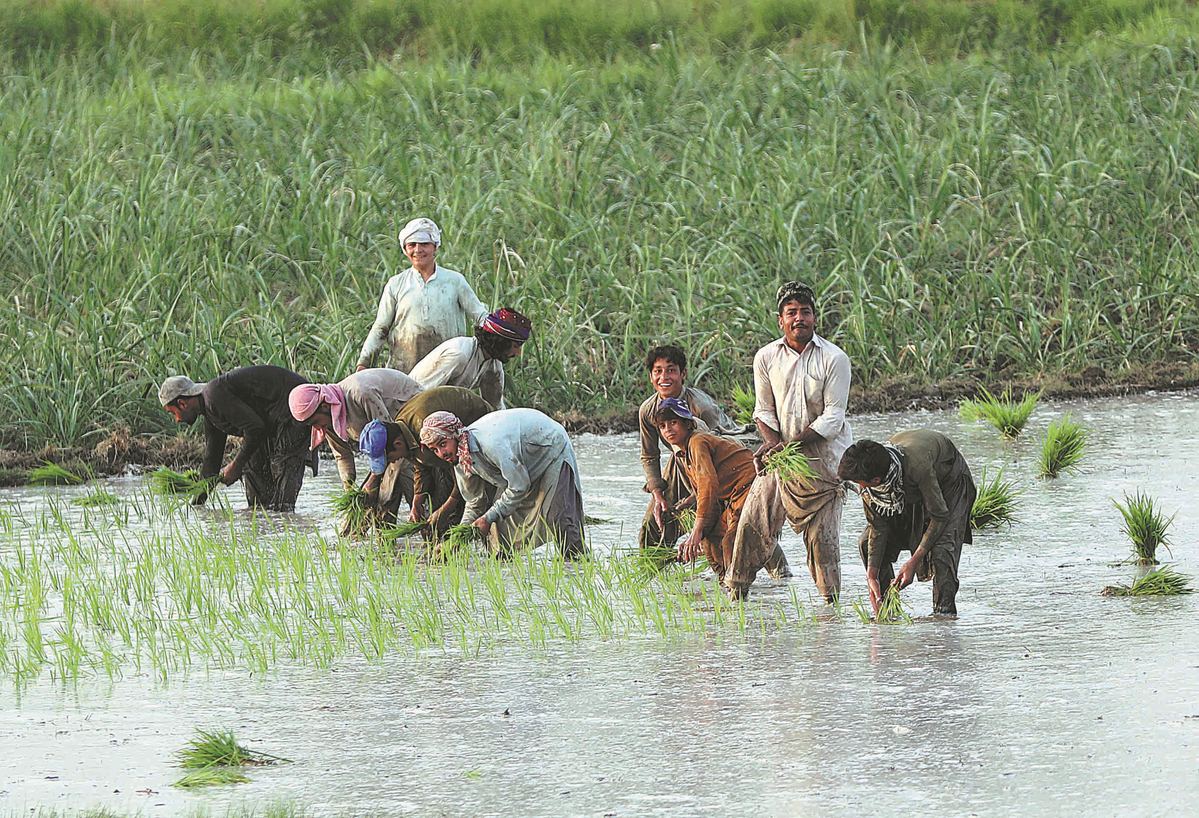
Trade curbs likely to worsen woes of developing nations, say experts in stressing support for farmers
Developing countries in Asia are moving to enhance food security in response to the rising prices of grains and farming materials that have compounded persistent shortages and the strains on vulnerable supply chains.
Speakers at a regional conference last week stressed the need for governments to support food producers as well as the importance of cooperation in the sector among nations.
At the Agritechnica Asia & Horti Asia 2022 held on May 25-27 in Thailand, Alongkorn Pollabutr, an adviser to Thailand's minister of agriculture and cooperatives, welcomed Vietnam's Deputy Agriculture and Rural Development Minister Tran Thanh Nam. Moves to expand cooperation between the Southeast Asian neighbors attracted much attention at the event.
Alongkorn, also chairman of the Thai Agritech and Innovation Center, said the two countries are keen to work together on food security and run cooperatives as well as provide training for farmers. While the two sides work out the details, Thai Minister of Agriculture and Cooperatives Chalermchai Srion is expected to visit Vietnam later, according to The Nation newspaper.
Sayamol Charoenratana, the head of the Human Security and Equity Research Unit and a researcher at the Chulalongkorn University Social Science Research Institute, said Thailand can contribute to the global food supply given that the major food exporter has always branded itself as the kitchen of the world.
While regional governments look to increase food production, Sayamol said it is important to support the food producers by providing them with more food sovereignty, or the power in the food system. The researcher said this need was evident because farmers usually gain only a small share of the profits while the middlemen that sell the products overseas take the larger chunk.
The steady climb in food prices over recent months is continuing as the conflict and sanctions imposed by Western nations on Russia make it difficult for Russia and Ukraine to export grain, among other farm products. Developing countries in Asia, many with large populations, have been forced to respond quickly.
India, the world's second-largest wheat grower after China, banned wheat exports in mid-May after huge crop losses due to a heat wave that began in March. India is also the biggest producer of sugar and the second-largest exporter of the commodity after Brazil. On Wednesday, the country begins restricting sugar exports, in the first such move in four years, to maintain "domestic availability and price stability of sugar", according to earlier government announcements.
India's actions follow Pakistan's imposition in May of a ban on sugar exports. Motivated by concerns for the home market, Indonesia banned the export of crude palm oil on April 28 but lifted the ban on May 23 after the country brought domestic cooking oil prices and supply under control.
Singapore has had to contend with its own concerns. The taste of fresh chicken meat has long been prized in one of the world's most livable cities. But, from Wednesday, people will have to go without the treat following an export ban by Malaysia, in one of the latest Asian responses to the global food crisis stemming from the COVID-19 pandemic and Western sanctions on Russia.
Malaysia announced on May 23 that it will halt the export of up to 3.6 million chickens a month from June 1, as part of measures to address a domestic supply shortage and stabilize prices. Globally, chicken prices have risen since the Russia-Ukraine conflict started in February.
Malaysia's move will hit Singapore hard-about a third of the city-state's chicken supply comes from across the border. The Singapore Food Agency issued a statement in which it encouraged consumers to switch to frozen chicken and buy only what they need.
"Since early April, many Asian countries have started to feel supply chain disruptions. And the prices of simple items like shallots have spiked," said Paul Teng, an adjunct senior fellow with the Centre for Non-Traditional Security Studies at the S. Rajaratnam School of International Studies in Singapore's Nanyang Technological University.
Teng said poor consumers are being affected by price increases in many food items, forcing them to reduce their purchases.










