



Hungary plays key role in China-CEE cooperation









Hungary-China relations go back several centuries, but the most important date in modern times is Oct 3, 1949, when Hungary was among the first countries to recognize the newly established People's Republic of China. Three days later, diplomatic relations were established.
Economic relations gained momentum in the early 1990s, when visa-free travel was briefly introduced in both countries at the same time. About 50,000 Chinese arrived in Hungary at that time. Unlike the practice in other European countries, they did not open restaurants but started trading in goods from China. The biggest Chinese community in Central Europe is in Hungary.
The most recent and ongoing period of economic relations began in 2011, when 12 agreements were signed, several of which are still having a positive impact on the development of economic ties. Among the most important agreements signed are the opening of a 1 billion euro ($1.04 billion) credit line, economic and cultural cooperation and the establishment of a regional logistics center. Today, the Central European Trade and Logistics Cooperation Zone and Sino-Hungarian BorsodChem Industrial Park are national-level special economic zones operating in Hungary.
The meeting also had a significant theme: Then Chinese premier Wen Jiabao indicated in advance that he would like to meet with some leaders of Central and Eastern European countries. As a result of that meeting, the idea of the"16+1" cooperation mechanism was born. It was formally established at the Warsaw meeting in 2012. The 16+1 framework put the CEE countries on China's economic map as a market comprising 120 million people. The market includes 12 European Union member states and four candidate countries.
The launch of China-CEE cooperation has taken off with great momentum. It is important for two reasons: On the one hand, the countries in the region are mostly small countries, and they have become "visible" for Chinese economic policy and Chinese companies; on the other hand, it gave these countries the opportunity to cooperate economically.
Hungary is a small country in the middle of Europe, with a population of around 10 million, the equivalent of a medium-sized Chinese city. What Hungary can offer the Chinese economy and Chinese companies is a special factor-a platform that enables the development of economic relations with Europe, and especially with CEE countries. Hungary can become a financial, economic and logistics hub.
In the years after 2012, more than half of Chinese foreign direct investment to CEE countries came to Hungary. In 2020, China, for the very first time, became Hungary's largest foreign investor.
According to China's Ministry of Commerce, the total trade volume of the Chinese mainland with the 17 CEE countries reached more than $103 billion in 2020, exceeding $100 billion for the first time. Last year, the trade volume between Hungary and China was more than $11 billion, also for the first time.
The challenges and results highlight China's resilience in the face of adversity as the world's biggest trading country. Many of China's trading partners still relied heavily on Chinese exports and imports during the pandemic.
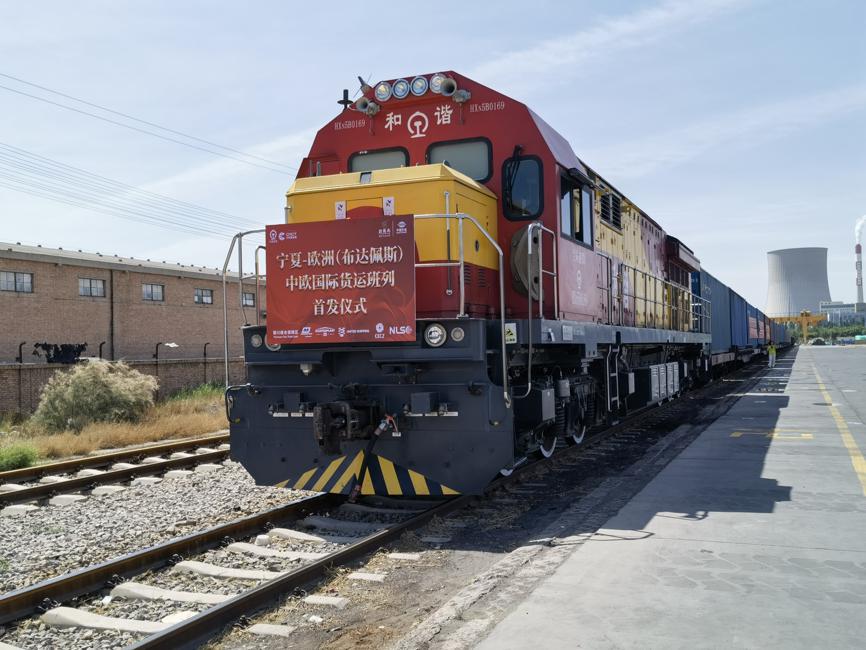
Amid the COVID-19 pandemic's disruption of global shipping, the collapse of sea transportation, sky-high freight rates and unpredictable transit times, the demand for China-EU rail freight transportation has risen dramatically. China-Europe freight trains have become a vital component of cross-border logistics, ensuring the smooth operation of supply chains between China and Central Europe, as well as providing one more option for enterprises suffering from the soaring prices of international sea and air freight.
In addition to the growing land freight opportunities, Budapest is increasingly acting as an air cargo hub for Chinese goods. Since 2021, two terminals-one in Budapest and one in Zhengzhou, Henan province-have been dedicated exclusively to air cargo traffic between Hungary and China.
With the pandemic, many things are changing all the time, and we have to learn a lot of new modes and systems. The future is still uncertain and the pandemic is not yet over, but I strongly hope and I do believe that together we can overcome the difficulties and find the right solutions for a brighter future.
The author is president of the Hungarian-Chinese Chamber of Economy.










