Sino-Japanese ties at a crossroad









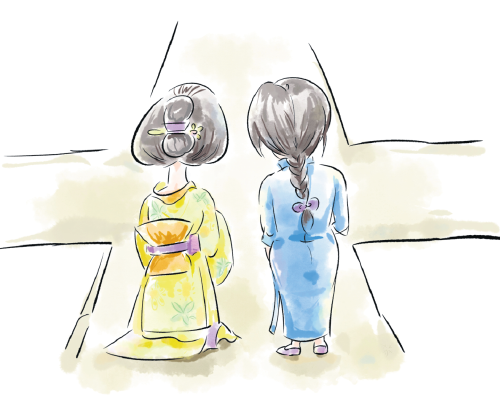
Editor's note: China-Japan ties are at a crossroad in a year that marks crucial anniversaries. Three experts share their views on the topic with China Daily.
July 7 this year marks the 85th anniversary of the Marco Polo Bridge Incident, which is regarded as the start of Japan's full-scale invasion of China, and China's whole-of-nation resistance against Japanese aggression. This year also marks the 50th anniversary of the normalization of China-Japan diplomatic relations. The two anniversaries show how complicated China-Japan ties are.
In this crucial year, bilateral ties have reached a crossroad, which can be attributed to Tokyo's three moves.
First, Japanese Foreign Minister Yoshimasa Hayashi said he had received invitation from China but eventually couldn't make a decision, apparently due to domestic political pressure. Second, Japan joined the United States-led diplomatic boycott of the Beijing 2022 Winter Olympic and Paralympic Games over so-called human rights concerns. And third, Japan participated in a series of meetings organized by the US to devise how to overcome the imaginary "China threat".
Given these factors, along with growing global uncertainties due to the great-power rivalry, the COVID-19 pandemic and the Russia-Ukraine conflict, it is difficult to predict the future of Sino-Japanese relations.
Last month, the leaders of Japan, the Republic of Korea, Australia and New Zealand were, for the first time, invited to attend a NATO Summit, which worked out new strategic plans and defined Russia as the "most significant and direct threat" and China as a "systemic challenge".
Japan saw in the NATO Summit an opportunity to team up with the US and some European countries to encircle China, possibly militarily intervene in the Taiwan question, and consolidate the Japan-US alliance, thus increasing US military presence in the Asia-Pacific region.
In fact, speaking at the NATO Summit, Japanese Prime Minister Fumio Kishida said he feels "a strong sense of crisis that Ukraine may be East Asia tomorrow", referring to the situations in the East China Sea and South China Sea.
Today's global landscape looks a lot like the one seven decades ago, during which the US and the Soviet Union competed for global dominance, with the US establishing several alliances in the Asia-Pacific. In fact, according to historian Niall Ferguson, today's Ukraine is like the Korea of the 1950s. In a recent article, he said: "It is the early-innings phase of the superpower struggle, the time when the US still has military superiority but cannot help getting dragged into peripheral conflicts".
Ferguson considers "detente a smart solution to the mess the US was in by the beginning of 1969", when Richard Nixon became US president, and suggests the Joe Biden administration adopt "detente 2.0" and "take a historical shortcut and proceed straight to the 1970s".
As Mark Twain famously said: "History does not repeat itself, but it often rhymes." The core components of strategic planning have not changed. History shows that Washington's anti-China policy decades ago spelled disaster for the US and the Asia-Pacific.
The Russia-Ukraine conflict once again proves that challenging a superpower's bottom line will bring serious consequences.
Fortunately, three factors can help the world move in the right direction. First, by adhering to peaceful development and a defensive defense policy, as indicated by its Global Development Initiative and the Global Security Initiative, China can strengthen its commitment to maintain global peace, contribute to global development, and help defend the world order and provide public goods.
Second, the expansion of the US-led NATO and Japan's military will face many inhibiting factors. As it is, the spillover effect of the Russia-Ukraine conflict is already testing Western countries' unity on issues such as immigration, food, energy, supply chains and finance. And given the rising political and economic uncertainties in transatlantic countries, NATO may not be able to implement its new strategy.
Against this backdrop, how can Japan afford the cost of expanding its military and upgrading its partnership with NATO? Especially because the Japanese government needs to raise taxes and/or cut social security funding, even issue bonds-a big challenge for an aging society like Japan-to raise its defense spending to 2 percent of GDP in the next five years, as called for by the ruling Liberal Democratic Party.
Third, Asia-Pacific countries in general do not want a new Cold War. Most of the ASEAN members and Pacific island countries are worried about NATO's expansion in the region, because they believe Western powers' militarization and efforts to contain China will make the region volatile, and even trigger a nuclear race.
More important, most Asia-Pacific countries do not consider China a threat since they have benefited from China's rise and don't want to engage in any geopolitical competition. Instead, they seek to accelerate their development in a multipolar world.
Fifty years after the normalization of Sino-Japanese diplomatic ties, Tokyo ought to carefully consider its diplomatic strategies rather than attaching undue importance to strategic autonomy and national interests. As an old Chinese saying goes, "You reap what you sow". Promoting friendship, unity and harmony will lead to great achievements; sowing discord among countries will only trigger disputes.
The views don't necessarily reflect those of China Daily.
The author is a senior researcher at the Institute of Japanese Studies, the Chinese Academy of Social Sciences.
Neighbors must explore paths of cultural exchanges http://www.aigou888.cn/a/202207/11/WS62cb640ea310fd2b29e6b7fd.html
Things don't look good for Japan, thanks to US http://www.aigou888.cn/a/202207/11/WS62cb640ca310fd2b29e6b7f8.html