Leafing through the city









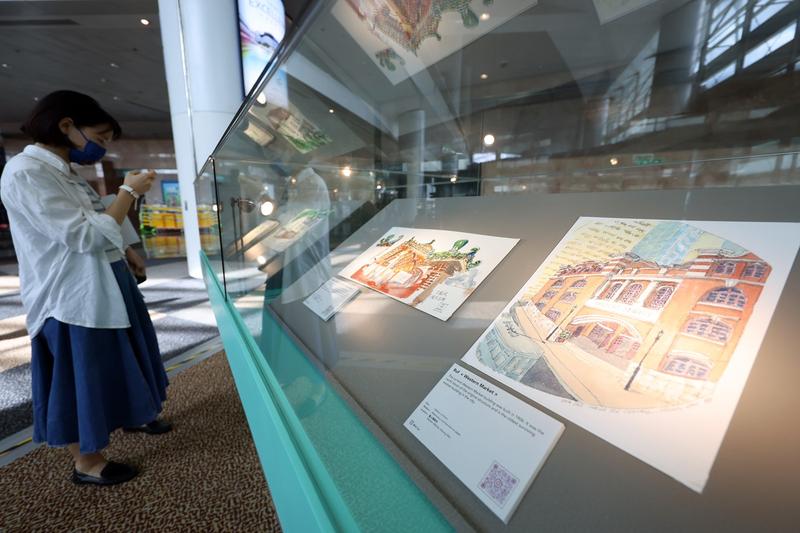
There is much to find out about the city's history and eclectic culture at the ongoing 32nd Hong Kong Book Fair, and then some more, writes Gennady Oreshkin.
The ongoing 32nd Hong Kong Book Fair could make for a happy hunting ground for those looking for answers to the question: What constitutes Hong Kong culture? And the History Writers display - one of four thematic exhibitions in the fair's Art Gallery section - could be a good place to start.
Selected works by Elizabeth Sinn Yuk-yee are a highlight of this display. The honorary professor at the Hong Kong Institute for the Humanities and Social Sciences has engaged with the history of modern China for more than four decades. She will be sharing her experience of researching Hong Kong history on July 24, as part of Reading the World: Stories of Hong Kong seminar series.
Her book, Power and Charity, published in 1989, is an extension of her PhD thesis on the Tung Wah Group of Hospitals - "a living example of Hong Kong culture". The first Tung Wah Hospital was established in 1870 by a group of highly powerful Chinese merchants "to provide Chinese medicine to Chinese people in Hong Kong" at a time when the local government was mostly focused on Western medicine.
Sinn says the move helped bring stability to the city.
"Tung Wah was there to take care of the poor people, (which) meant (the government) didn't have to spend a lot of money on social welfare."
The hospital's network soon expanded beyond Hong Kong. "They didn't have a Tung Wah branch in San Francisco or anything, but they took care of Chinese people overseas ... everywhere," Sinn informs.
Such help was particularly useful during the California Gold Rush of the late 1840s and 1850s.
"Hundreds of thousands of Chinese people went (to California) in the 1850s and '60s to build railways. A lot of them died because the conditions were rough," Sinn says. "If they were not so rich, they would be buried in (American) cemeteries, and, after a few years, they'd dig the bones out, put them in bone boxes, and ship them back to their native villages through Hong Kong."
Since the 1870s, there has been a steady stream of such boxes arriving in Hong Kong from the United States. They were kept at the Tung Wah Coffin Home on Victoria Road, awaiting the onward journey. As a facilitator of the process, Tung Wah Hospital came to be seen as the face of the Chinese community abroad, gradually evolving into a world-famous and hugely influential charity.




- Authorities urged to prepare as cold wave hits Central China
- Explosion at Baotou steel plant kills 2, 5 missing
- Multiple injured rescued after factory explosion in China's Baotou
- Beijing activates emergency responses to ensure safety
- Beijing witnesses snowfall
- Tongji University's Wu Jiang assumes presidency of architects' Asia council