



Global warming calls for lifestyle changes









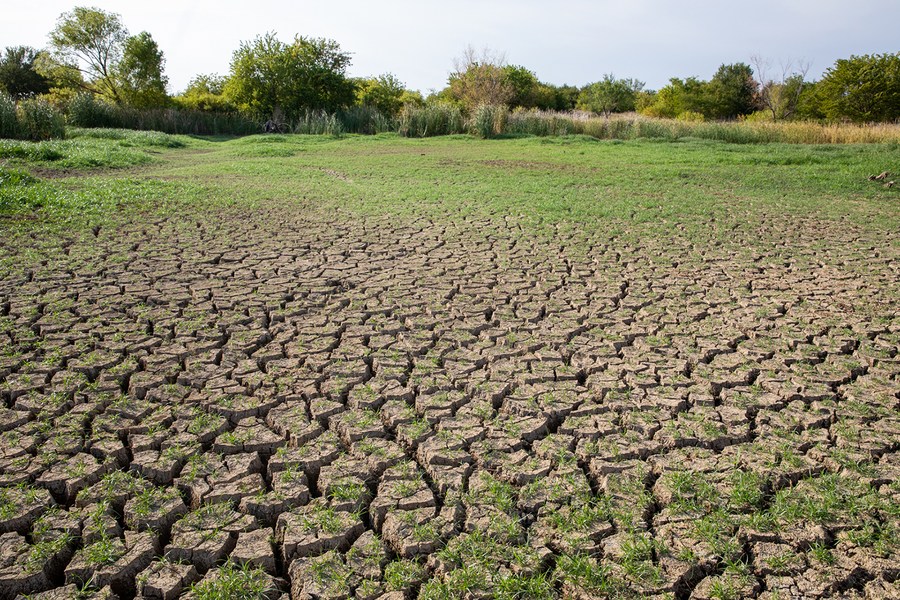
Few people these days can reasonably deny that the globe is already experiencing many of the negative effects of climate change-making different places hotter, wetter or both.
Quite like nations in Europe, the Americas and South Asia, China has recently undergone record-breaking high temperatures, including scorching days in Hong Kong. When we are talking about temperatures above 40 C, such heat poses a risk to life from heatstroke, and there is also the threat of drowning from flooding or of burning in forest fires.
Such extreme changes to weather patterns cannot be simply ignored, and with global climate change likely to become even more prevalent in the future, better ways need to be found to cope with potential disasters.
For over a decade, I lived in several of the desert countries in the Gulf region. Over thousands of years, the local Arabs have developed approaches to cope with extreme heat-approaches that could be emulated in other countries. Some of these are self-help approaches to getting through heat waves; others would need major lifestyle changes to bring them about.
Let's start with what individuals can do to cope with living in overheated places, cognizant as we should be that global warming is very likely to continue, and to even increase as time goes by.
We should all learn to walk on the shady part of the street. Ideally, we should wear loose-fitting clothes made of cotton or linen. Business suits and ties are really inappropriate in places with temperatures in the 40s. The full-length and long-sleeved loose robes worn by many Arabs of both sexes keep the burning sun from causing sunburn. And, of course, men and women alike wear traditional headgear that protects the head from the sunshine. A hat, at least, should be worn on sunny days.
At home, we should keep the curtains, blinds or shutters closed, thereby keeping direct, scorching sunlight from warming the place. Of course, drinking copious amounts of cool water is also necessary during heat waves.
Larger societal changes over a longer time span would also help. In many hot countries, such as those in Southern Europe and the Middle East, many people start work fairly early in the morning, before the worst of the day's heat kicks in.
In many of these places, people try to avoid going out into the hot sunshine from noon to 4 pm, when the sun is at its most scorching. Indeed, many return home for an afternoon siesta, with offices and shops closed over these extra-hot hours.
In many places, it is legally mandated that outdoor workers, such as builders, are not to work outside once the temperature rises to a dangerous level. Some places of work, such as shops, reopen around 5 pm, when it becomes slightly cooler.
Societal changes would be needed to make that possible in southern China, but in the long term, this would be a good way to cope with exceptionally high temperatures. That approach might be brought in to cover the hottest months of the year.
Some of the causes of death during very hot weather are heatstroke, severe sunburn and dehydration. These deadly effects are often seen in people who make no allowances for the ways a stressed body reacts to grossly high temperatures, and who try to simply carry on as normal in abnormally high temperatures.
There is a limit to how far the human body can be pushed to cope with exceptional heat. Lifestyle changes are a must.
In a heat wave, any form of sunbathing should be avoided, to prevent dangerously overheating and to avoid the risks of developing skin cancer from the strong sun's rays on unprotected skin.
Tragically, in several parts of the world, the elderly, frail and infirm pass away from the effects of excessive heat, when chilled water and the use of an air conditioner would have saved them.
Family members should ensure that those at particular risk are suitably looked after, including contributing to paying the electricity bills of aged relatives to encourage them to use their home air conditioning.
We are never going to learn to cope with living in very hot temperatures until we recognize that lifestyle changes are needed-and without delay.
The writer is a veteran commentator on social issues who has lived in many parts of Asia.










