Nation leads in supplying vaccines for developing countries









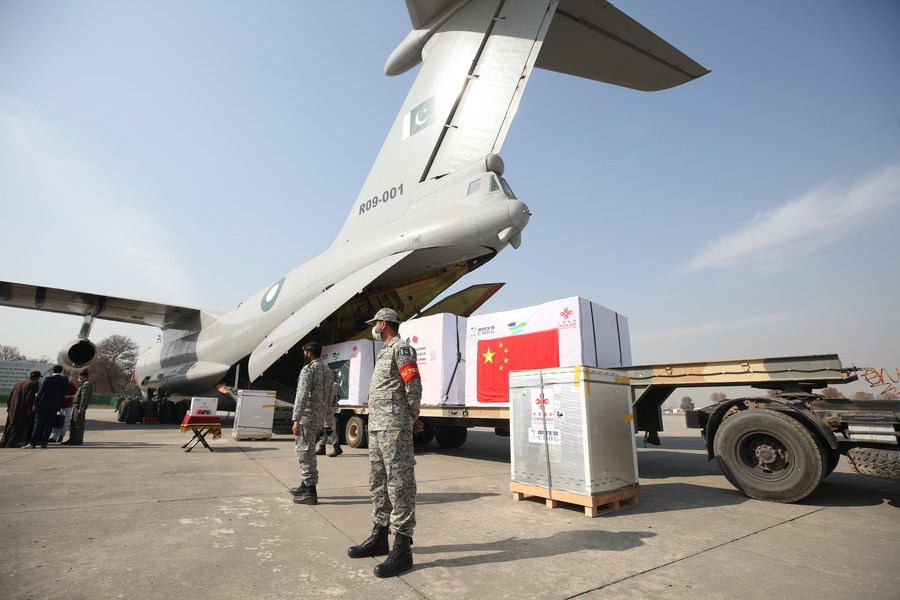
China has become a reliable, stable and indispensable provider of COVID-19 vaccine supplies to the developing world, experts and officials from several countries said.
As of August, China has supplied over 2.2 billion doses to more than 120 countries and international organizations. It has launched joint production plants or transferred vaccine-making technologies to over 20 countries, resulting in an annual manufacturing capacity of over 1 billion doses of vaccine overseas, according to Chinese government data.
Recent shipments to foreign destinations include 3 million vaccine doses made by Chinese company Sinopharm along with syringes, which was donated to Dar es Salaam, Tanzania, on July 14. The shipment was expected to benefit 1.5 million people.
China also pledged on June 30 to supply 2 million more doses to Myanmar, on top of the 600 million doses provided to all members of the Association of Southeast Asian Nations.
Earlier in June, a pharmaceutical company in Cambodia signed a memorandum with Chinese company Sinovac Biotech to build a factory for filling and packaging vaccines in that country. The factory is expected to produce around 104 million COVID-19 doses from 2024 to 2026 and explore the possibility of making other vaccines.
Zha Daojiong, a professor at the Peking University's School of International Studies and the university's Institute of South-South Cooperation and Development, said that China has played an indispensable role in facilitating timely and affordable access to vaccines for poor and less-developed countries.
He said that amid the pandemic, many governments stuck to the practice of pre-purchasing experimental vaccines — often in excessive amounts — for their own citizens.
"While this can be a prudent public health measure, advanced purchasing by rich countries led to severe strains on COVID vaccine supplies to poor countries," Zha said.
"It is not the amount of supply, either by way of sales or donation, that matters. Rather, it is the match of supply and needs that made the Chinese effort one of true solidarity," he said. "In contrast, most developed countries opted to donate 'surplus' vaccines to countries in need. The resulting gap between need and availability is apparent."
"At a time when a majority of states were focused on safeguarding the well-being of their own citizens, and when it was very difficult to purchase medical equipment and vaccines on the global level, China was the first country that gave medical aid to Serbia, as well as vaccines, and later on enabled purchases of them from China," Serbian Ambassador to China Maja Stefanovic said during a media briefing held by Sinopharm on Aug 15.
Alberto Fernandez, the president of Argentina, wrote in a letter to Sinopharm that China "quickly and safely" provided 31 million doses to Argentina when the country was in urgent need, reinforcing the bond between the two peoples.
Mohamed Elbadri, Egypt's ambassador to China, said that China sent a first shipment of vaccines sent to his country in early December 2020, when the world was still in the grip of fear over the virus. Egypt is now partnering with Chinese vaccine developers on joint production.
Zha, the professor from Peking University, said that technology transfer and joint production with developing countries are vital to help partner nations save on costs, instead of spending hard currency on imports.
"More significantly, it drastically reduces the time in international transport of vaccines. With logistics requirements for transporting vaccines getting more technology-intensive and costly, China's practice of coproduction contributed to reducing the burden on partner countries in both public health and finance," he said.
Peter Chang Thiam Chai, deputy director of the University of Malaya's Institute of China Studies in Kuala Lumpur, Malaysia, said that in addition to shipping antivirus materials, medical equipment and vaccines to Malaysia, China has also advanced local production of its vaccines in the country.
"During the pandemic, vaccine nationalism severely stymied global distribution of doses. To address the dilemma, each country should be capable of producing vaccines, and China has done so to help ensure all people can access affordable medical and vaccination services," he said during a recent forum.
As the pandemic drags into its third year and new variants continue to emerge, Zha said that there has been some progress in waiving vaccine patents under a deal initiated by the World Trade Organization.



- Top Chinese mainland, Hong Kong finance education institutions ink partnership to deepen ties
- Lantern Festival lights bring the Dunhuang grottoes to life
- China's 2026 Spring Festival travel rush to begin
- Knocking on the stone-framed door
- Shanghai Science and Technology Museum to reopen soon
- Shanghai celebrates Spring Festival with intl students