



'Rigid'? 'Inflexible'? China's pandemic policy is changing









There are a lot of words you get tired of hearing when following corporate media coverage of China. "Authoritarian", "draconian", "tyrannical", I could go on. After a while you start to tune them out, as they're the kinds of thought-terminating clichés serious people tend not to use.
But it's no-holds-barred when it comes to China's epidemic control measures. Since the first major COVID-19 outbreak in early 2020, there has been a parade of bad-faith attacks on the country even from the most "respectable" outlets, who sensed an opportunity to parlay the spread of a deadly virus into forceful advocacy of an economic or political agenda. First China was being too harsh. Then, when it was obvious that response had worked, those same commentators clamored for full opening-up — right before the Delta and Omicron variants hit and reset pandemic clocks to 30 seconds before midnight.
To be sure, there have been ongoing challenges when it comes to containing Omicron and its newer, more virulent subvariants. After Shanghai's large-scale outbreak in March, smaller flare-ups have been underway in several places around the country, most notably in Hainan province and the Xinjiang and Tibet autonomous regions.
At time of writing, these appear to be mercifully on the downswing; daily case counts have been dropping and more areas have gone for longer periods without new infections, so the rapid response blueprint China has developed over the last few years is still proving effective. Even with this empirical evidence, however, criticisms continue and allegations of "rigid" and "inflexible" policy continue to fly.
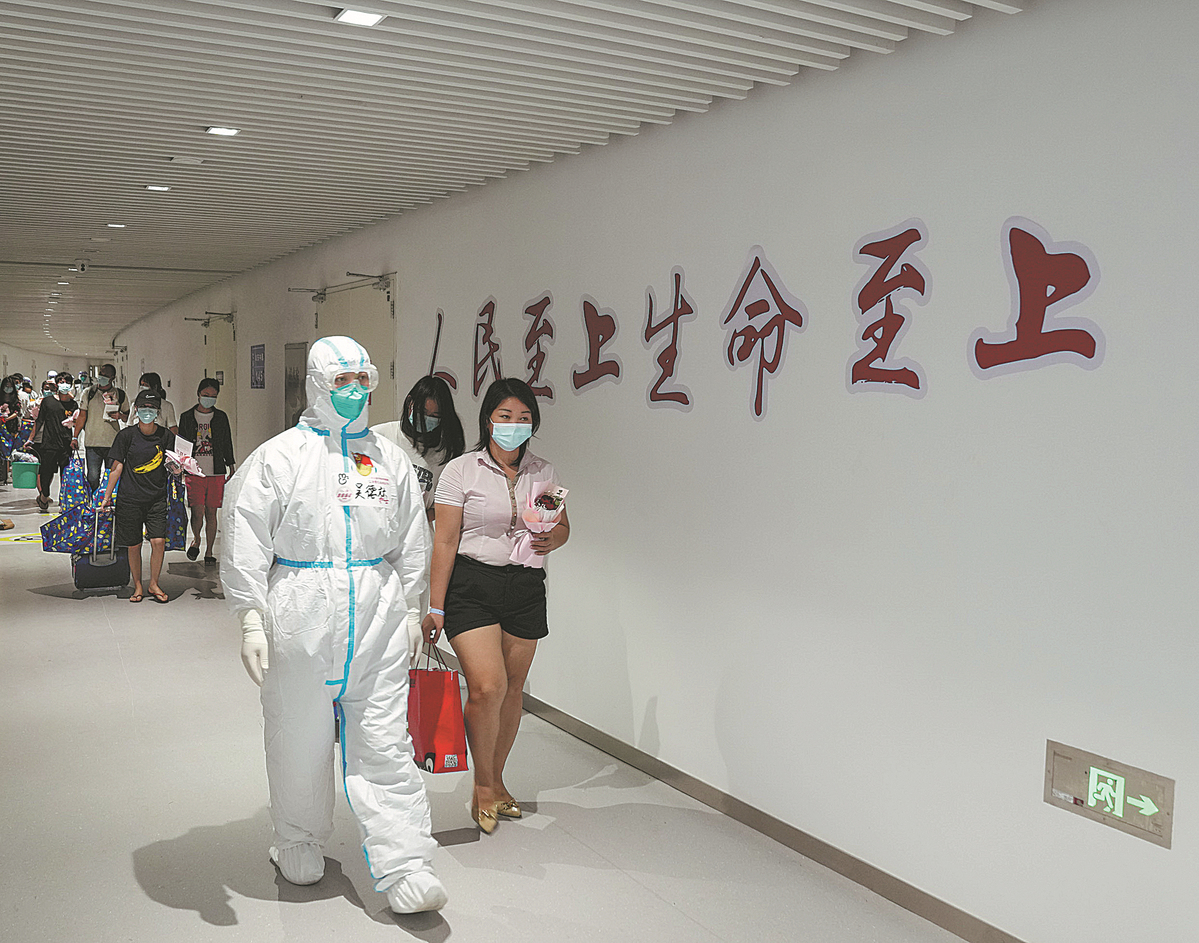
But an honest appraisal of the facts shows this perception could not be further from the truth. In recent months it has gotten easier to enter the country, not harder. The changes have been coming quickly, and too numerous to lay out in great detail; I'll do my best to summarize them here.
For one, pre-flight testing requirements have been adjusted to two PCR readouts within 48 and 24 hours of departure, down from those two tests plus a rapid antigen test and a blood sample needing to be taken to check for antibodies.
As a result of that change, travelers no longer need to spend seven days in their city of departure to facilitate this extensive testing regime, and can show results from any two labs certified by the CLIA rather than a single approved list of facilities.
The quarantine period for international arrivals has been significantly reduced, now a cumulative 10 days compared to the previous 21. The Hong Kong Special Administrative Region followed suit in August, dropping its seven days of hotel quarantine down to three.
Passengers can transit through countries on their way back to China, opening more alternative pathways at greatly reduced cost compared to the limited number of direct flights which operate each week.
The threshold for suspension of flights if positive cases are discovered has been recalibrated to be based on percentages of total passenger load rather than flat numbers, meaning a higher margin for "breaking the circuit" and fewer flights expected to be cancelled in the coming months. More flights have been steadily added to the schedule, increasing convenience and lowering prices.
Where domestic travel and other activities are concerned, the window for areas being closed-off during an outbreak has shrunk. It used to be that 14 days with no new cases was the norm for a high-risk area to be removed from the rolls of epidemiological no man's lands, but that has been reduced to seven. This was identical to the steps taken regarding a person's travel history, cutting in half the time when one's earlier presence in a high-risk area would mean temporary lockdown.
Many around the country breathed a sigh of relief when the "travel card" app which shows a person's travel history no longer displayed the dreaded asterisk, the telltale sign a user has been in the same city where cases have been discovered; the method for determining whether someone's code is yellow or red is now more granular and based on smaller geographic areas, reducing the overall risk of being swept up in an anti-pandemic dragnet.
And in what was a big breakthrough for many who had been eagerly hoping for such a change, just last week international students were given the green light to reenter China and continue their studies either through the use of existing residence permits or the application for new visas, which several embassies announced would be processed after a multi-year pause. This was welcome news to legions of young people, particularly in the Global South, who have looked to China as an opportunity to pursue higher education but had been locked out of the journey due to the pandemic.
Over the past year the trend could not be clearer: A slow, steady loosening of restrictions with few, if any, steps backward. China is learning from its experience and applying those lessons to its policy, which has been in a constant state of flux. Certainly this shift is happening slower than some would like — as mentioned, many direct flights are priced so high as to be out of reach for those without deep pockets or a treasure trove of frequent flyer miles — but it is happening nonetheless. As more tools become available to fight viral transmission and prevent those who do get infected from developing severe symptoms, the likelihood increases this trend will continue and intensify.
Sinopharm, the State-owned developer of an inactivated COVID-19 vaccine that has been used around the world, expects to complete clinical trials on its Omicron-specific booster shot by next month. It is also in the first phase of clinical trials for an mRNA vaccine designed to combat the variant, which is now the planet's dominant strain.
On the treatment front, three separate antibody therapies from Sinopharm have entered trials, providing yet another avenue for those unfortunate enough to be infected. The domestic oral antiviral Azvudine was conditionally approved by China's drug regulator in July with a price tag of less than 300 yuan ($44) per bottle — even less with public insurance — and pharma giant Pfizer has teamed up with a local partner to distribute its oral treatment Paxlovid in the country. WHO approval has been granted for the manufacture of a generic version of the latter at less than $25 per course of treatment for low-income countries, and five Chinese companies were included in the 35 initially tapped for production.
This will ensure the affordability and accessibility of essential COVID-19 drugs for populations most in need, and continue to move the needle to the point where it is feasible for China to fully open up without the risk of mass death or the as yet unknown effects of a wave of "long COVID". The recent changes are a clear sign of a desire to return to normalcy sooner rather than later, but as China has been able to contain its local outbreaks while minimizing fatalities this must be done cautiously.
All that hard work and sacrifice would be lost by one miscalculation, but the "open 'er up" die-hards either aren't aware of this, or know and don't care — and neither proposition makes for compelling listening.
The author is a US writer with China Daily.
The opinions expressed here are those of the writer and do not necessarily represent the views of China Daily and China Daily website.
If you have a specific expertise, or would like to share your thought about our stories, then send us your writings at opinion@chinadaily.com.cn, and comment@chinadaily.com.cn.





